Saudi gold market to outshine regional peers: World Gold Council
RIYADH: Saudi Arabia is poised to outperform other Middle Eastern gold markets in the coming months as resilient domestic demand and rising investor interest offset weaker jewelry consumption, according to the World Gold Council.
The Kingdom’s gold market is benefiting from a growing shift toward investment demand, making it less vulnerable than neighboring markets that rely more heavily on tourism, Andrew Naylor, head of Middle East and public policy at the World Gold Council, told Arab News.
His comments came as the World Gold Council released its Gold Demand Trends Q2 2026 report, showing global gold demand held steady at 1,269 tonnes in the second quarter, while first-half demand rose 2 percent year on year to 2,522 tonnes, worth $380 billion, despite prices retreating from record highs earlier this year.
“The outlook is stronger for Saudi than other markets in the Middle East,” Naylor said.
“The reason I say that is Saudi, in particular, has strong domestic consumption, whereas the UAE, for example, is more of a tourist-driven consumption market. Saudi is less dependent on tourist flows, and the outlook is very much centered on investment demand,” he added.
“Gold’s early-year rally reversed in the second quarter, with prices consolidating after correcting from record highs. But the market remained well supported, reflecting gold’s established role as a diversifier and store of value,” Louise Street, senior markets analyst at the World Gold Council, said in the report.
Investment drives demand
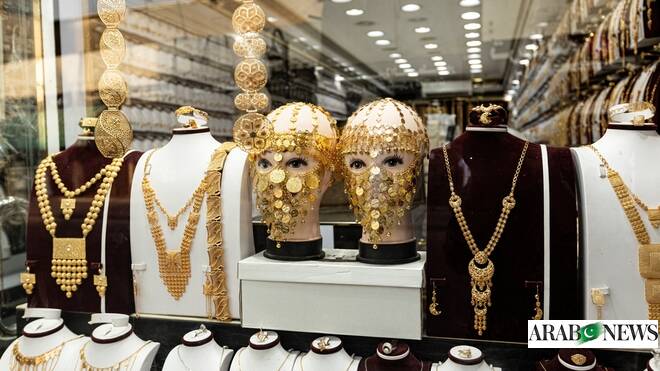
Naylor noted that although jewelry demand has softened across the region because of historically high gold prices, Saudi Arabia recorded the smallest decline among the Middle Eastern markets covered by the council.
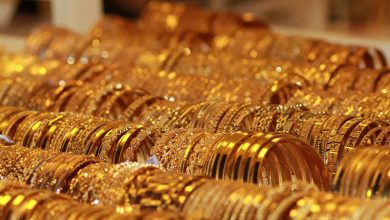
He said Saudi jewelry demand fell 8 percent year on year during the quarter, compared with a 19 percent decline across the Middle East and a 28 percent drop in the UAE.
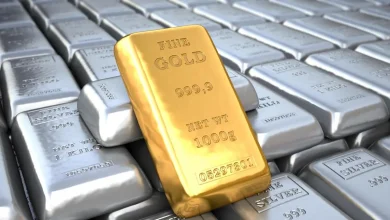
Saudi Arabia also recorded robust bar and coin investment demand, with demand rising 23 percent year on year, while the UAE posted a 30 percent increase. Naylor noted that the two markets bucked the broader regional trend, even as overall Middle East demand declined 12 percent.
He said investor demand is increasingly becoming the dominant driver of gold consumption, while jewelry purchases have become more sensitive to elevated prices.
“The outlook is still positive, but it’s more skewed toward the investment outlook,” Naylor added.
Safe-haven demand
Naylor said geopolitical tensions, inflation concerns and trade disruptions continue to reinforce gold’s role as a safe-haven investment across Saudi Arabia, the Gulf Cooperation Council region and global markets.
He noted that gold is attractive because it is not strongly correlated with other asset classes, is highly liquid and can help diversify portfolios during periods of uncertainty.
He also said inflationary pressures linked to global conflicts, higher trade costs and protectionist policies have strengthened investor appetite for bullion across the GCC.
“Gold tends to outperform or can protect against inflation,” Naylor said, adding that this is supportive of investment demand for gold because “gold is seen as a hedge against inflation.”
Digital shift
Looking ahead, Naylor said one of the biggest structural changes expected over the next two years is the digitalization of gold investing.
He noted that financial technology, online banking and tokenization are changing how investors buy, store and trade gold across the region.
Growing confidence in regulated financial institutions is encouraging investors to hold gold digitally rather than take physical delivery.
Naylor said tokenization is broadening access to institutional-grade gold bars by allowing investors to buy fractional interests in bullion that would otherwise be beyond the reach of most individuals.
He added that growing private wealth across the region is also increasing interest in gold among wealth managers and private banks, particularly in international financial centers such as the UAE, where demand for vaulting and storage services is expected to rise.
Central bank buying
Naylor said central banks continue to play a significant role in the global gold market despite purchases moderating from the exceptionally high levels recorded in recent years.
He noted that official institutions account for roughly 22 percent of annual global gold demand, and their buying often influences broader investor sentiment.
According to the World Gold Council’s latest report, central banks added a net 289 tonnes of gold reserves during the second quarter, up 62 percent from a year earlier.
The report also highlighted findings from the World Gold Council’s June Central Bank Gold Reserves Survey, which showed that 45 percent of central banks surveyed expect to increase their gold holdings over the next 12 months, underscoring strong appetite among reserve managers to expand bullion holdings as gold assumes a larger strategic role in official reserves.
Beyond reserve purchases, Naylor noted that the World Gold Council is encouraging central banks in countries with artisanal and small-scale gold mining industries to source gold directly from local miners to help formalize the sector.
He said artisanal mining accounts for around 20 percent of global gold supply but is often associated with environmental, health and illicit trade challenges. He added that the initiative is less relevant for the GCC because artisanal mining is largely absent across the region.
Outlook
Looking ahead, Naylor said investors should closely monitor US interest rates and the strength of the dollar, noting that both remain among the most important factors influencing gold prices because higher interest rates increase the opportunity cost of holding non-yielding assets such as gold.
He noted that lower US interest rates have historically supported gold prices by encouraging investment flows, while movements in the dollar typically have an inverse relationship with gold prices.