SCHB and SPTM Are Both Excellent Broad Market Funds. Here’s How to Choose.
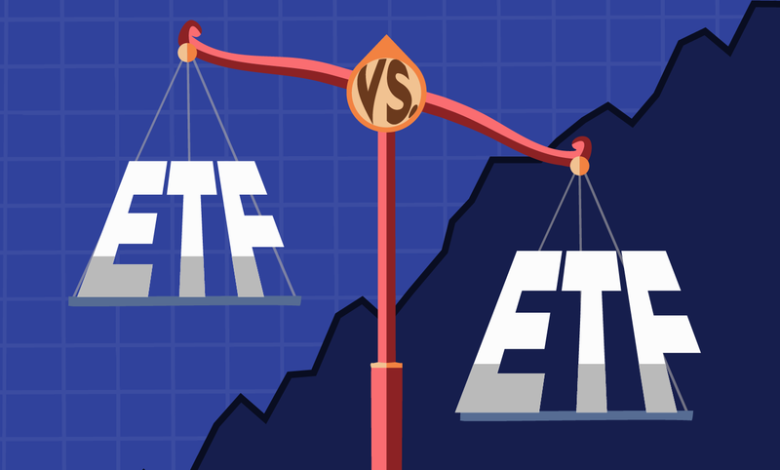
The Schwab U.S. Broad Market ETF (SCHB +0.74%) and State Street SPDR Portfolio S&P 1500 Composite Stock Market ETF (SPTM +0.79%) both provide ultra-low-cost, diversified exposure to the United States equity market with nearly identical long-term performance.
These two exchange-traded funds serve as foundational building blocks for long-term investors. Both offer a one-stop solution for capturing the performance of large-, mid-, and small-cap stocks. Investors often choose between these funds when seeking a core holding that captures the growth of Silicon Valley giants alongside the stability of established industrial firms.
Snapshot (cost & size)
| Metric | SPTM | SCHB |
|---|---|---|
| Issuer | SPDR | Schwab |
| Expense ratio | 0.03% | 0.03% |
| 1-yr return (as of May 6, 2026) | 32.80% | 33.10% |
| Dividend yield | 1.10% | 1.00% |
| Beta | 1.00 | 1.01 |
| AUM | $13.1 billion | $42.0 billion |
Beta measures price volatility relative to the S&P 500; beta is calculated from five-year monthly returns. The 1-yr return represents total return over the trailing 12 months. Dividend yield is the trailing-12-month distribution yield.
Cost is a wash here, as both funds charge a razor-thin 0.03% expense ratio. This means an investor pays just $3.00 annually for every $10,000 invested. The payout levels are also comparable, with a slight yield advantage for the State Street fund.
Performance & risk comparison
| Metric | SPTM | SCHB |
|---|---|---|
| Max drawdown (5 yr) | (24.10%) | (25.40%) |
| Growth of $1,000 over 5 years (total return) | $1,828 | $1,779 |
Schwab Strategic Trust – Schwab U.s. Broad Market ETF
Today’s Change
(0.74%) $0.21
Current Price
$28.42
Key Data Points
Day’s Range
$28.31 – $28.44
52wk Range
$22.16 – $28.44
Volume
4.9M
What’s inside
The Schwab fund launched in 2009 and holds 2,406 stocks. It seeks to track the total return of the Dow Jones U.S. Broad Stock Market Index. Its sector allocation features technology at 31%, financial services at 13%, and healthcare at 10%. Its largest positions include Nvidia (NVDA +1.73%) at 6.94%, Apple (AAPL +2.08%) at 5.85%, and Microsoft (MSFT 1.33%) at 4.42%. The fund has a trailing-12-month dividend of $0.30 per share.
The State Street fund launched in 2000 and maintains a portfolio of 1,510 holdings. It follows the S&P Composite 1500 Index, which includes large-, mid-, and small-cap stocks. Its sector exposure leans toward technology at 34%, with financial services at 12% and consumer cyclicals at 10%. Top holdings include Nvidia at 7.37%, Apple at 5.91%, and Microsoft at 4.77%. It has assets under management (AUM) of $13.1 billion and paid $0.95 per share over the trailing 12 months.
For more guidance on ETF investing, check out the full guide at this link.

SPDR Series Trust – State Street SPDR Portfolio S&P 1500 Composite Stock Market ETF
Today’s Change
(0.79%) $0.70
Current Price
$89.46
Key Data Points
Day’s Range
$89.12 – $89.53
52wk Range
$69.84 – $89.53
Volume
375K
What this means for investors
Owning the entire U.S. stock market in a single fund, at virtually no cost, is one of the most powerful things a long-term investor can do. SCHB and SPTM both deliver exactly that, and they do it so similarly that distinguishing between them requires squinting.
Both charge the same negligible fee. Both count Nvidia, Apple, and Microsoft among their top holdings. Both tilt roughly a third of their portfolios toward technology. Both have delivered nearly identical returns over every meaningful time horizon.
The differences that do exist are modest. SCHB holds roughly 900 more stocks than SPTM, reaching further into the smaller end of the U.S. market. It manages three times the assets, giving it deeper liquidity. SPTM has a longer track record, having launched in 2000, nearly a decade before SCHB.
For most long-term investors the practical choice comes down to brokerage preference. Schwab investors will naturally reach for SCHB; those without a strong platform preference may find SPTM’s longer history a marginal tie-breaker.