Sensex, Nifty gap up on Iran diplomacy, crude slide; financials lead, pharma drags
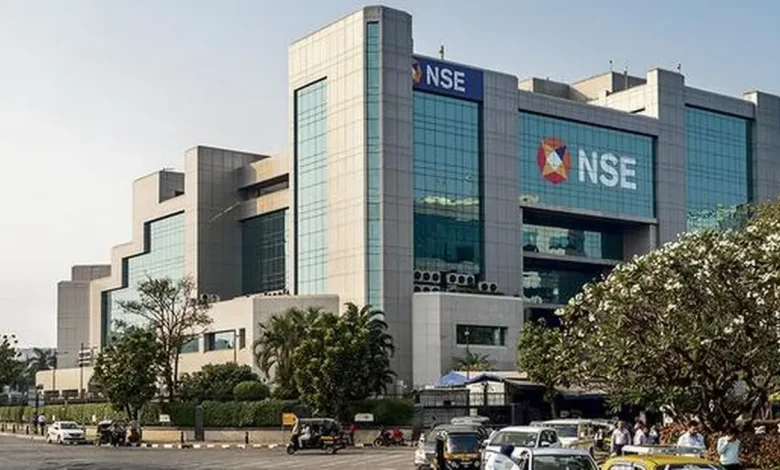
Benchmarks opened sharply higher on Monday, August 3, 2026, as easing geopolitical tensions in West Asia and a fall in crude oil prices lifted investor sentiment across the financial and consumer sectors, even as pharmaceutical and auto stocks weighed on the broader rally.
The Sensex, which closed at 78,094.64 on Friday, opened at 78,883.34 and was trading at 78,601.92, up 507.28 points or 0.65 per cent, as of 9.27 AM. The Nifty 50, which ended the previous session at 24,383.60, opened at 24,572.70 and was last seen at 24,540.25, up 156.65 points or 0.64 per cent.
The trigger for the gap-up open came over the weekend when US President Donald Trump called off a scheduled military strike on Iran to allow direct diplomatic talks to resume on Monday, aimed at fully reopening the blockaded Strait of Hormuz. Brent crude oil slipped below $84 per barrel, while WTI crude traded around $80–81 per barrel, nearly 6 per cent below recent highs, offering significant relief on India’s import bill and inflation outlook. US markets closed positively on Friday, with the S&P 500 and Nasdaq rising 0.7 per cent and 1.0 per cent, respectively. Asian markets, however, traded mixed, with Japan’s Nikkei 225 falling more than 2 per cent and South Korea’s Kospi declining over 3 per cent.
Dr. VK Vijayakumar, Chief Investment Strategist at Geojit Investments Ltd, said the set-up favoured continued upside: …”The decline in Brent crude to below $84, the good progress in monsoon in July and FIIs turning buyers are positive triggers for the market… In brief, it is advantage bulls.”
Among the top gainers on the Nifty 50, Bajaj Finance led with a 2.94 per cent rise, opening at ₹1,176.30 and trading at ₹1,174.70 against a previous close of ₹1,141.20. Shriram Finance gained 2.70 per cent, last seen at ₹1,075.00 against a previous close of ₹1,046.70. Bajaj Finserv rose 2.69 per cent to ₹2,083.70, up from a close of ₹2,029.10. IndiGo advanced 2.66 per cent to ₹5,308.50 against a previous close of ₹5,171.00. ITC rose 2.03 per cent to ₹286.70, from a previous close of ₹281.00.
The financial services sector dominated the morning’s gains. Vijayakumar pointed to credit growth as a structural positive: …”The better-than-expected credit growth, now running above 18 per cent, and the sustaining growth in auto sales numbers are good indicators of the growth momentum in the economy.”
On the losing side, Sun Pharmaceutical Industries led declines, falling 2.36 per cent to ₹1,943.50 against a previous close of ₹1,990.50. Maruti Suzuki dropped 2.11 per cent to ₹13,933.00 from ₹14,234.00, even as the auto sector broadly attracted attention following strong July sales data reported over the weekend. Cipla slipped 0.51 per cent to ₹1,465.70 from a close of ₹1,473.20. ONGC edged lower by 0.43 per cent to ₹241.48 from ₹242.53, while Bajaj Auto fell 0.39 per cent to ₹11,476.00 against a previous close of ₹11,520.50.
Shrikant Chouhan, Head of Equity Research at Kotak Securities, noted that last week’s rally was broad-based: …”The Nifty gained 2.6 per cent, while the Sensex advanced 2,035 points… IT and Auto emerged as the top performers, surging 6.6 per cent and 5.6 per cent, respectively.” He added that the Nifty has moved decisively above its 20-day Simple Moving Average, placing the first key support at 24,130 on the Nifty and 77,300 on the Sensex.
On the upside, Chouhan flagged 24,500–24,600 as the immediate resistance zone: …”A decisive breakout above 24,600 could extend the rally towards 24,800–25,000.” He cautioned that a close below 24,200 could weaken the current uptrend and push the index towards the 24,000–23,800 zone.
Market participants are also closely watching the Reserve Bank of India’s Monetary Policy Committee decision due on Wednesday. Hariselvan Radhakrishnan, Founder and CEO of HST Wealth, a SEBI-registered Research Analyst firm, said: …”While markets broadly expect the central bank to leave interest rates unchanged, the focus will be firmly on the RBI’s commentary for clues on inflation, liquidity conditions and the future policy path.”
He added that rupee vulnerability, shipping disruptions, and elevated commodity prices remain risks despite the crude pullback: …”The Indian rupee remains close to record lows against the US dollar… these factors continue to pose upside risks to imported inflation and external stability.” Radhakrishnan noted significant Put open interest around the 24,400 strike providing a strong support base, while heavy Call writing near 24,600 is likely to cap near-term upside.
Macro data added to the cautiously constructive backdrop. India’s IIP recorded an average year-on-year growth of 5.7 per cent during Q1FY27, while the Index of Services Production grew 15.3 per cent YoY in the first two months of the quarter, according to a monthly outlook from Bajaj Broking Private Research. CPI inflation edged above the RBI’s 4 per cent target in June 2026, coming in at 4.38 per cent, driven partly by elevated crude prices. India’s merchandise trade deficit rose to a five-month high of $30.43 billion in June 2026, with imports surging 26.8 per cent YoY against export growth of 9.5 per cent.
Gaurav Udani, Founder of ThinCredBlu Securities, said the easing of geopolitical pressures carried direct domestic relevance: …”The reduction in war-related concerns and softer crude prices are positive for India, as they ease inflationary pressure and improve the outlook for corporate earnings.” He placed immediate support at 24,400–24,300 and resistance at 24,700–24,800.
Monsoon progress offered additional comfort. The rainfall deficit narrowed to around 14 per cent as of end-July 2026, easing fears of food-price inflation that had been flagged as a risk at the start of the quarter.
Q1FY27 earnings reported so far have been broadly steady. Banking and financial services, select IT and technology services, and capital goods and infrastructure have delivered better-than-expected results, driven by healthy domestic demand, robust credit growth, and strong government capital expenditure. Airlines, fragrance and flavours, and recycling companies also reported a healthy quarter, reflecting their ability to navigate disruptions from the West Asia conflict.
Ponmudi R, CEO of Enrich Money, a SEBI-registered trading and wealth-tech firm, summed up the near-term calculus: …”Global risk sentiment has also been supported by a sharp correction in crude oil prices as easing geopolitical concerns prompted investors to unwind the recent risk premium.”
Globally, China’s factory growth slowed with the People’s Bank of China signalling timely policy support. Japan confirmed joint foreign exchange intervention with the US to support the yen, while South Korea saw strong export growth on AI chip demand. The Bank of England kept rates on hold even as recession risks rise if the Strait of Hormuz remains disrupted. In the Eurozone, inflation edged higher, and US Treasury yields hit multi-year highs as the Federal Reserve remained cautious on inflation.
Kruti Shah, Quant Analyst at Equirus Securities, noted that FII index shorts have begun to unwind and the volatility index has slipped below 13: …”With NIFTY approaching the 24,500 zone, the gradual migration of put writing towards higher strikes suggests the possibility of an upward shift in the trading range… the bias remains constructive, but broader participation and fresh long accumulation will be critical for a sustained move beyond 24,500.”
Published on August 3, 2026