Strait of Hormuz, bond market route threaten Trump plan
Mike Tyson famously said that everyone has a plan until he’s punched in the face. We have to wonder whether the same might be said of Donald Trump and new Federal Reserve Chair Kevin Warsh’s plans for the Fed under new leadership.
While Trump and Warsh might want to have the Fed lower interest rates and reduce the size of the Fed’s bloated balance sheet, they are receiving two economic punches in the face that will force them to shelve those plans for another day. The first punch is coming from the closure of the Strait of Hormuz. The second is coming from the U.S. bond market rout.
Start with the inflation shock coming from the Strait of Hormuz’s closure. Not only does 20 percent of the world’s oil and natural gas supply pass through that strait; so too does 30 percent of the world’s seaborne fertilizer trade, 30 percent of the world’s helium supply and 10 percent of the world’s aluminum production. Little wonder then that we have seen a surge in international oil prices and an increase in world fertilizer prices.
As a result of the strait’s closure, we have already seen a more than 50 percent surge in gasoline prices from less than $3 a gallon to around $4.50 a gallon.
Meanwhile, diesel prices have increased by more than 60 percent. The fertilizer shortage is bound to add a food price shock to the current energy price shock later this year. Meanwhile, a prolonged shortfall in helium supply could disrupt semiconductor production, which is all-important in today’s manufacturing.
The net result has been that consumer price inflation has already risen to 3.8 percent, nearly double the Fed’s 2 percent inflation target. Meanwhile, wholesale prices have jumped by 6 percent. Inflation could very well exceed 4 percent by year’s end as oil prices rise above their $100 a barrel level.
With consumers now expecting inflation to run at 4.5 percent in the year ahead, the Fed would risk allowing inflation expectations to become unanchored if it were to contemplate interest rate cuts at this stage. Understanding the Fed’s inflation challenge, markets are now pricing in more than a 50 percent chance that the Fed will be forced to raise interest rates by year’s end.
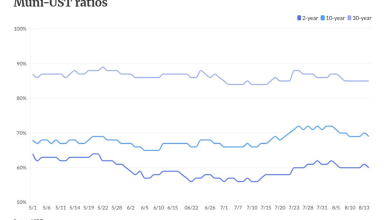
The second economic punch that Trump and Warsh are receiving is a spike in long-term interest rates. Since the start of the Iran war, the all-important 10-year U.S. Treasury bond yield has surged by more than 50 basis points to around 4.6 percent. Meanwhile, the 30-year U.S. Treasury bond yield has surged to 5.2 percent, the highest level since 2007.
It is difficult to overstate how much of a risk the recent long-term interest-rate surge poses to the economy. Those rates are key determinants of mortgage rates, auto loan rates and many other household and corporate borrowing rates. They could also create problems for financial markets by exacerbating the strains in the $3 trillion private credit market.
One of the factors driving the interest rate spike is the unsustainable path our public finances are on. According to the Congressional Budget Office, our country’s budget deficit is set to exceed 6 percent of GDP as far as the eye can see. That will soon push the public debt level relative to the size of the economy to its highest level since the end of World War II.
Another factor driving long-term interest rates higher is waning investor confidence in the U.S. commitment to low inflation. This is particularly important among foreign investors, who hold around a third of all outstanding Treasury bonds.
All of this makes for an inappropriate time for the Fed to try to reduce the size of its balance sheet by selling its large Treasury bond holdings.
English economist John Maynard Keynes famously said: “When the facts change, I change my mind. What do you do, sir?” Now that the economic facts are changing, we have to hope that Trump and Warsh change their mind about what the Fed should now be doing with its interest rate policy and with the size of the Fed’s balance sheet.
Desmond Lachman is a resident fellow at the American Enterprise Institute. He wrote this for InsideSources.com.