Tech Stocks Hit Peak Value in Years Following Stellar Q1 2026 Earnings
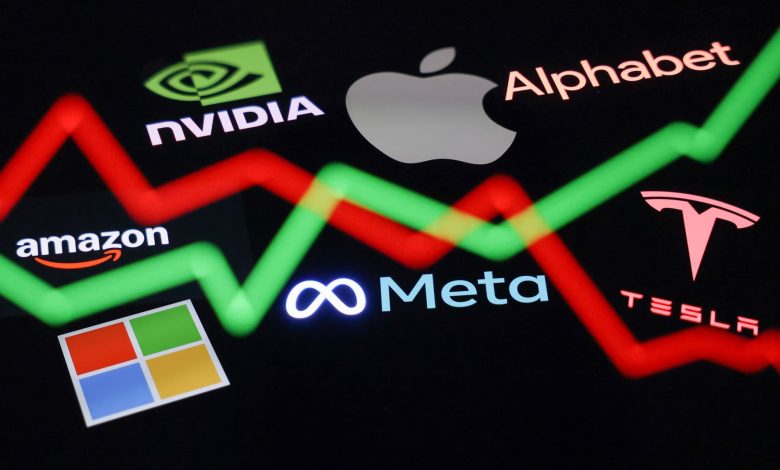
Wall Street analysts have declared that global technology stocks are offering their most compelling valuations in years, as a succession of blockbuster quarterly earnings allows the sector to effectively grow into its historically elevated market capitalizations.
Following a highly volatile trading period marked by macroeconomic uncertainty, massive revenue generation by industry leaders has recalibrated price-to-earnings ratios. This stabilization presents a critical window for institutional investors. In Nairobi’s burgeoning Silicon Savannah, tech founders and venture capitalists are closely monitoring the US equities market, as improved valuations directly influence global capital flows into emerging market technology ecosystems.
The Earnings Valuation Recalibration
For the past twenty-four months, market bears have loudly cautioned that the technology sector was severely overvalued, driven by artificial intelligence hype and speculative frenzy. However, the first quarter of 2026 has decisively shattered that narrative. The largest silicon manufacturers, cloud infrastructure providers, and software behemoths have not only met but entirely obliterated Wall Street consensus estimates.
By generating unprecedented free cash flow and executing aggressive share buyback programs, these corporations have successfully reduced their forward price-to-earnings (P/E) multiples. Essentially, the fundamental earnings growth has outpaced the rapid appreciation in stock prices. Analysts assert that investors are now purchasing tech equities at fundamental valuations not seen since the pre-pandemic market normalization.
Macroeconomic Headwinds Defied
The resilience of the tech sector is particularly staggering when contextualized against the broader macroeconomic environment. Traditional industrial sectors are currently buckling under immense pressure. Escalating geopolitical tensions, including renewed hostilities in the Middle East, have triggered the “NACHO” trade—a Wall Street strategy betting heavily on prolonged oil shocks and supply chain disruptions through the Strait of Hormuz.
Simultaneously, legacy automotive manufacturers are reporting massive revenue slumps, heavily driven by newly imposed U.S. tariffs and sluggish consumer spending. Yet, technology firms remain largely insulated from these physical supply chain catastrophes. Their reliance on high-margin digital distribution models and enterprise software subscriptions provides a robust economic moat against inflation and border tariffs.
The Silicon Savannah Implication
The health of the NASDAQ and the broader U.S. technology sector serves as the primary barometer for global venture capital liquidity. When American tech stocks demonstrate stable, fundamentally backed growth, institutional capital aggressively seeks out higher-yield opportunities in emerging markets to diversify portfolios.
For Kenya’s technology ecosystem, this valuation recalibration is highly fortuitous. Startups headquartered in Nairobi rely heavily on seed and Series A funding originating from Western institutional funds. A confident, highly capitalized Silicon Valley directly translates into increased foreign direct investment for African fintech, agritech, and healthtech enterprises aiming to scale their operations across the continent.
- 49 percent revenue slump reported by select legacy automakers in Q1 2026.
- 3 consecutive quarters of aggressive margin expansion achieved by top-tier tech firms.
- 15 percent reduction in forward P/E ratios for primary cloud infrastructure providers.
- $500 pricing threshold recently breached by next-generation gaming consoles.
- 8 percent immediate pre-market valuation bump recorded by leading digital payment processors.
Institutional Investment Strategies
Moving forward into the second half of 2026, wealth managers are aggressively recalibrating their portfolios to overweight technology holdings. The previous anxiety regarding a sudden market correction has been replaced by a fear of missing out on fundamentally sound, highly profitable compounders.
Strategic focus has shifted away from purely speculative AI startups toward established megacap entities that possess the proprietary data, immense computing power, and existing distribution channels required to monetize new technological paradigms. These firms are no longer viewed merely as growth stocks, but as defensive staples within modern institutional portfolios.
Ultimately, the numbers do not lie. The technology sector has unequivocally demonstrated that its premium pricing was not a symptom of an irrational bubble, but an accurate forward projection of its total dominance over the global digital economy.