The Interview | Lt. Governor-Elect Ghazala Hashmi
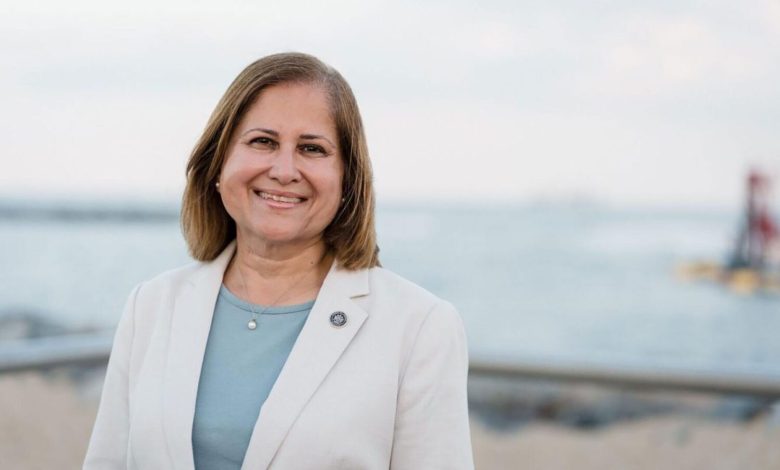
“Virginia voters will be able to respond to what’s happening in America. It’s important that they understand their role and capacity to impact the direction the country is going and that’s true power, true democracy.”
– Lt. Governor-elect, Ghazala Hasmi
A British colleague visiting Richmond told me not too long ago that “politics should never be entertaining.” He’s not wrong. The simplicity of this observation should be obvious. Unfortunately, we have traded the soberness of skilled lawmakers for the entertainment of politics. Clicks. Likes. Outrage. Performance becomes policy; legislating only a formality. In that vacuum we’ve all lost something. And in the past year, Virginians perhaps more than most.
Yet there are always exceptions to that rule. In her victory speech on November 4th, Lt. Governor-elect, Ghazala Hashmi, told her supporters: “As we all know this moment of success is not mine alone… our politics must be more hopeful, more inclusive, and focused on solving problems instead of scoring points on the backs of other people’s pain.”
Less performance. More policy. A winning prescription.
I interviewed the Lt. Governor-elect once before, during the Democratic primary in the summer of 2024. She was optimistic but pragmatic, observant and direct, a shrewd policy tactician that understood state and local government is not always reflective of the national body-politic. She told me during that interview: “I think one of the benefits of being in the state legislature is that we are not as polarized as national politics and we actually get along.”
But that was in the before times, before 2025. A year that’s changed so much of what we believed government was, or should be. Now she’ll preside over the State Senate as the first Muslim woman elected nationwide into a statewide office—a shatterer of glass ceilings, at at time when local and state politics can no longer escape the orbit of our national polarization.
After four years of drift and kowtowing, Virginia was ready for a change; a mandate was given. That much was clear after the Democrats’ decisive victory in November. Yet translating that mandate into action (in this political environment) is where ideas will now collide with reality.
That’s where my conversation with the Lt. Governor–elect began, as she laid out her top priorities ahead of taking office on January 17th.
Thank you for taking the time to speak with us Lt. Governor-elect. I’d like to start with your mandate to govern, given how sweeping the Democratic victory was in November. Because I think there’s an expectation about what that means nowadays when politics feels so zero sum. Do you have an underlying principle that’s going to shape your term as lieutenant governor?
You’re right. We won by sweeping margins. I think what we saw in November’s election is a sense from the voters that what’s happening in Washington has been very destructive, very dysfunctional for Virginia especially, and for the entire country. That’s one part of the story because Virginia, in particular, along with Maryland, has been impact severely by the crisis in Washington.
The loss of federal jobs, escalating prices, the federal shutdown, has been so harmful for so many different communities. So part of our mandate is that we have to shore up the areas that are being affected and harmed by Washington’s decisions.
But along with that reaction, I think another critical part is that voters were responding to what we were talking about on the campaign trail. Not just talking about what we’re proposing to do, but what we’ve already done. I was able to share a record of legislative accomplishments in the State Senate, accomplishments that focus on education, health care, housing, environment and our energy needs.
That message really resonated with voters. And for me, as I look into what the first few days are going to look like, and for what the next four years are going to look like, I’m working to combine those two areas.
The first is that we have to provide Virginians with effective solutions to the crisis from Washington now. And second, the immediate crisis, of course, is around health care. The impacts are going to be felt by our most vulnerable communities: our individuals with disabilities, our seniors, communities of low income.
Being able to craft a budget that is responsive to that looming crisis is going to be a top priority. The state will have to pick-up some degree of strong financial support for health care, and I think that moves us closer in the direction of the healthcare needs of Virginians and Americans.
We cannot continue to skate by on a healthcare system that is predicated on the employment of an individual; separating the healthcare support infrastructure from employment is going to be an important part of that. So in that sense, it’s a real solution that Virginians are going to be looking for us to deliver.
Outside of the healthcare crisis, if you were to rank your top priorities for the upcoming legislative session what would they be?
Healthcare is the number one priority, and then closely following that is education. We were making strong movements in Virginia on delivering opportunities for universal Pre-K education, research shows that students who start with this foundation of social and emotional learning do well academically. So this is a top priority.
Then rebuilding what we’ve lost over the past four years in education. Our K-12 system has been harmed by the politics of this current administration [outgoing governor, Glen Youngkin]. We’ve seen an attrition of skilled and experienced educators, and we need to rebuild that bench and make sure we’re paying our teachers what they deserve along with improving the quality of our schools.
So recasting the school funding formula is an area that I am working on. We’ve begun that project last year, and Virginia is actually lagging behind other states.
And then lastly, higher education: coupling higher education with the critical needs of our workforce and making sure our community colleges have robust support and resources is very important. We also need to restore our faith in higher education. We’ve seen such damage come to our flagship institution [UVA], the attacks on our students, the attacks on our curricula, and our teachers.
That has to change day one as this new administration comes in.
So you see this administration as a bulwark against the attacks on higher eduction?
Absolutely. For me, it’s one of the top priorities—making sure that we restore public faith and trust that we have in our institutions. And that we depoliticize the ways in which these last four years have harmed so much of the work of higher education.
You brought up the challenges associated with Washington. Since Virginia’s economy and workforce are so uniquely tied to the federal government, where do you see the major challenges emerging in having to work with the Trump administration?
Well, we now have a governor and attorney general, as well as a lieutenant governor, who are ready to stand up for Virginians and not capitulate to the Trump administration.
They are trying to harm state government and state resources, our social safety net, and one clear response that we have in front of us is to join the broader coalition of Democratic governors and attorney generals in challenging the Trump administration.
Much of the tactics of this administration are bullying tactics. And when those unconstitutional actions, illegal actions, by the administration are challenged in court on constitutional grounds, Democratic states win—we see the Trump administration backing down and reversing its policies.
So we need to constantly be challenging. To be standing up to those bullying tactics. And as we do, we’ll see reversal, either in court, or we’ll see a reversal in the actions of the administration. We cannot capitulate on on protecting what Virginians are requiring us to do.
I was speaking with Delegate Mike Jones the other day, who you’ve now endorsed for your senate seat. We were talking about the expectation of political targeting due to the Democratic sweep, since revenge and retribution are a fixture of our politics now. Is this something to be worried about?
One thing we know about Donald Trump is the capricious nature of his so-called policy making, it is purely based on personal ego and personal retribution.
The unpredictability of Trump’s actions is the only known quantity that we have, and that is a very harmful form of leadership that this country is facing. So there may be some of that, which is all the more reason for us to hold our ground. To challenge illegal actions in court.
This is all the more reason for every one of our congressional leaders to truly stand up for Virginia and the constituents they represent, regardless of party. They need to be speaking up and challenging in Congress the actions that are harming Virginians.
One thing, sadly, that we haven’t seen from any of our rural congressional representatives is actually speaking out on behalf of our farmers. Our local farmers have been so impacted by the tariffs by diverting support and resources to other nations rather than to our own farmers. So we need people who are going to stand up, which I’m fully prepared to do.
Coming back to affordability since that was the campaign’s main message, which seems to be the winning formula for Democrats right now. I did see that Trump dismissed this as a “con-job,” which was a real let them eat cake moment. For Virginians who have been so impacted by federal firings, tariffs, and rising health care costs, but also workplace disruption and dislocation caused by artificial intelligence (AI). How do we translate the affordability message into actual economic action when all of these issues are connecting in one place?
It is a complex issue. And so much of the cost of living is predicated on the global market and the inflationary systems that are in place—and we have a confluence of all those pressures. AI is just one example of that.
I read recently that in the US we’ve lost over a million jobs just this past year, some to AI. What it’s calling for is a radical reconfiguration of our economy and a radical reconfiguration of the kind of focus our workforce needs.
One thing that’s clear, is that we need to have more deliberate and thoughtful pressure on education and be thinking about the new kinds of jobs that are emerging—the kinds of skills our students need for opportunities in a world that is increasingly controlled by artificial intelligence.
So that’s one part of it. But how do we lower cost immediately? There are certain actions we can take. Part of the critical impact on so many families is rising energy costs—how we make sure the burden of rising energy cost is not placed on our individual families.
A big reason why Virginians are seeing an escalating cost on their electric bill is because the global data infrastructure comes through Virginia—we are paying for the data traffic of the entire world. We are paying for the individual sitting in Berlin using AI. So we need to have a more equitable and distributed share of the cost.
We also need to focus on the rising cost of housing, which is something that we’ve been working on. That means thinking through the kind of impediments that delay the building of more housing units, having more mixed development, and stabilizing housing costs by targeting these critical areas.
This is what’s hitting our families: the cost of energy, housing, groceries, and healthcare. As we focus on those key areas, we’re going to be able to respond to the hurt that people are feeling in their wallets, that’s a priority.
You talked about data centers, and it’s true, our energy bills are going up. Dominion announced an increase for 2026, followed by another in 2027. Why should Virginians bear the financial and environmental burden for multi-billion dollar corporations, where is the return on investment for citizens of the Commonwealth?
That’s a good and important question. There’s a reason why Virginia is the [data] hub for the world. First of all, the transatlantic cables are easily accessible for Virginia; it’s also national security concerns and all the work of the federal government. This makes us the logical choice.
The return on investment is that data centers are a huge boon to local economies. This is why some localities, initially, opened the door for a large number of data centers. That’s revenue for local government, it doesn’t come to state government necessarily.

Local government is able to use this [revenue] for critical infrastructure projects, education, public schools—and that has been a transformative economic boon for many localities. It’s also jobs. I think over 70,000 jobs are now part of the data center industry.
So we’re talking about high paying construction jobs that are increasingly valuable for many Virginians. I’m very mindful of that. Our next step has to be, how do we do this in a thoughtful way, in a way that is more structured from a state perspective? Because right now, the permitting and the siting is largely under the auspices of the local government.
But it impacts the whole state electric system, so having greater state regulation is going to be an important step for us—allowing us to address the overall impact on our grid.
This also helps us to think more thoughtfully about environmental impacts for communities that are living next door. Not just to the data centers, but also to the transmission infrastructure that has to accompany these very large energy consuming behemoths. We’ve been having these ongoing conversations over the last two years.
We’re going to see some important legislation this session to address some of these big issues.
So in the past 48 hours, the topic of redistricting has been a strong topic of conversation. Are you supporting the current redistricting efforts?
You know, I was actually called off the trail during my last week of campaigning into that special session. I’m very much in support of returning the idea of redistricting back to the voter, which, in fact, is what the resolution is doing.
I think the public needs to be aware of the work that we did in 2020 on independent and non-partisan redistricting. That that amendment is largely intact, nothing has changed in that language. The resolution we worked on during that special session, and passed, is very focused on the congressional lines, and is triggered by actions, illegal actions, that are happening in other states.
It’s a way for Virginians to express their response to what’s happening nationally, and I think that’s an important power for the people of Virginia to have. So the question of congressional redistricting is not going to be made by the General Assembly. It will be part of a constitutional amendment to be handed back to Virginia’s voters. They will have the voice in making that decision.
But on the campaign trail, so much of the messaging was framed around this idea of bipartisanship. Don Scott and Louise Lucas were out yesterday, essentially touting this ten-to-one map. Doesn’t that undermine the idea of building bipartisan consensus in Virginia?
I don’t think it does, because the vote is not being made by Ds and Rs, but by Virginia voters. And in that sense I don’t think it is a partisan issue. Virginia voters will be able to respond to what’s happening in America. It’s important that they understand their role and capacity to impact the direction that the country is going and that’s true power, true democracy.
Just two more things from my side because I know Sofia want’s to ask you a question. This was a historic election and you broke barriers for so many Virginians, smashed so many glass ceilings. The whole ticket did with this election. What’s it been like to inspire people across the Commonwealth this way? I think that’s an important thing for people to also understand.
It’s so incredibly humbling and gratifying. And I’m truly, truly honored. I acknowledge that being able to do this work and have these election results is because of the work that preceded me.
I’m also very hopeful, that though I was the first, I will not be the last, and we’ll see a lot of other similar glass shattering. I think the most important thing for me is the young women that I’ve heard from over the past several weeks, so many young women. Whether they want to be in the political space or not, they have reached out and shared that they are so excited.
They see opportunities for their own dreams, and the chance to push forward. It’s wonderful. And I’ll share Landon, that its not just Virginians who’ve reached out. I’ve heard from people across the country, and across the world. I’ve been doing a few international zoom calls because people are excited.
What’s exciting to me is that Virginia has led the way. And who would have thought that Virginia would be the first state to actually elect a Muslim woman immigrant to a statewide office in the entire country. That has put a spotlight on Virginia in a very strong and positive way.
So these message and media attention from around the world has been overwhelming.
I wanted to end by taking your diagnosis on American democracy at the close of 2025. We spoke about this last year, but those were the before times. Now that you’re about to take office, what’s your perspective?
I really do lean on our historians and historical perspective, and the longitudinal, long view of where this country has been and where it’s going. For that reason I remain optimistic that we have faced immense challenges as a nation.
Democracy continues to be tested, and continues to remind us that every generation has to fight as hard as we can to protect and expand it. I’m much more optimistic at this point than when we last spoke.
I ran for office back in 2019 and for Lieutenant Governor because of my deep concerns about the direction this country was headed. This November’s election was a very important part in restoring my faith in the fundamental principles and values of our people. I think we’re getting a clear sense that people understand that we’re at a historic and dangerous point in this nation and they’re ready to fight.
Sofia: You were talking about affordability, AI, and the restoration of higher education. I wanted to bring that impact to college graduates, since I’ll graduate in May of this year. What steps can we take to help us enter into the economy and will allow us to use our degrees for opportunity and social mobility?
You’re graduating at a time when we’re facing so many challenges, and I think every generation goes through that. So there’s a couple of things we’re positioned to do in Virginia. First of all, we need to focus on lowering the cost of tuition.
The state government has, over my 30 years working in higher education, pulled back funding for higher education. Which means higher tuition cost on families. So restoring funding is important. I can’t promise that it’s going to happen quickly given the other financial crises we’re seeing. But that is my perspective and plan for the next few years.
We need to help students have other alternative opportunities. Whether it’s community colleges, career, or technical programs that will allow them to get to work faster. Many students might think that a four year college degrees isn’t necessary for them.
The reality is though, we have to restore our faith in higher education and that’s been tarnished deliberately by people who want to undermine the role of higher education. Because higher education is the pathway for democratic structures and economic mobility, especially for first generation students.
Ed Note: Sofia Feliciano is an intern at RVA Magazine.
Lt. Governor-elect, thank you for such an in-depth interview and, once again, congratulations on your win. I hope we get to speak again soon.
Well, thank you Landon and Sofia. I hope to see you in person soon.
Support RVA Magazine. Support Independent Media in Richmond.
At a time when media ownership is increasingly concentrated among corporations and the wealthy, RVA Magazine has remained one of Richmond’s few independent voices. Since 2005, the magazine has provided grassroots coverage of the city’s artists, musicians, and communities, documenting the culture that defines Richmond beyond the headlines.
But we can’t do this without you. A small donation, even as little as $2, one-time or recurring, helps us continue to produce honest, local coverage free from outside interference. Every dollar makes a difference. Your support keeps us going and keeps RVA’s creative spirit alive. Thank you for standing with independent media. DONATE HERE.
We’ve got merch HERE
Subscribe to the Substack HERE
And Reddit HERE
And YouTube HERE
Credit: Source link