The Need for Political Science in a Politically Turbulent World
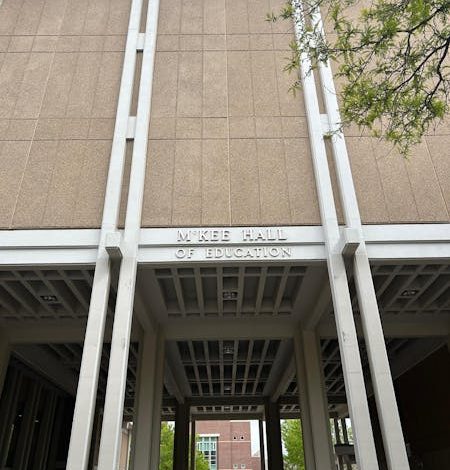
In an age where human rights are at risk, the field of political science has never been more important. For Joseph Kusluch, a professor of political science at the University of Northern Colorado, politics and all it encompasses have been at the forefront of his mind since his high school years.
And it all started with the news.
“As a teenager, I liked to read the news,” Kusluch said. “Like, really, really liked the news and to follow what was going on in the world. I would spend a lot of time in any of my classes following the latest news, even when I should have been paying attention to other topics.”
Kusluch developed a love for history in high school that would follow him to college. He received his bachelor’s degree in the subject from Slippery Rock University in Pennsylvania. It was at SRU where Kusluch would find his true passion in political science.
“There wasn’t necessarily an ‘Ah, ha!’ moment that steered me towards political science,” Kusluch said. “But more of just realizing it was the best degree to help me evaluate public policy, foreign policy and make sense of the contemporary world around me.
Kusluch would continue his journey in graduate school, culminating in his doctorate in political science at Kent State University.
But with all of these years of experience, has Kusluch noticed changes in the field, especially in a political climate that can seem opposed to education? And how are students affected?
“The current administration has not fundamentally changed what I teach…” Kusluch said. “Laying the foundations for understanding the field doesn’t change from one administration to the next.”

While foundations remain the same, adaptability is crucial to ensuring that students understand the material through a modern lens.
“I rewrite my syllabi each semester to make sure the material I am assigning connects the fundamental literature and scholarship of the field with current events and contemporary affairs,” Kusluch said. “This allows the material that we are learning to remain fresh to students, as well as evolving to meet the changing needs of students in an evolving political climate.”
Students like Aidan Wegmann-Hoel, a third-year political science and history major, are noticing these changes too, especially in how the material is being tailored to apply to current issues.
“There’s definitely been a shift within our classes,” Wegmann-Hoel said. “In both of my poli sci classes I had last week, we talked about fascism, and it’s the first time we’ve talked about fascism in these classes in like a long, long time that wasn’t basically just, like, a little historical footnote.”
While the field may be evolving alongside an ever-changing world, could the growth of political science be halted under President Trump? His administration seems set on cutting funding to fields of research and programs deemed unimportant, such as climate change and DEI. Could a field like political science, dedicated to educating the masses on the nuances of politics and world affairs, be at risk? Kusluch said he doesn’t think that’s likely.
“I believe the field is in a good place nationally,” Kusluch said. “Instead of being at risk with the current political landscape, I believe it is as strong as ever, as students continue to want to make sense of the world. Quantitatively, the field is growing around the country as more and more students become interested in how they can become change-makers in their community.”

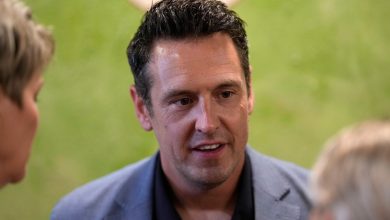
Aidan Wegmann-Hoel, a political science student at UNC, said he believes those who take political science classes are more prepared to handle world events.
Wegmann-Hoel isn’t as optimistic and said he’s concerned about how the field could be affected by Trump and his policies.
“There is a fear about what we can talk about,” Wegmann-Hoel said. “We are expanding the discussions we’re having, but also, there’s an academic crackdown in this country. For example, last semester in the 100-level global issues class… there was a concern about if we can do an Israel-Palestine lesson, because this was when the crackdown on pro-Palestine messages and colleges were happening.”
Wegmann-Hoel said that while the political landscape is encouraging some to become involved, it’s scaring away others.
“There’s a bit of a threat, as we’re worried about, you know, censorship within the field, but also we’re worried that people are just going to lose interest because things are scary,” Wegmann-Hoel said. “And I can’t really blame them for, like, not wanting to keep up with all of it.”
As poli sci professors and students are learning how to navigate these complex issues and how to approach them, Kusluch is confident that, regardless of the political climate, his students will find a way to enact positive, lasting change.
“Political science degrees help students find their way… because the degree teaches such a diverse array of contemporary skills and knowledge across the curriculum,” Kusluch said. “I hope students take away from my classes that the world is a complex place and there are no simple, quick and easy solutions to many of the problems of the world. Understanding that there is no simple and quick fix helps students understand that the change they want to see in the world takes time and dedication, but is achievable.”
Credit: Source link