The Warren Buffett Approved ETF Every Long-Term Investor Should Own
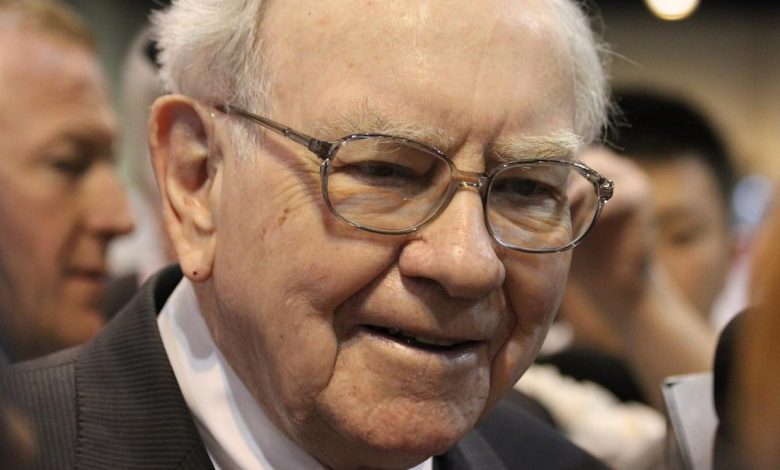
You’ll probably agree that Warren Buffett is one of the world’s very best stock pickers; Berkshire Hathaway‘s long-term track record says as much. You may even borrow the occasional Buffett pick for your own portfolio, in fact.
Did you know, however, that the Oracle of Omaha wishes most of you wouldn’t do that? He would much rather you do something far simpler. He recommends a buy-and-hold strategy, starting with a single exchange-traded fund (ETF) that mirrors the performance of the S&P 500 (SNPINDEX: ^GSPC).
Will AI create the world’s first trillionaire? Our team just released a report on the one little-known company, called an “Indispensable Monopoly” providing the critical technology Nvidia and Intel both need. Continue »
The data supports Buffett’s suggestion
The legendary selector of stocks reiterated it most recently at 2020’s annual meeting of Berkshire Hathaway’s shareholders, where he said that for most people, the best thing to do is to own an S&P 500 index fund, like the SPDR S&P 500 ETF Trust (NYSEMKT: SPY) or the Vanguard S&P 500 ETF (NYSEMKT: VOO). He has regularly preached the benefits of this simple, passive approach to investing ever since 1993’s letter to shareholders in which he said that by periodically investing in an index fund, the know-nothing investor can actually outperform most investment professionals.
And the data decisively supports Buffett. Standard & Poor’s ongoing tracking of mutual funds available to U.S. investors reveals that 79% of large-cap funds lagged the performance of the benchmark S&P 500 last year.
It wasn’t just a short-term run of bad luck, either. For the past five years, 89% of these funds underperformed. For the past 15 years, almost 90% of large-cap funds offered to American investors failed to keep up with the S&P 500. And for the record, the funds that beat the market for one of these time frames rarely led it in another.
In most cases, outperforming the S&P 500 is more luck than skill. Hedge funds suffer similar performance comparisons to key benchmarks as well, by the way, as do actively managed ETFs.
Just play the odds
Is it possible that you, as a smaller-scale investor, can do what the so-called smart money can’t? Sure, it’s possible. And as an ordinary retail investor who isn’t required to disclose your trades before or after they’re made or doesn’t need to worry about moving the market with your activity, you do have an advantage that most funds don’t.