This European country picked a leader in 33 days.
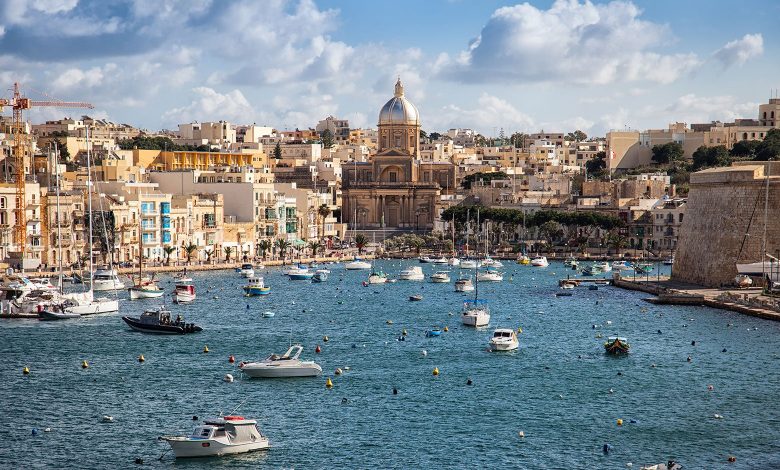
At 1 in the afternoon on Sunday, May 31, my husband and I heard the first fireworks. We had spent the morning at the beach, where most of Malta also was, because the water was perfect and it was 78 degrees and the ballots from the day before were being counted by hand. We did not know who had won. The fireworks told us to check the news.
Malta does fireworks during the day. This is … surprising. They are petards, locally called kaxxa spanjola, designed to make noise and a small puff of smoke without anything visible in the sky. Malta has more than 35 fireworks factories for a population the size of Fresno’s. They go off during summer festas, after Mass on big saint days, and, it turns out, when the governing party wins reelection.
On Sunday the booms started, and the horns came soon after. Cars draped in red flags began circling our village in Mellieħa—the color of the Labour party.
This is what an election ending feels like in a country that has not forgotten how to end an election.
I am American. I moved to Malta last December on an EU passport my mother left me. I cannot vote here, which I have come to think of as the price of admission for living in a country whose politics do not become world headlines.
In America, the 2028 presidential election started before the 2024 winner was sworn in. By spring of 2025, candidates were already flying to Iowa and New Hampshire to “get to know voters.” There is no off-season. An American campaign begins around the second Tuesday of your last good (or bad) mood. It ends, several years and several billion dollars later, when somebody concedes via a 14-page post at 1 in the morning. I assumed this was simply what democracy felt like: a low-grade fever you never fully shake.
Then I watched Malta call an election on April 27 and finish it on May 30. Thirty-three days. Three of those days were a holiday weekend. No primaries. No conventions. No exploratory committees. Billboards went up within 24 hours, preprinted and prepasted, clearly waiting in a warehouse for the starting gun. Leaflets landed in my mailbox by morning. I have ordered protein powder in America that took longer to arrive than the entire Maltese national election took to occur.
There are good reasons why picking the leader of a nuclear-armed superpower should take longer than 33 days, and I’m not here to promise you that Malta is some sort of democratic utopia. But surely we Americans can learn something from a country that holds an election without tearing itself apart—that treats politics as something to deal with and move on rather than as a way of life.
Both major parties released manifestos with more than 1,000 individual promises each. Not 10. Not 100. A thousand. The opposition’s manifesto was so long they built an A.I. chatbot on their website to help you locate which of the 1,000 promises personally applied to you.
Labour promised a 1,000-euro annual cash bonus for the act of having a job. Every Maltese resident was to live within a 10-minute walk of green space, on an island composed largely of limestone, concrete, and the parking lot of a Lidl, that overall turns brown in the summer. A highly specific 35 percent cut to government red tape using A.I. A national “positive list” of which animals citizens are legally permitted to keep as pets. Somewhere in the government, a committee will soon convene on the question of the chinchilla.
The Nationalists countered with four new hospitals on an island you can drive across in under an hour. A total income-tax exemption for everyone under 30 for five years. Improved educational campaigns about cannabis. And 11.5 kilometers of an underground metro system, nearly 1.5 billion euros, through solid limestone, in FIVE years—a project first studied in 2016, shelved as unaffordable in 2025 by the same government that proposed it, and triumphantly resurrected by the opposition for this campaign.
On an island with 300 days of sun, Labour’s headline solar promise was 15 million euros, over five years, for renewables on 1,000 social-housing units. That’s 3 million euros a year. Across all of Malta. The metro was 1.4 billion euros. The sun, apparently, can wait. We’ll just keep importing all of our power … through cables … from Sicily.
Nearly everyone I have talked to here has told me, at some point, that both parties are corrupt. They never give specifics. It is just understood, like how we understand that potholes will not be filled.
Six weeks before this election, an Italian television program reported that the late Totò Riina, the Sicilian Mafia “boss of bosses” who ordered the assassinations of the anti-Mafia prosecutors Giovanni Falcone and Paolo Borsellino, had once hidden from Italian authorities in a seafront villa in Gozo. That villa has been leased since 2002 by Anton Refalo, who has served in this government as the minister for agriculture. When confronted on his doorstep by an Italian journalist about the property’s history, the minister said, “I do not know who that is.” Riina ordered roughly 200 murders. He is one of the most infamous criminals in modern European history.
This was widely reported in Malta in April. Refalo’s party—Labour—won a fourth consecutive term six weeks later. None of the Maltese people I asked about the election mentioned Refalo. They mentioned the gas subsidies.
In 1607, a fugitive painter named Caravaggio arrived in Malta on the run from a murder warrant in Rome. He had killed a man named Ranuccio Tomassoni in a brawl. The Knights of Malta welcomed him, petitioned the pope for special dispensation, and made him a Knight of the Order of St. John. He painted The Beheading of St. John the Baptist, which still hangs in St. John’s Co-Cathedral in Valletta, and is the only painting Caravaggio ever signed. Then he got in another brawl, was imprisoned in Fort St. Angelo, escaped, and was formally expelled by the Order—the recorded language is “like a rotten and fetid limb.”
Four centuries later, a Maltese minister leases a villa once used by a different murderer on the run and says he does not know who that murderer is. The country shrugs.
As an American, this corruption seems … quaint.
Here is what I have noticed. Making a thousand promises, many of which are impossible fantasies and won’t be implemented, does not seem to interfere with the basic operation of the country.
I can walk into a general practicioner’s office during posted hours and be seen without an appointment. Gas prices did not move during a global energy crisis, because the government subsidized them. An expat friend who has been here 10 years told me Labour would probably win again because the gas subsidy is too popular to undo. This strikes me as an observation about a democracy responding to its citizens. The government promised the gas subsidy. The government delivered the gas subsidy. The citizens voted for the government. The arc of the transaction was clear, completed, and visible at the pump. Tourists from other European countries are doing TikToks about our gas prices.
In America, my taxes paid for things I never saw and things I saw and certainly didn’t want. Here, my taxes pay for a thing I totally want and I have it.
Meanwhile, the United States Senate, in 2022, unanimously passed a bill to make daylight saving time permanent. A body that cannot agree on lunch agreed on this. It went to the House and died, and Americans continue to change their clocks twice a year against their own clearly stated will, like a nation under a curse. And then there’s free tax filing—most developed countries just send you a prefilled form. America flirts with it and folds, every single cycle. Lower insulin prices. Paid family leave. Infrastructure. These are reasonable, popular, broadly agreed-upon things everyone wants and somehow never get.
Malta is maybe a little corrupt and the deliverables show up. In America, they do not.
Saturday was warm and bright. Polls opened at 7 a.m. Maltese citizens who live abroad—in London, Sydney, Toronto, Melbourne—flew home to vote, because Malta does not allow remote voting. There is no mail-in ballot. No app. But the national airline sells the round-trip flight for a flat 90 euros that actually costs the government about 850 euros. You can only book it by calling a call center.
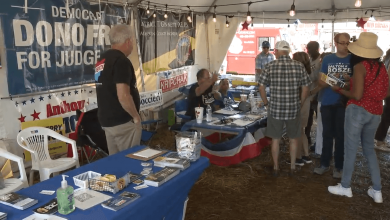
The ballots are then counted by hand in a hall where party activists watch through a giant plexiglass wall and bang on it when they think a vote has been miscounted. Maltese journalists call this “the sound of democracy.” Turnout was over 87.5 percent. In recent American presidential elections, two-thirds is considered remarkable.
I asked a Maltese acquaintance who he was voting for. He said he was not political. Then he said his family was Nationalist. I have come to learn that for many Maltese people, those two sentences are not contradictory. You inherit your politics here. You vote what your parents voted.
In America, I once told my father—during Bill Clinton’s 1996 reelection, in which I knew he was voting for Bob Dole—that I was heading to the library to cancel his vote. My conservative father raised two rabidly liberal daughters. We still speak, but many families don’t. The Thanksgiving tables broken by political disagreement since 2016 are too numerous to count.
Saturday, while people were voting, we were eating burrata and watching The Boroughs on Netflix. We live here, but the choice that affects us is not ours to make.
Monday morning, the billboards started to come down. Nobody stormed the counting hall. Nobody is going to file 120 lawsuits about hand-counted ballots. The minister for agriculture, whose villa has its own footnote in mid-20th-century Mafia history, will continue serving in the Cabinet. The gas prices will not move (I hope). The metro will never be built.
Transport Malta (our equivalent of the DMV) was closed Monday. People had told me this before they knew which party would win—the government offices will be closed; people will be celebrating. They didn’t have to know who.
I needed to go to Transport Malta. I couldn’t. So I went to the beach.
Credit: Source link