‘Too much of a hassle’: Tougher rules drive retail investors from South Korean leveraged chip ETFs
Regulatory tightening moves, including a rule to complete five-day simulated trading, key to sapping demand
Published Sun, Aug 30, 2026 · 02:14 PM
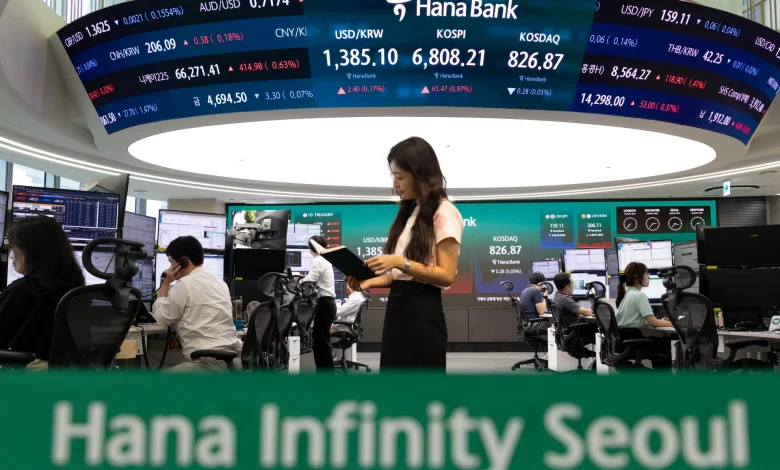
AN ONEROUS mock trading course is becoming an effective tool for South Korea to cool investor fervour over risky products that have turned the country’s US$4.3 trillion stock market extremely volatile.
Leveraged exchange-traded funds (ETFs) targeting twice the daily returns of chipmakers Samsung Electronics and SK Hynix have seen their trading value collapse to 4 per cent of its June peak and are set for their first monthly outflow.
Key to sapping demand has been a series of regulatory tightening moves, most recently a rule to complete five-day simulated trading. Investors must download a Windows-only program on PCs and spend at least an hour a day learning the ropes – and the risks – of leveraged trading with virtual cash. Interviews with several South Korean retail investors suggest the new requirement, effective Aug 19, is too cumbersome to meet.
When Kim Jung-hoon, a 41-year-old resident of Gyeonggi province outside Seoul, heard about the mandatory mock trading, his first reaction was that he would not even attempt it because it was “too much of a hassle.”
“The hours sound long and you can only download the program on PCs,” Kim said. “My work computer can’t download external programs. It doesn’t sound easy to bring an extra laptop with me to work.”
The mock trading exercises add to a slew of regulatory curbs since July to deter investors from trading the leveraged ETFs tied to Samsung Electronics and SK Hynix, the chipmaking duo that dominate the world’s AI supply chain. Earlier tightening measures included a higher minimum deposit.
These single-stock ETFs were introduced in May to draw retail money into the local market, but quickly became a political hot potato. During their heyday, turnover of the leveraged products and the two chipmaker stocks combined accounted for over 80 per cent of the market’s total and triggered wild price swings.
The system gives investors a virtual cash deposit of 100 million won (US$72,872), offering a first-hand lesson on the perils of trading risky instruments. It lets them witness the so-called “volatility decay” – how returns can erode over time for leveraged products.
Another retail investor, who asked to be identified by his surname Lee only, said he satisfied all the other prerequisites including the 30 million won minimum cash deposit but stumbled over the mock trading course.
“You have to download a program and there were minimum time requirements,” Lee said, adding that he also had to create a new membership account. “So I didn’t proceed. I just turned off there.”
The Korea Exchange declined to share the number of people who have downloaded the program or tried the mock trading system since its launch. The bourse said it has no plans to introduce a mobile-based platform.
The single-stock ETFs tied to Samsung Electronics and SK Hynix have seen combined outflows of about US$1 billion so far in August, poised to suffer their first monthly fund exodus, according to data compiled by Bloomberg Intelligence. The data tracks products listed in Seoul.
The ETFs’ combined assets under management shrank to US$5 billion as of Aug 27, down from US$11.4 billion at their peak in late June. The plunge resulted from several waves of global tech sell-offs caused by concerns over the AI sector’s elevated spending and monetisation prospects.
“The outflows may persist in the near term as regulators continue to tighten rules,” said Rebecca Sin, a Bloomberg Intelligence analyst. “South Korean authorities have shifted from supporting these products to actively restraining them.”
While the rapid contraction in trading may frustrate existing investors hoping to cash out at higher levels, it has helped stabilise the market. The Kospi’s volatility gauge has slid to a four‑month low of around 50, down from a peak of 97 in late June.
South Korea’s stock benchmark is up 61 per cent so far in 2026 but remains 25 per cent below its record high reached in June.
Park Ki-duck, a 39-year-old retail investor, said the fading sheen of the AI trade has put him off trading leveraged ETFs.
“I don’t want to brave all the regulatory hurdles when the AI or memory chip industry isn’t doing great,” said Park. “If market conditions were much better and I had the conviction that I could profit from those trades, I would be willing to go through them all.” BLOOMBERG