Trump Family Crypto Venture Tokens Crash: What’s Happening to WLFI?
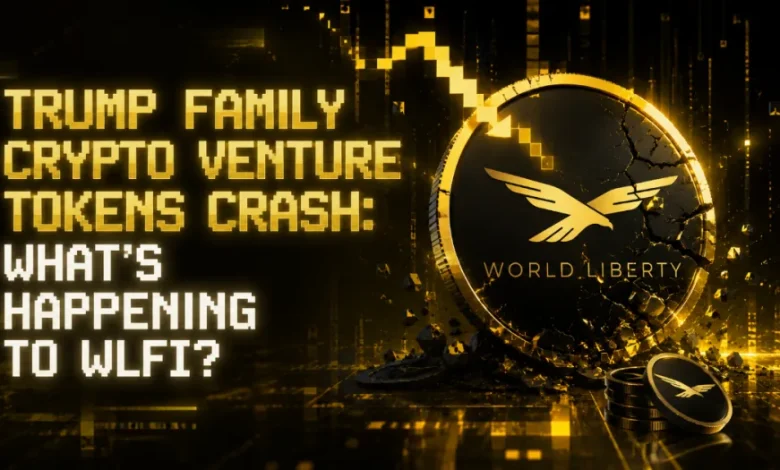
The weakness of the Trump family crypto venture tokens may be due to waning political appeal, weak demand on secondary markets, and active skepticism around token distributions.
Contents
Why Are Trump Family Crypto Venture Tokens Crashing?
WLFI▼$0.0570’s outperformance relative to the broader cryptocurrency market suggests that project-specific factors are driving sentiment in a bearish direction.
WLFI Falls More Than 80% From Its Peak
WLFI peaked at around $0.331 in September 2025 and then fell to around $0.055 on 31 July 2026, around 83% lower than its peak and only slightly higher than its record 2026 low.
However, WLFI price crash removed most of the premium created after the token’s exchange launch, and the price had immediately dropped to about $0.18 within days after the token became publicly available.
Retail Investors Are Sitting on Massive Unrealized Losses
By late July 2026, public estimates said investors in World Liberty Financial tokens lost $674 million, realized and unrealized, when the value of the token collapsed in the secondary markets, with some early token investors left with their holdings subject to transfer restrictions.
Early investors have at times cashed out their unlocked allocations, but much of their allocation is still locked, so their exits have been infrequent, and WLFI investors’ losses are difficult to assess. World Liberty Financial has denied these alleged losses, and insists that its governance tokens are not investments.
| Factor | Potential Impact on WLFI |
| Declining Political Momentum | Reduced investor enthusiasm for politically branded crypto assets. |
| Weak Secondary Market Demand | Lower buying interest increases selling pressure after launch. |
| Token Distribution Concerns | Lock-up rules, unlock schedules, and ownership concentration create uncertainty. |
| Investor Sentiment | Negative headlines and bearish market psychology weigh on demand. |
| Governance Questions | Concerns over transparency and decision-making affect market confidence. |
| Profit-Taking by Early Holders | Partial exits by unlocked investors can add short-term selling pressure. |
Why the “Trump Trade” Has Lost Momentum
The Trump family crypto venture was initially helped by its political branding, but amid a sentiment shift towards risk dislike, crumbling momentum for politically-tied assets and delayed regulatory approvals, enthusiasm has since died down.
At the same time, the Trump crypto business has generated scrutiny for reasons other than politics – governance and token economics, and investor returns – and is thus less in the market spotlight.
What Triggered the Latest WLFI Sell-Off?

The latest WLFI token crash has been widely attributed to political scrutiny of the asset, ethics concerns in Washington, and waning interest in crypto coins themed around political events.
In the fast moving world that is the cryptocurrency market, where news headlines always lead the agenda, news coming out of Washington regarding World Liberty Financial is now once again front page news.
Political Pressure Around Trump’s Crypto Businesses
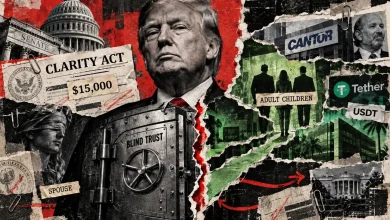
Trump’s crypto business has drawn the attention of U.S. politicians, as it has been reported that the former president received millions of dollars in cryptocurrency proceeds from World Liberty Financial and affiliated firms. They have raised conflict-of-interest questions stemming from his public service and his private digital assets business.
This has contributed to the decline of news coverage of Trump crypto tokens as investors focus on litigation, governance disputes, and political investigations rather than on market fundamentals.
CLARITY Act Ethics Debate Adds New Uncertainty
While there were four major related bills, the CLARITY Act was the most recently revised. As originally proposed in the Senate, the latest version had ethics provisions preventing public officials from issuing or otherwise promoting digital assets, but it was perceived as insufficient to eliminate regulatory uncertainty.
World Liberty Financial is a business that is so closely tied to the Trump family that traders see it as a project specific risk, and it therefore depends on the sentiment for and against this legislation, which has indeed been impacted even though the legislation has not been signed into law yet.
Market Sentiment Turns Against Politically Linked Tokens
Since then, speculation around politically branded crypto assets may have waned from its peak, but the assets may have been considered increasingly for their liquidity, governance and long-term economic utility, rather than their press popularity.
Read More: Why John Oliver Thinks Donald Trump’s Crypto Empire Is a Disaster
This has also impacted the wider Trump crypto project, where the token economics and execution risk have been exacerbated by token volatility, despite the wider cryptocurrency market being relatively stable at the same time.
The Biggest Problems Inside the Trump Family Crypto Venture

In addition to weakness in the crypto market overall, potential investors have raised questions regarding issues with the structure of the Trump family crypto project, including token ownership, governance and disclosure, as it continues to come under scrutiny from regulators and the public.
Insider Token Concentration Raises Red Flags
Another area of concern is the actor’s centralized control of the protocol. As previously reported by Reuters, Trump family controlled World Liberty Financial through a related company and was entitled to a large share of the revenues from token sales, an unusual control structure for DeFi protocols.
Some critics believe this concentration of tokens erodes the decentralization anticipated in a WLFI governance token, as a small number of holders would control the project’s direction.
Private Token Sales Spark New Transparency Questions
Some of this private fundraising has also attracted skepticism, especially given that World Liberty Financial WLFI is aggregating hundreds of millions through token sales before being listed on public exchanges, with little information being released on how these funds are spent or what their long-term plans are compared to established crypto projects.
However, investor confidence was shaken after it was revealed that the lock-up period for early purchasers would be extended and that most of the tokens sold privately would be subject to long vesting schedules.
Governance Concerns Continue to Grow
Governance has also been a subject for concern. Some token holders have questioned whether the voting weight is fairly distributed, and the community has raised concerns over the influence of large wallets, preferential governance rights awarded to large token holders and centralized governance.
These concerns were increased by an allegation in the Justin Sun controversy that Sun’s voting power was revoked after his tokens were frozen (which WLF subsequently denied).
The incident was named World Liberty Financial controversy and concerned questions about transparency, governance, and the legitimacy of the WLF token.
| Issue | Why It Matters |
| Insider Token Concentration | A high concentration of tokens may increase centralization and reduce community influence. |
| Governance Structure | Voting power concentrated among large holders can raise concerns about fair decision-making. |
| Private Token Sales | Limited disclosure around fundraising and token allocation may reduce transparency. |
| Extended Lock-Up Periods | Longer vesting schedules can affect investor expectations and future token supply. |
| Transparency | Questions around reporting, governance decisions, and project communication may weaken confidence. |
| Regulatory Scrutiny | Ongoing public and regulatory attention can influence investor sentiment and project credibility. |
Investor Backlash Is Getting Louder

Increasing discontent among WLFI holders over governance and investor rights have kept World Liberty Financial news in circulation as a result of multiple lawsuits and allegations against the project’s founders, raising questions regarding the project’s management and overall direction.
Justin Sun Dispute Explained
One of the most prominent disputes is with Tron founder Justin Sun, one of World Liberty Financial’s largest supporters and advisors, who in April 2026 sued the project, claiming it had frozen his WLFI holdings, removed his governance rights, and threatened to burn his tokens.
World Liberty denied the allegations and, in turn, filed a defamation lawsuit against Sun, accusing him of orchestrating a campaign against the project.
The legal battle became one of the biggest Trump crypto token news stories, and illustrated how a dispute between stakeholders can quickly become a reputational problem.
Allegations Over Frozen Wallets and Governance Control
In addition to the lawsuit, Sun alleged that World Liberty Financial WLFI created a mechanism to freeze certain wallets.
He said this feature could be used to restrict token holders without the required notice, though these claims could not be independently verified by Reuters. The company, World Liberty, responded that its policies allowed for restrictions in case of security or legal concerns.
Read More: Justin Sun Accuses Trump of Threats After Exposing Alleged World Liberty Crypto Fraud
The incident again raised criticisms of WLFI governance token model, which some critics assert weakens governance by allowing the issuer to revoke voting rights or access to tokens. World Liberty denies those claims and has argued that the project has acted within the terms originally published for the project.
Why Some Investors Are Calling for Greater Transparency
Some community members have argued that more transparency in documenting token freezes, governance decisions, and future unlocks would help rebuild community trust in a project that has changed throughout the years.
While proponents argue stricter regulation may reduce protocol abuse, others suggest the Trump family crypto project needs further transparency to regain credibility following months of governance and legal disputes.
Can WLFI Recover?

WLFI’s own success may ultimately be less sensitive to macroeconomic factors than its success in delivery, adoption, and rebuilding investor trust in a protocol. Perspectives appear mixed, with supporters stressing ecosystem expansion and detractors stressing supply and governance risks.
Bull Case: USD1 Ecosystem and Ongoing Development
Recovery could be achieved through expansion of the USD1▲$0.9989 stablecoin ecosystem. World Liberty Financial states that USD1 is backed 1:1 by cash, U.S. Treasuries, and cash equivalents under the custodial services of BitGo, and plans to incorporate it into the protocol’s lending and borrowing system.
The team has also indicated there may be plans to expand the USD1 to other blockchains, to create other DeFi products, and to continue to expand the ecosystem as a whole. With adoption, demand for World Liberty Financial token may also increase.
Bear Case: Oversupply, Unlock Risks and Weak Demand
The token’s bearish narrative is supply-related, with investors monitoring the future WLFI token unlock events. An increase in supply could result in selling pressure if demand cannot keep pace. Governance proposals to alter vesting schedules and burn tokens highlight a keen focus on distribution.
At the same time, why is WLFI falling remains tied to broader concerns about governance, increasing political scrutiny against the token, and virtually no organic demand beyond speculative trading, making trading sentiment vulnerable to negative headlines around the meme coin.
Key Levels and Catalysts Traders Are Watching
Traders will watch for liquidity, exchange volume, and governance proposals. Votes, launches in the ecosystem, and developments involving USD1 will also be key factors. Legal and regulatory developments therefore remain the most important catalysts to watch in this regard.
So, while any WLFI token price prediction is likely to be driven by execution and not political debate, we think product development, USD1 use and greater clarity on the timing and quantum of future token issue are most relevant for near term performance.
| Bullish Factors | Bearish Factors |
| Expansion of the USD1 stablecoin ecosystem | Future WLFI token unlock events could increase selling pressure |
| Broader adoption of World Liberty Financial products | Weak organic demand beyond speculative trading |
| Growth of DeFi services and multichain integration | Governance concerns and political scrutiny |
| Higher ecosystem activity and user adoption | Oversupply risk from future token distribution |
| Clearer regulatory framework for digital assets | Uncertainty surrounding investor confidence and market sentiment |
What Does This Mean for Trump Family Crypto Venture Tokens?

The recent decline in value suggests investors are beginning to pay attention to fundamentals and utility. While the tokens of Trump family venture tokens remain in demand, their future seems tied to adoption, governance, and regulatory action rather than political news.
Is WLFI Still an Investment or Purely a Political Trade?
However, WLFI has since shifted from purely being a politically motivated asset to building products on the USD1 stablecoin ecosystem, including payments infrastructure, lending, multichain infrastructure, and developer tools, with WLFI being the governance token.
Read More: Donald Trump Made $1.4B from His Own Crypto Holdings: What’s Next for Trump Crypto Profits?
At this moment, price action is still heavily influenced by political developments, which makes quantifying the Trump crypto empire in relation to fundamental metrics like adoption, liquidity, or protocol activity challenging.
Risks Investors Should Watch Over the Next Few Months
Token supply is one of the largest factors; the early-holder unlocks, covered in governance proposals, are one approach, and it’s uncertain how exposing more WLFI to trade will impact liquidity.
The growth of the ecosystem and an understanding of governance decisions and products adopted by World Liberty Financial WLFI should also be closely monitored by investors. Growth may result in better fundamentals, while disputes or disappointing user growth may put pressure on the token.
Could Regulatory Developments Become the Next Major Catalyst?
Regulation also remains one of the most important external drivers for the Trump family crypto project, as shown by the ethics provisions passed as part of the CLARITY Act and active political discourse, which can quickly influence market perceptions of WLFI.
Investors will be watching for whether government regulations provide greater clarity for digital assets, or create new hurdles for Trump-linked crypto firms.
Combined with the product execution improvements, these developments will determine the next evolution for Donald Trump crypto earnings and the broader WLFI ecosystem.
FAQ
What caused WLFI to lose most of its value?
The fall was the result of a combination of early investors selling soon after public trading began, governance failures, federal government scrutiny, low demand, and crypto market volatility.
Can WLFI recover in the future?
If the project expands ecosystem adoption, delivers on its roadmap and restores market confidence, a rebound is possible. Future performance will also depend on the token’s supply, liquidity and regulatory environment.
Why are investors concerned about governance?
The voting structure, token distribution and decision-making process have received criticism, and senior stakeholders in the project have been involved in a number of legal disputes.
How important is USD1 to the project’s future?
USD1 is expected to be a mainstay of the ecosystem, being used as a payment method, for DeFi applications, and to encourage consistent use of the platform.
What should investors monitor going forward?
Token unlock schedules, governance proposals, ecosystem development, regulatory changes, and on-chain adoption metrics may have a greater impact on sentiment in the short-term than political developments.