US-Japan yen intervention unravelling – World Socialist Web Site
Little more than a week after it was undertaken the US-Japan intervention to try to lift the value of the yen is starting to fall apart.
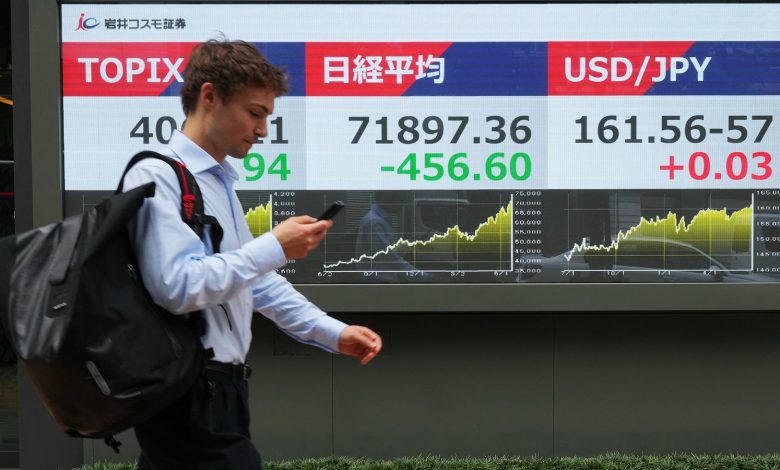
The intervention, which has involved a combined outlay of up to $97 billion by US and Japanese financial authorities, began when the yen was 164 to the dollar and continuing to fall. It rose to as high as 155 last week but on Monday it recorded a fall of 1 percent, wiping out half of its previous gains amid signs that it has further to go.
As Lee Ferridge, a market strategist at the financial firm State Street, told Bloomberg: “Without fresh interventions, it will continue to drift lower. It seems that the market is disappointed that we didn’t see more intervention.”
One of the reasons being cited for the rapid unravelling of the intervention is the lack of coordinated action by other central banks, in particular the European Central Bank.
In order not to put downward pressure on the dollar and a rise in bond yields, especially at the longer end of the market—the interest rate in the 30-year Treasury bond is 5.2 percent, its highest level since 2007 on the eve of the global financial crisis—US Treasury secretary Scott Bessent decided to carry out the US intervention in euros.
The ECB was only made aware of the unusual character of the intervention—the first such joint action in nearly 30 years—after it had been carried out.
The US action, yet another expression of the way in which the Trump administration is pushing aside post-war conventions and arrangements, brought a significant reaction.
According to an article in the Financial Times (FT), which had first reported on the US bypassing the ECB, “senior officials” of the central bank “viewed the US decision to use euros in its trade as an unprecedented breach of longstanding conventions on co-operation between western monetary authorities.”
Senior officials said that “this has never happened before” and that it indicated that decades of close cooperation between western central banks had come under threat.
The US Treasury said it had made the decision using the department’s Exchange Stabilization Fund which did not require co-ordination. A senior unnamed Trump official, cited by the FT, responded to the criticism pointedly stating that “we respect the confidentiality of private discussions with our international counterparts, unlike the ECB.”
But the US decision to bypass the ECB appears to have come back to bite it with one of reasons given for the fading effect of the intervention being lack of a “unified voice” among central banks.
“I don’t think it’s helpful that the ECB was not involved,” Guy Miller, the chief markets strategist at the insurance firm Zurich told the FT.
The main reason being advanced for the diminishing effect of the intervention is the absence of major structural changes in the Japanese financial system and the need for an increase in the interest rate by the Bank of Japan (BoJ) from its very low rate of 1 percent, well below that of other central banks.
Goldman Sachs analysts said in a note that the “relatively muted response to the intervention reflects the fundamental reasons for the currency’s weakness” and the depreciation would continue.
The Bank of America said that a stronger yen would require a “more forceful” intervention or a signal that the Bank of Japan will raise its interest rate in September.
Paresh Upadhyaya, a strategist at the US global financial firm Pioneer Investments told Bloomberg: “I’m skeptical we can see a much stronger yen unless it is followed up by a stronger policy action. A September rate hike is just not enough.”
A rapid and significant interest rate increase by the Bank of Japan to boost the yen, however, presents real problems as outlined in analysis by Masayuki Nakajima of the Japanese financial firm Mizuho.
“From a domestic perspective … the hurdle for a September move remains high. After decades of low growth, low inflation and ultra-low interest rates, concerns persist about the impact of higher borrowing costs on households with mortgages and on small and medium-sized businesses.”
The BoJ, the analysis continued, would prefer to lift rates every six months and a September increase would prompt markets to price in additional tightening in December “raising questions about how well the Japanese economy could absorb a more rapid increase in interest rates.”
There is also the issue of the impact of rising rates on the financing of Japanese government debt. The relatively minor rise from around zero has already lifted the debt servicing cost to more than 30 trillion yen, around $200 billion, accounting for up to 30 percent of all government expenditure.
Across the Pacific, the concern in the US is that the continued fall in the value of the yen will lead to a selloff of US dollar assets by Japan as it attempts to counter the inflationary effects of a sharply falling currency.
Japan is now the largest foreign holder of US Treasury bonds with stocks of $1.1 trillion. With the rate on the 30-year Treasury bond at a 19-year high and the rate on the 10-year rising, the fear is that a major dollar selloff and a rise in interest rates will impact the AI-fuelled stock market boom which is increasingly being financed by debt.
These concerns were reflected both in the decision by the US side to use euros in its part of the intervention and to have Japan borrow money from a Federal Reserve facility to finance its operations rather then selling US Treasury bonds.
The official line from the US was that the intervention was to “help a friend in need.” But it is increasingly clear that it was motivated by the growing weakness of the US financial system.
In the words of one analyst cited by Bloomberg: “We’ve apparently reached a point of such fragility in the US Treasury market with the rise in long rates that we are encouraging foreign holders not to sell.”
The FT’s foreign affairs commentator Gideon Rachman reported that he had recently spoken to an Asian money manager who said she “increasingly thought of Trump’s America as an emerging market.” When challenged, she pointed to arbitrary changes in policy, a fear that foreign investors may be discriminated against, the deep involvement of the president and his family in business, all of which might make foreign investors wary of holding US assets.
While noting that money was continuing to flow into the US, Rachman pointed to warning signs, including that borrowing rates were now lower in Greece than in the US.
“The annual cost of servicing America’s federal debt exceeds the Pentagon’s budget and it is rising fast,” he wrote.
However, the Trump administration had no serious plan to bring it under control and “at some point, there will surely be a reckoning.”