US Stocks’ Biggest Drop Since Start of War. US Treasury Liquidity Crisis Erupts; Why Trump TACO Struggles to Save Market This Time?
TradingKey – On Thursday, the three major U.S. stock indices closed sharply lower across the board: the S&P 500 Index fell 1.7%, marking its largest single-day decline since January 20 and dropping below the 6,500 mark to hit a six-month low. The Nasdaq dropped 2.4%, its largest single-day decline since November 20, 2025, entering technical correction territory.
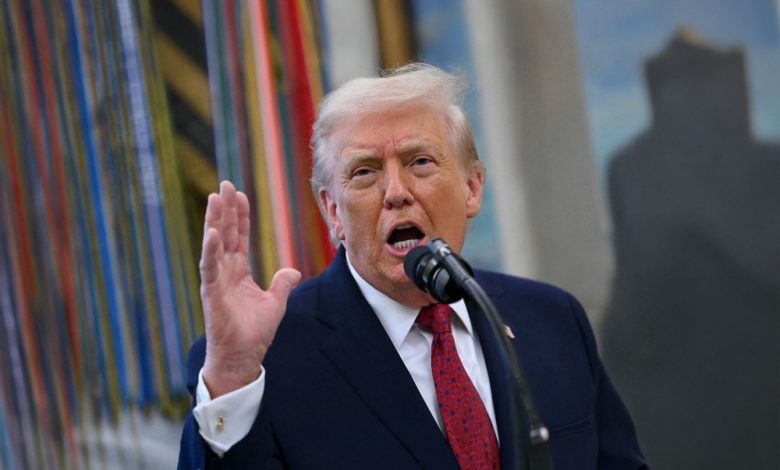
Subsequently, Trump posted on social media that, at the request of the Iranian government, airstrikes on Iranian energy facilities would be delayed by another ten days until 8:00 p.m. ET on April 6.
After Wall Street experienced its most volatile trading session since the outbreak of the U.S.-Iran conflict, Trump has retreated once again. However, can Trump’s repeated TACO rhetoric save the precarious market liquidity?
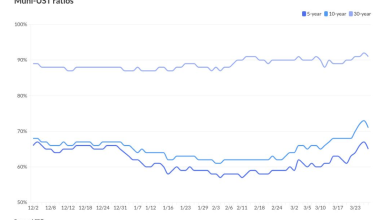
While the stock market was hit hard, the $30 trillion U.S. Treasury market has also been experiencing its most severe volatility since Liberation Day last April. In late Thursday trading, the benchmark 10-year Treasury yield rose 7.95 basis points, up 12% over the month; the more interest-rate-sensitive two-year Treasury yield jumped 10.05 basis points to 3.9858%, surging more than 0.6 percentage points over the past month, marking its worst performance since September 2022. This week, demand for three consecutive Treasury auctions totaling $183 billion was also quite weak.
Analysis indicates that the recent sharp fluctuations in Treasury yields are primarily due to investors reassessing how rising oil prices will impact inflation and, consequently, the Federal Reserve’s interest rate outlook.
Matthew Scott of AllianceBernstein noted that over the past month, since the start of the conflict, liquidity for interest rates and macro products—the ease with which traders buy and sell—has deteriorated.
JPMorgan also pointed out that market depth—the trade size required to move prices—has also declined, with the drop approaching the levels seen after Liberation Day.
Scott of AllianceBernstein stated that traders have chosen to remain on the sidelines due to intense market volatility, thereby reducing market depth; currently, market depth in the cash market has dropped by approximately 40%-50% compared to pre-conflict levels. In the short-term Treasury futures market, market depth this week has plummeted by as much as 80% compared to this year’s average.
The decline in market depth further corroborates the current tightness in market liquidity. However, James Carter of investment management firm W1M explained that, historically, such declines are usually short-lived.
In addition to the bond market, the crude oil market has also shown signs of a trading slowdown: earlier this month, total open interest in Brent crude futures fell to a four-month low, and consulting firm Energy Aspects noted that liquidity measures for Brent have dropped to their lowest levels since at least April 2024.
In the 2025 trade war, Trump’s TACO strategy has repeatedly proven effective. Following a historic stock market crash in April 2025, Trump announced tariff delays and cuts in May, prompting a V-shaped recovery in U.S. equities as his market stabilization strategy took effect. However, in the current U.S.-Iran conflict, why has Trump’s “rhetorical bluster” ceased to be effective?
Analysis indicates that the fundamental reason is the difference between a trade war and an actual war; the former is an artificial intervention in pricing, while the latter, once it erupts, results in the destruction of production capacity and facilities, triggering uncontrollable chain reactions. During the trade war, whether tariff hikes would truly lead to a surge in U.S. inflationary pressure remained to be seen, but currently, the inflationary transmission triggered by war is already clearly visible.
Furthermore, Trump’s frequent concessions and Iran’s hardened stance have led the market to realize that Trump’s TACO is merely an ineffective stalling tactic. This has instead heightened risk-off sentiment and failed to facilitate a recovery in liquidity.
Currently, the market has entered a “cash is king” phase. If the U.S. fails to provide a substantive geopolitical de-escalation plan and liquidity continues to dry up, market runs will intensify, potentially leading to a stampede. However, close attention should be paid to the Federal Reserve’s subsequent actions, specifically whether it will activate the Standing Repo Facility (SRF) or slow Quantitative Tightening (QT) to support the market.
This content was translated using AI and reviewed for clarity. It is for informational purposes only.