US Treasury yields surge as $6 billion bond buyback disappoints markets
Yields on long-term US Treasury bonds surged on Wednesday after the government announced a $6 billion (€5.2bn) bond buyback, disappointing investors who had expected a larger intervention.
The yield on the benchmark 10-year Treasury note rose above 4.85%, its highest level in nearly three years, before easing slightly.
The yield on the 30-year bond stood at 5.29%, up from 5.26% a day earlier. It reached 5.33% in August, its highest level since 2007.
Treasury yields influence interest rates across the US economy, meaning sustained increases can make mortgages, business loans and other forms of borrowing more expensive. Higher borrowing costs can also slow economic growth and weigh on share prices.
The rise came after the Treasury Department said it would buy back up to $6 billion of bonds maturing in 10 to 20 years on Thursday. This is three times the size of its previous long-dated buyback operation.
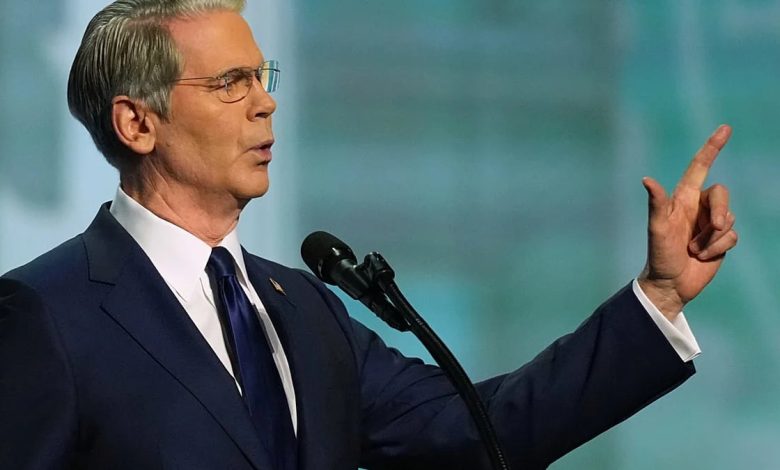
The move is part of a plan announced last month by Treasury Secretary Scott Bessent to support liquidity in the bond market.
Yields were also pushed higher as Brent crude climbed above $100 a barrel for the first time since late July amid an escalation in the US-Iran war.
Some bond market participants had expected the buyback to reach $10 billion (€8.6bn) or more, rather than the usual $2 billion (€1.7bn), based on Bessent’s comments, financial commentator Stephen Innes wrote in a Substack column.
Related
The $6 billion figure was “near the lower end of the whisper range,” Innes said.
“The Treasury market spent the morning waiting for Scott Bessent to reveal how much firepower he was prepared to put behind the expanded buyback program,” he wrote.
“When the number finally arrived, it was larger than the original commitment but still too small to satisfy a market already choking on duration.”
Briefing.com analyst Patrick O’Hare said disappointment over the size of the buyback could help explain the jump in yields. Another possibility was that “the market sees it more or less as a shell game,” he said.
Some leading figures in finance have criticised the plan as a short-term fix for deeper problems with US public finances. They argue that the Treasury market is too large for buybacks of this size to have a significant effect.
Bessent’s plan represents a “forced effort that’s too obvious,” O’Hare said.
Controversial plan
Wednesday’s announcement followed a plan unveiled on 19 August to “at least double” buybacks of long-dated government debt.