Washington tightens squeeze on the Iranian economy
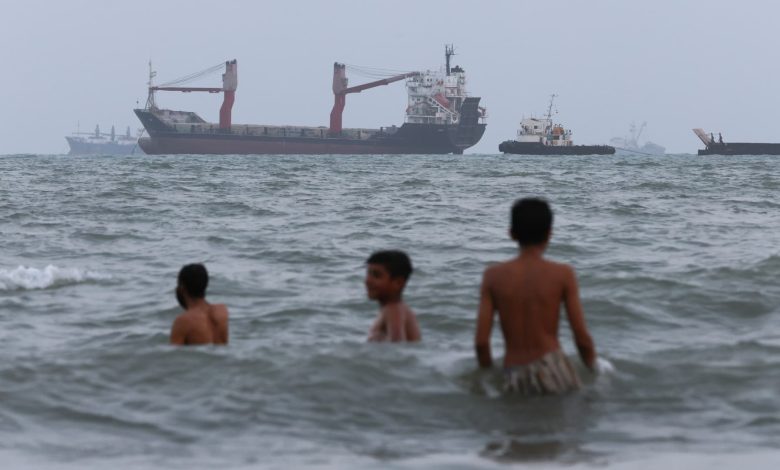
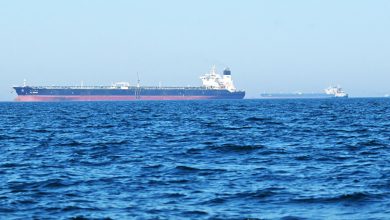
Children swim as ships are seen anchored in the Strait of Hormuz on August 10, 2026 off the coast of Bandar Abbas, Iran.
Ali Saeedi | Getty Images
Hello, this is Anniek Bao writing to you from Singapore. Welcome to another edition of CNBC’s Daily Open.
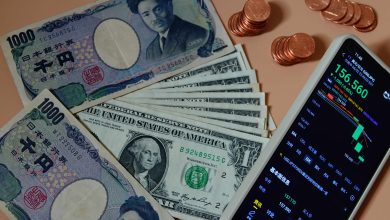
Six months into its Iranian blockade, Washington is shifting weapons. The pressure campaign against Iran is now migrating from the Strait of Hormuz to the financial system — and the second-order effects are landing squarely in Europe.
Britain is the G7’s fastest-growing economy and, per the IMF, the rich world’s most exposed to this war.
Greenland has just told a Trump-linked oil venture that its permits aren’t in order. And Chinese robotaxis are heading for four more European cities.
What you need to know today
U.S. Treasury Secretary Scott Bessent said the U.S. will apply measures as “never been seen” against Iran, describing Washington’s next move as economic isolation on a scale without precedent.
The statement came as Defense Secretary Pete Hegseth’s said that the U.S. Navy can sustain its blockade of Iranian ports “indefinitely” by rotating warships in and out of the region.
Iran, for its part, has rushed to look for a way around U.S. economic pressure. Central bank governor Abdolnasser Hemmati said Thursday that Iran will soon join the BRICS New Development Bank, as Tehran seeks to shore up its economic alliances.
Hemmati is currently in India ahead of next month’s BRICS summit, according to Iran’s Tasnim News Agency. “We are seeking to establish bilateral and trilateral monetary cooperation with member states,” Hemmati is reported to have said.
Trump has threatened 25% tariffs on any country buying Iranian goods or services, directly or indirectly, potentially hurting China, Iran’s largest trading partner.
The U.S. aircraft carrier USS George Washington was en route to replace the USS Abraham Lincoln, positioned in the Middle East for more than 250 days, with deployment originally expected to end in May.
Markets climbing a wall of worry
War toll lurking
The U.K. economy is showing further signs of a long-awaited rebound, as its GDP rose 0.4% in the second quarter, putting Britain on track to lead the G7 for a second straight quarter. Business investment also rose 1.7% in the same period, against forecasts for a 0.5% decline.
Deutsche Bank chief U.K. economist Sanjay Raja called the first-half annualized pace “scorching,” while flagging that pump prices will squeeze household incomes
The International Monetary Fund warned in April that this war would damage U.K. growth more than any other advanced economy’s, given Britain’s dependence on imported oil and gas.
Brits have also spent more than expected in recent months amid hot weather, a strong performance for England in the FIFA World Cup and an uptick in business confidence, data Thursday showed.
Eclipse economics
Hotel and short-term rental prices have surged to over $1,000 a night in parts of Europe where a solar eclipse will be visible.
The solar eclipse, which was visible in the U.K., Iceland, northern Spain, Greenland and Portugal earlier this week, drove a surge in travel demand across destinations.
Some European cities in the path of the eclipse saw hotel and short-term rental prices surge, such as Iceland’s capital Reykjavik and Spanish cities like A Coruña and Bilbao, according to data from commercial travel and hospitality firm Lighthouse Intelligence.
Greenland declines to be hurried
Greenland Energy, a Nasdaq-listed oil and gas exploration firm with links to Trump, and London-listed partner 80 Mile, have delayed exploration drilling in the Jameson Land Basin to winter 2027, after Greenland’s government issued a formal warning for bringing equipment ashore without permission.
“Operating in the Arctic requires patience, flexibility and a long-term perspective. We will use this time to refine our plans and deepen relationships with local communities, strategic partners and relevant authorities,” Greenland Energy Co. CEO Robert Price said in a statement.
80 Mile holds the licenses and runs the permitting through its wholly owned subsidiary, White Flame Energy. The exploration licenses were granted before Greenland stopped issuing new licenses in 2021, citing the worsening climate crisis.
More Chinese cars on European streets
And finally…
Why global funds are flocking to GIFT City in Modi’s home state
A strong domestic investor appetite for global markets, relaxed rules for foreign currency usage, and increasing tax sops are driving leading asset management companies to India’s GIFT City, more than a decade after its launch.
GIFT City, located in Prime Minister Narendra Modi’s home state of Gujarat, is emerging as an important gateway for international investors looking to access India’s growth opportunity, as well as resident Indians seeking international wealth solutions, experts said.
Earlier this year, the government improved tax structures to put GIFT City on par with global financial centers such as Singapore, said Rajesh Gandhi, Partner at Deloitte India.
While these tax benefits are driving inbound investment, the government has also loosened capital controls on outbound investments made via the City, Gandhi said, adding that his firm was seeing an increase in outbound and inbound funds being set up in India’s first global financial center.
— Priyanka Salve