What the Best Crypto Discord Servers Teach You About Prop Trading
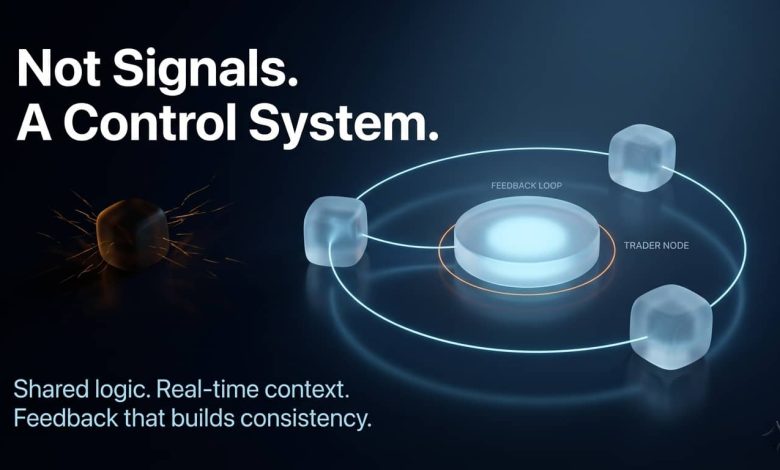
Elite crypto discord communities teach market structure, execution reasoning, and disciplined risk management, not signal dependency. For crypto prop traders, the right Discord acts as a behavioral control system, offering real time context, shared logic, and feedback loops that improve consistency, reduce emotional trading, and accelerate performance in funded challenges.
Elite Discord Communities vs. Spam Signals
I joined a Discord server at two a.m. Because someone in another group swore it was one of the best crypto discord servers out there: “best calls, high win rate, join now.” The invite link had been posted three times in ten minutes. I clicked it.
The first thing I saw was a channel called #free-signals. Seventeen messages in the last two minutes. All of them were the same format: ticker, entry, two take profits, stop loss, rocket emoji. No chart. No explanation. No context. Just the call.
I scrolled up. Same thing. I scrolled down. Same thing. Someone asked “why this setup?” No one answered. Someone else said “already in, let’s go.” The price had moved four percent since the entry was posted. No one mentioned that either.
I stayed in that server for three days. I took two trades from it. I lost both. Not because the calls were wrong. I lost because I had no idea what I was doing. I entered late. I held too long. I did not know what invalidated the setup because no one explained structure. I was just copying entries and hoping.
That server was not a community. It was noise with a member count.
The Discord I use now has sixty three people. It does not post entries. It posts structure. When someone shares a chart, three other people ask questions. Someone else explains what they are watching and what would change their mind. When a trade goes wrong, they talk about it. They do not pretend it did not happen.
That is the difference. One server made me feel busy. The other one made me better.
Why Structure and Moderation Matter More than Activity
A bad Discord feels alive because it never stops. New messages every minute. New tickers every hour. It looks like opportunity. It feels like you are in the middle of the action.
But activity is not the same as value. When a server has no moderation, no structure, and no filter, every message has the same weight. A thoughtful breakdown of market structure sits right next to LONG NOW with three fire emojis. You cannot tell what matters. You cannot tell who knows what they are talking about. You just see volume.
A good Discord is slower. It has rules. It has moderators who remove spam and block low effort posts. It has channels organized by purpose: one for analysis, one for journaling, one for questions. You do not see seventeen calls in two minutes. You see two or three real setups explained with context, structure, and invalidation.
That structure is what protects you. It keeps the noise out. It keeps you from feeling like you have to act every time someone posts a ticker. It gives you space to think instead of react.
When Discussion Replaces Dependency
In a signal spam server, you wait for someone to tell you what to do. You refresh the channel. You look for the next call. You do not learn to read the market. You learn to read the group.
That is dependency. And dependency does not survive a prop firm challenge. When the group is quiet and the market is moving, you do not know what to do. When the group posts a call and you enter late, you do not know when to exit. You are not trading. You are following.
A quality Discord does not give you calls. It gives you discussion. Someone posts a chart and says “I am watching this level because of X.” Someone else replies and says “I see that, but I also see Y, so I am waiting.” Another person says “I took this trade yesterday and it invalidated here, so now I am watching Z.”
You are not being told what to do. You are being shown how people think. You hear the reasoning. You see what they are watching and what would change their mind. You start to build judgment instead of copying entries.
That is what makes you a better trader. Not the calls. The conversation.
Navigating the Charts: Identifying High Probability Trade Scenarios
The best trade I ever skipped was one I never took. It was a clean long setup. The kind that looks perfect on the chart. Price had pulled back to a level I trusted, volume looked right, and my finger was already on the entry. In a signal spam group, this would have been a “LONG NOW” message with three rocket emojis and forty people piling in.
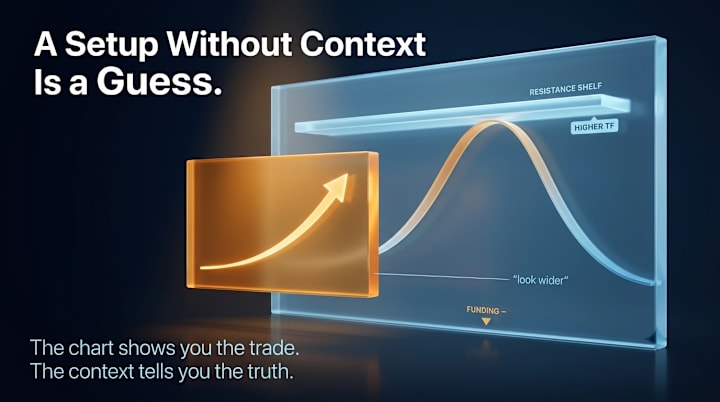
But I had posted the chart in my Discord first. And before I could enter, someone replied: “Watch the higher timeframe. There’s a major resistance fifty points above and funding just flipped negative. This rips into that level and gets sold.” I had not looked at the higher timeframe. I had not checked funding. I was looking at one chart in isolation and calling it a setup.
I waited. The price pushed up, hit that resistance almost exactly, and reversed hard. The perfect long would have stopped me out in twenty minutes.
That is what context does. It is the difference between seeing a setup and understanding it.
Why a Setup without Context is Just a Guess
Anyone can spot a pattern. A pullback to a level, a breakout, a bounce off support. These things are visible. They are easy to point at. That is exactly why signal groups are full of them.
But a pattern by itself tells you almost nothing. The same pullback that works in a strong uptrend fails completely when the higher timeframe is rolling over. The same breakout that runs in low volatility gets crushed when funding is extreme and the move is already crowded. The chart looks identical. The outcome is the opposite.
Context is what separates the two. It is the higher timeframe structure, the funding, the news, the volume, the broader market state. It is everything around the setup that tells you whether the setup actually has a reason to work.
A trader who only sees the pattern is guessing. A trader who reads the context is making a decision. In a crypto prop firm challenge, where one bad cluster of trades can end your account, guessing is not something you can afford.
How Shared Reasoning Trains Your Filter
Here is the part that matters: you do not learn context by being told the answer. You learn it by hearing how other people think.
In a good Discord, the filtering happens out loud. Someone posts a setup and explains what they are watching. Someone else points out a piece of context they missed. A third person says they passed on a similar trade last week and explains why. You are not just seeing the conclusion. You are watching the reasoning that produced it.
Over time, that reasoning becomes yours. You start asking the questions before anyone else does. You check the higher timeframe automatically. You glance at funding before you size. You ask “what would make this trade wrong” before you ask “how much can I make.” The filter that someone else used to save you from a bad long becomes a filter you run on your own.
That is the real value of a quality community. It does not hand you fish. It builds the instinct that tells you when the water is empty. And that instinct is what keeps you trading inside the rules long enough to get funded.

Learning from Funded Trader Experience and Payout Behavior
I used to think a good trader was someone who posted winning screenshots. Green P&L, a clean entry, a perfect exit. That was the image I chased.
So I joined groups full of those screenshots, and I tried to copy the people who posted them. It took me longer than it should have to notice that I never saw their losing days. I never saw the trade that went wrong, the week they gave back half their gains, or the moment they sat on their hands instead of trading. I was learning from a highlight reel and wondering why my real account did not look like it.
The first time I sat in a Discord with actual funded traders, the conversation was different. Someone posted a drawdown. Not a win, a drawdown. And instead of getting mocked, he got questions. How did you size into it? What did you do when it hit your daily soft stop? Did you stop, or did you push? That is when I understood what real experience sounds like. It is not the wins. It is everything around them.
What Consistency Looks Like in Real Accounts
Funded traders don’t just share wins. They share the parts most people hide.
They talk about the drawdowns. The mistakes. The psychological pressure of trading capital that isn’t yours, with rules that can end your account in a single bad session. They talk about the recovery phases, the slow grind back to even after a rough stretch. And that is the education. Because that is what trading a funded account actually feels like, and no winning screenshot will ever teach it to you.
This is also where payout discussions matter more than they sound like they should. When people talk openly about payouts, the whole conversation shifts. It stops being about abstract performance and becomes about measurable behavior. You stop asking what’s the best setup and start seeing what consistency actually looks like in a real capital environment. Not a perfect month. A repeatable one.
That shift, from theory to real outcomes, is the thing you cannot get from a chart by yourself.
Why Recovery Behavior Matters More than Win Rate
Passing a challenge is not a single event. It is a repetition of controlled behavior under constraint.
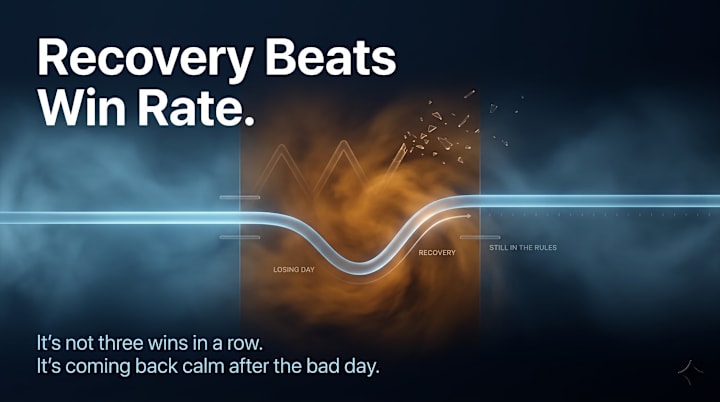
That sentence reframed the whole thing for me. I had been treating the evaluation like a test I needed to ace once. But it isn’t one good day. It is a string of days where you don’t break the rules, even when the market gives you every reason to. Prop trading is not about being right. It is about staying consistent across changing conditions, which means the trader who recovers calmly from a losing day is worth studying far more than the one who happened to win three in a row.
This is why context based thinking matters so much here. When you think in context instead of hype, you overtrade less. You get more selective. You take fewer trades, but the ones you take have a reason behind them. And that selectivity is exactly what keeps you inside the rules during an evaluation, when a single careless cluster of trades can end the whole thing.
Watching real traders handle their bad days, sharing their real outcomes, their verified payouts, their actual progress, gives you something a backtest never will: a realistic expectation of what consistency costs. Not the dream version. The real one. And once you’ve seen the real one, you stop chasing the highlight reel and start building the behavior that actually gets you funded.
How Prop Traders Actually Share Execution Logic in Professional Forums
The most useful thing I ever got from a Discord wasn’t a trade. It was a reason. For a long time I collected setups like recipes. Buy here, target there, stop below. I had pages of them. And none of them worked, because a setup without a reason is just a coincidence you’re hoping repeats.
The thing that finally changed how I traded was sitting in a room where nobody handed out instructions. They handed out logic. Someone would post an idea and the conversation wasn’t “should I take it”, it was “why does this exist, and what would prove it wrong?” That question, over and over, is what rewired how I see a chart.
In the strongest communities, a setup is never presented as a fixed instruction. It’s a conditional framework. People talk about why the setup exists, what invalidates it, and how risk gets structured around it before a single dollar is at stake. And once you start thinking that way, something shifts. Trading stops being a decision moment and becomes a decision system.
Teaching Invalidation, Not Just Entry
Anyone can tell you where to get in. Almost nobody tells you when you’re wrong.
That gap is where most accounts die. I used to take an entry and then just… hold it, hoping. I had no line where the idea was simply invalid. The good traders I watched always had that line first. Before they talked about the entry, they talked about the thing that would prove the whole idea wrong. The level. The condition. The point where you don’t argue with the market, you just leave.
For a prop trader this isn’t a nice to have. It’s survival. When your account can end from a single bad session, knowing exactly where a trade dies is what keeps a normal loss from becoming a breach. A community that teaches invalidation is teaching you how to lose small, which is the only skill that lets you stay around long enough to win.
Turning Setups into Decision Systems
The phrase that stuck with me was simple: this transforms trading from a decision moment into a decision system.
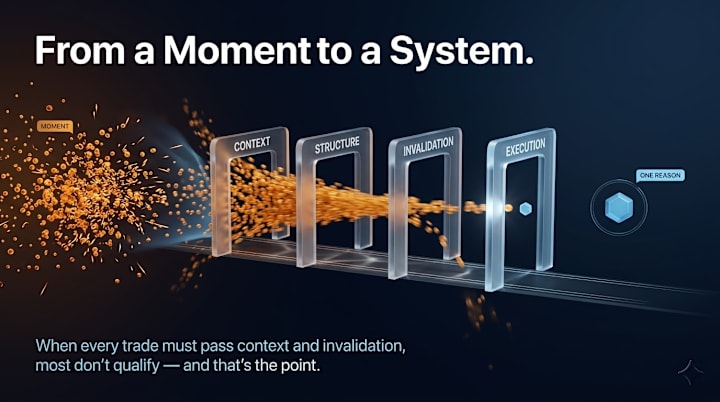
A decision moment is a gamble. You see something, you feel something, you click. A decision system is the opposite. It’s context, structure, invalidation, and execution logic stacked together so that by the time you act, the hard thinking is already done. You’re not deciding in the heat of it. You’re following a process you built when you were calm.
This is also why these communities make you trade less, not more. When every trade has to pass through context and invalidation before it earns a click, a lot of trades just don’t qualify. You get selective. And selectivity is exactly what a funded challenge rewards, fewer trades, each with a reason, each sized to respect the rules. That’s the whole game. Not finding more setups. Building a system that filters them.
The Value of a System Driven Community
Finding a community that prioritizes reasoning over blind signals is rare, especially in the high stakes environment of futures trading. After experiencing the chaos of typical signal rooms, the contrast becomes obvious when you finally step into a structured environment.
For example, observing the dynamics within communities like the CoinProp Discord highlights how professional traders actually operate. The focus there shifts entirely risk is calculated before entries are discussed, and invalidation levels are prioritized over profit targets. Nobody is selling certainty, they are sharing their analytical frameworks and market structure insights.
This is the core takeaway. A valuable community doesn’t hand you a map, it provides a mirror. It is a space where your decision making processes are sharpened by interacting with those who have already navigated the strict drawdown rules of a funded account. The specific setups will always change, but the underlying reasoning is what builds a lasting career.
If you are trading in isolation, you might be missing the one crucial question that can save a session: why are you taking this trade? Finding a space that constantly asks this question, and filters out the noise, is the first step toward genuine consistency.
Disclaimer: The information provided in this article is for educational purposes only and does not constitute financial or investment advice. Cryptocurrency trading involves significant risk.