Why political debate still matters in Kansas
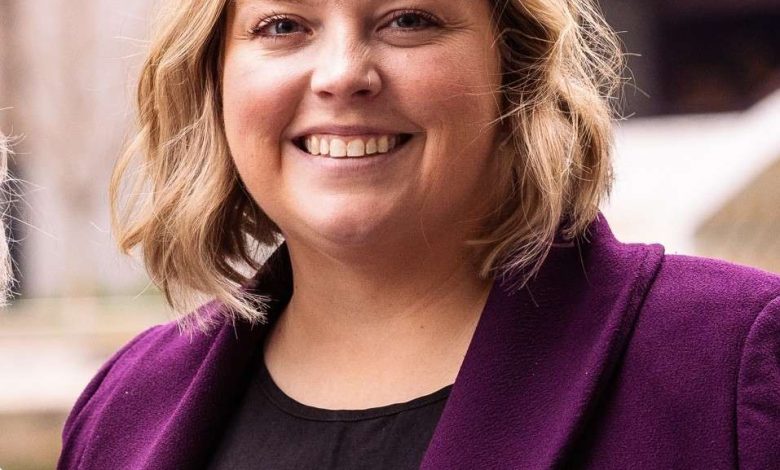
By ALEXANDRA MIDDLEWOOD
Insight Kansas
Kansas was born arguing.
Before it became a state, before there was a capitol dome in Topeka, the Kansas Territory was consumed by a defining question: whether it would enter the Union free or slave. That struggle played out through elections, conventions, newspapers, and public meetings, giving rise to some of the most consequential debates in American history.
The era came to be known as “Bleeding Kansas,” a reminder not of heroism, but of how fragile democracy can be when institutions fail and conflict overwhelms deliberation. At its core, the dispute was about who would govern and how freedom would be defined.
That history should still matter today, because Kansas is once again growing quieter—and not in a good way.
What ultimately redeemed Kansas then, and what can redeem us now, was a commitment to deliberation rather than domination. Free‑state advocates rejected the idea that power alone should determine the character of government. They insisted that argument, persuasion, and public reasoning mattered—even when doing so was slow, frustrating and uncertain.
Kansas does not need quieter citizens or faster legislatures. It needs the kind of civic courage our founders practiced—not with rifles or fists, but with words.
The lesson is not to sentimentalize conflict. Bleeding Kansas was a warning, not a blueprint. But neither should we forget what it revealed: that democracy is pluralistic by nature, and that forcing unanimity—whether through intimidation, procedure or silence—betrays the very idea of a republic.
Democracy thrives on argument; sometimes uncomfortable, often messy, but always necessary. In Kansas, a state that prides itself on pragmatic independence and neighborly debate, our democratic muscles are quietly atrophying.
The erosion is happening in two places at once: among citizens who increasingly self‑censor, and inside the statehouse, where procedural maneuvering has replaced deliberation.
Kansans are talking less to one another about politics, and not because disagreements have disappeared, but because the cost of disagreement feels too high.
In workplaces, churches, and family gatherings, many people avoid political discussion out of fear of being “canceled,” misinterpreted, or written off entirely.
But democracy cannot function on tiptoe. Self‑government depends on citizens who are willing to argue—civilly, imperfectly and in public.
This same troubling retreat from debate is visible inside the Kansas legislature.
In the recent session, the supermajority pushed sweeping bills and veto-overrides through the process with remarkable speed, often using procedural maneuvers to limit discussion. One particularly problematic tactic was the use of an opaque rule allowing any member of either chamber to end debate immediately and force a vote.
This is a fundamental manipulation of the legislative process: it silences dissent, the opportunity to question and policy improvements in favor of unquestioned authority.
Legislative debate exists for a reason. It is how representatives explain legislation to the public, surface unintended consequences, offer amendments, and place concerns into the official record. Debate is not an inconvenience to democracy; it is the mechanism by which democracy proves itself legitimate.
Cutting off debate may secure a political win, but it costs legitimacy. Democracy erodes when those in power answer criticism by cutting off the microphone.
That message travels far beyond the limestone halls in Topeka.
Citizens take cues from institutional behavior; what happens in the statehouse shapes what happens around the dinner table. When legislators model contempt for debate, citizens learn that speaking up is pointless. When discussion is treated as obstruction, disagreement becomes something to avoid rather than navigate.
What has been forgotten is that debate does not weaken democracy; it disciplines it.
For citizens, that means reclaiming the courage to talk politics in good faith—to ask questions, admit uncertainty and allow disagreement without exile.
For lawmakers, it means respecting not only votes but voices, and understanding that the process of governing matters just as much as the result.
Democracy here began with the willingness to speak up. It will only survive if we are willing to argue again, in good faith, out loud and on the record. The survival of democracy will be decided not by how quickly we legislate, but by whether we still believe debate is worth having.
In a state forged by the fight to be free, silence has never been neutral.
Alexandra Middlewood, PhD, is an associate professor and chair of the Political Science Department at Wichita State University.
Credit: Source link