With primary looming, CT politicians eye housing. Where they differ
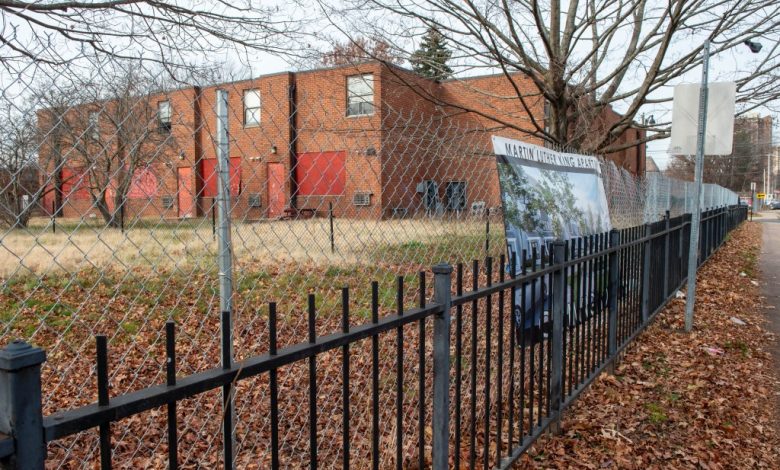
One of the longest-running, far-reaching and intractable problems in Connecticut is affordable housing.
Housing has been a gnarly and frustrating problem for a long time — despite persistent efforts by politicians that they have been working on the issue.
The issue flashed over at the state legislature over the past year as Gov. Ned Lamont vetoed a high-profile housing bill before making changes on a new version that he later signed into law.
Now, as Lamont seeks re-election to his third term, he and his opponents are placing a spotlight on the issue as Greater Hartford remains one of the hottest housing markets in the country.
Realtor.com, which oversees the national rankings, says Greater Hartford’s median listing price of $475,000 makes it an attractive alternative to sky-high prices of nearly $850,000 in Boston and $775,000 in New York.
“We’re building more housing today than any time in the last 20 years or so,” Lamont said. “A lot of people want to be here in Connecticut. … Today, our cities are growing again, and that’s part of our plan for the state.”
Lamont and state Rep. Josh Elliott of Hamden, who are facing off in a Democratic primary on August 11, recently participated in a virtual forum that was sponsored by the independent Regional Plan Association on housing, transportation, and related issues. The Republican nominee, Sen. Ryan Fazio of Greenwich, will appear separately on July 9.
Lamont said the state is moving forward with the new housing law on a difficult, multi-faceted issue that does not have simple solutions.
“This bill had buy-in from mayors and first selectmen,” Lamont said. “The first round, we really didn’t have mayors and first selectmen on board. So far, it’s working. It’s not just our big cities. Even Darien and Wilton, they had more new housing construction – multi-family included – per capita than they’ve ever had before. … I think we’re making progress, but I’m running again because we’ve got a way to go.”
One of the biggest changes in the new law is that developers will be allowed to build “as of right” when converting commercial buildings into housing. That means they can largely avoid the traditional oversight of planning and zoning commissions that could block proposals in the midst of local opposition. For commercial properties to be changed to residential, the developers still must submit plans to the town that must be signed off by the local planning, engineering, and zoning departments, lawmakers said.
“We’re speeding up permitting … especially in commercial areas,” Lamont said. “Hartford, that region, is one of the hottest in the country right now.”
Elliott, who co-sponsored the original bill that Lamont vetoed, says that the two candidates differ on multiple areas like housing and the related issue of transportation.
“The big distinction between myself and Ned Lamont is Ned Lamont is a status quo manager, where I am a reformer,” Elliott said.
Jobs and transportation are highly inter-related as many workers want to live as closely as possible to their jobs in order to cut down on the commuting time and expense.
Lamont’s plan for electronic highway tolls was “a massive failure” that turned out to be highly unpopular and never passed in the legislature, Elliott said.
“I am still pro-tolls, even 10 years later or eight years later, however long it is,” Elliott said. “What I think it needed was a better messenger. … I do want to specify that tolls are regressive. As part of my overall tax package, I do not think the tolls are the end-all, be-all.”
The problem and the irony, he said, is Connecticut has underfunding problems in certain areas at the same time that “we have some of the wealthiest people who have ever existed in the history of our planet.”
At the same time, a large percentage of the population is living paycheck to paycheck, including some families earning more than $100,000 per year.
“The age of a first-time homebuyer is now 40 years old,” Elliott said. “We are dismantling the middle class.”
The answer, Elliott said, is “I would eliminate the property tax alone, and have one tax and one tax alone, and that would be the income tax.”
On the Republican side, Fazio has made housing – along with electricity prices and other issues – among the core issues of his campaign.
In a 60-second commercial, Fazio recently stood in front of nine different homes with “for sale” signs in Stratford within one square mile.
“You can’t make this stuff up,” Fazio says into the camera. “They’re leaving Connecticut because the cost of living has just gotten too damn high under eight years of Governor Lamont. That’s why I’m running for governor. This state deserves nothing but the best. As your governor, I’ll cap property taxes, which have spiraled out of control on Governor Lamont’s watch. It’s about time we had leadership that made Connecticut affordable for everybody and finally turned those moving vans around.”
Fazio has described the housing law as “the most significant affront to local control that our state has seen in a generation.”

Housing battles
Battles are taking place across the state as developers are seeking construction that local residents often oppose.
CT senior living complex triggers debate with plan for 40-unit expansion. Housing vs. environment.
In the Farmington Valley suburb of Simsbury, residents are staunchly opposed to a plan for 669 new units at the former site of The Hartford insurance company. The firm’s gigantic, 640,000-square-foot office building, which opened in 1984 and once housed as many as 3,000 employees in its heyday, has been torn down in an area overlooking the Farmington River and the famed Heublein Tower that is visible above the property.
New Jersey-based Silverman Group has proposed the largest residential project in the town’s history with 17 three- and four-story apartment buildings, 27 duplexes and 19 single-family homes that would rent for at least $5,000 per month.
At public hearings, Simsbury residents have blasted the plan regarding increased traffic, overdevelopment, and a large increase in public education costs due to the children who would be living in hundreds of new units.
While Connecticut has had high housing prices for decades, officials said the affordability issue has become particularly acute for young homebuyers as prices have skyrocketed since the coronavirus pandemic.

With inventories low, prices have jumped up exponentially in recent years as buyers have scrambled for condominiums and homes after they have been out-bid by more well-heeled buyers. The bidding has prompted buyers to pay above the asking price for Greenwich mansions to New Haven condominiums to Greater Hartford homes.
Transportation
While he has backed away from his previous proposal for tolls, Lamont says Connecticut needs to make moves to improve the buses and railroads. Critics complain that the state’s disjointed bus systems often do not connect to each other, and independent bus districts need to be better coordinated.
“Fewer and fewer people have cars,” Lamont said. “Here’s what I did in COVID : I made buses free.”
As a small state, Connecticut needs to improve its rail system to speed up the trains that cannot match the famed “bullet trains” in other countries, he said.
“Amtrak slows down when it goes through Connecticut,” Lamont said. “We have more twists and turns. … We’re not China. … All these trains slow down.”
Regarding the state’s aging highway infrastructure, he said, “All these bridges seem to have been built by Teddy Roosevelt and William McKinley.”
In order to improve the Metro-North Commuter Railroad branch line, Lamont said, “We’re actually shutting down the Waterbury line because we can rebuild those train stations in half the time at half the cost. …That’s the balance we’re trying to get.”
More units needed
From Greenwich to Granby, Connecticut is searching for ways to construct additional housing to address a critical shortage estimated between 100,000 to 300,000 units.
Through the 1990s and up to 2007, Connecticut saw in the neighborhood of 10,000 housing permits per year before a sharp drop off. By 2010, the number hovered around 3,000 and then slowly increased. In 2024, data from the state’s economic development department shows there were 6,840 permits for housing.
Even though the state’s population has not been increasing rapidly, state officials say that more housing units are needed because of the changing demographics in the housing world.
“We were a state that was shrinking for many years – and getting older,” Lamont said. “One of the reasons we have this housing issue is more and more people are living alone.”
Lamont, 72, says that when he was growing up, about 10% of people lived alone. “Now, it’s about 30%,” he said. “People marry a lot later, and they live a lot longer.”
In recent decades, the demographics have shifted sharply as elderly residents are living longer than in the past. U.S. Census data that was released in 2023 showed that nearly 28% of American households had only one person, which represented a jump of nearly four times from 1940 at 7.7%. The trend has continued to increase in each decade for the past 80 years.
With those shifts, more apartments and homes are needed in Connecticut even if the overall population is not skyrocketing.
In addition, Lamont said residents across the state should not be concerned about the words “affordable housing,” which varies from town to town depending on the income level in a particular area.
“Don’t get this harmful stereotype of affordable housing,” Lamont said. “It can be beautiful.”
Credit: Source link