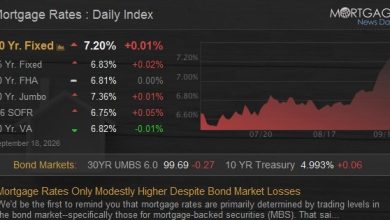
When Fed Chair Kevin Warsh lifts rates for the first time in three years and 10 year Treasury yields push back above 5%, the shockwaves do not stop at the bond market. They ripple through broker dealers and trading desks that live off volatility. That is where the potential opening sits for you. This piece walks through three stocks from our US Broker Dealers and Market Makers Exposed to Bond Market Volatility screener that could be positioned on the right side of this policy shift.
The stocks covered below are just a sample, and the full screen surfaced 20 more broker-dealers and trading firms with equally compelling stories around bond market exposure that are not discussed in this article. If you want to go straight to the source and identify, compare, and analyze potential high-conviction ideas, head into the US Broker-Dealers and Market Makers Exposed to Bond Market Volatility screener.
Overview: MarketAxess Holdings runs a global electronic marketplace that connects institutional investors and broker-dealers to trade a wide range of bonds.
Operations: MarketAxess generates about US$870 million from end to end trading solutions, with revenue mainly from the US, UK and other international markets.
Market Cap: US$5.7b
MarketAxess matters in this screener because it is effectively a pure play on electronic bond trading, so swings in fixed income volatility feed directly into how valuable its platform is for institutions hunting liquidity when rates move.
“Persistent migration from manual and phone-based trading to electronic execution, especially targeting large block trades, which are still primarily handled offline, positions MarketAxess to capture significant incremental volume as these trades move onto its platform, driving both top-line growth and operating leverage as fixed-cost technology infrastructure is increasingly utilized.”
What really could move the needle is how one unresolved competitive pressure ultimately feeds through into pricing power and long term margin resilience.
If that pricing power story is what you care about, read the full narrative for MarketAxess Holdings to see how bond volatility, competition and margins could be decoupling.
NasdaqGS:MKTX P/E Ratio as at Sep 2026
Overview: Virtu Financial is a global market maker and execution platform that matches buyers and sellers across bonds, ETFs and other securities when trading heats up.
Operations: Virtu generates about US$2.7b from Market Making and roughly US$700 million from Execution Services, with most activity in the United States.
Market Cap: US$8.9b
Virtu Financial matters for this bond volatility screen because its trading engine effectively sits on the fault line where swings in Treasuries, ETFs and other fixed income products turn into wider spreads and heavier flows.
“Rising volatility in the markets, fueled by ongoing geopolitical and macroeconomic shifts, is associated with wider trading spreads and increased client activity, which can support higher trading revenues and net margins for Virtu.”
What really shapes the opportunity now is how one funding and leverage decision ultimately filters through to the durability of those wider margins.
That funding call is only the start, and the full narrative for Virtu Financial shows how Virtu Financial’s leverage, volatility sensitivity and capital return plans could be quietly accelerating the story.
NYSE:VIRT 1-Year Stock Price Chart
Overview: Marex Group runs a global trading and clearing platform that provides liquidity, market access, and risk management across commodities, rates, and derivatives.
Operations: Marex Group generates about US$1.22b from Agency and Execution, US$774 million from Clearing, and US$381 million from Market Making, with meaningful contributions from Hedging and Investment Solutions.
Market Cap: US$5.3b
Marex Group matters in this screen because its clearing, agency, and market making engines plug directly into bond and derivatives activity when rate volatility picks up.
“Ongoing M&A activity, particularly the transformative Winterflood acquisition and a robust pipeline of smaller deals, will drive both revenue and margin synergies through product/geographic diversification, cross-selling, and operational scale. This is expected to positively impact topline and earnings stability.”
The real swing factor is how pressure on funding and balance sheet flexibility ultimately shapes the durability of those higher margins.
That balance sheet question is exactly why the full narrative for Marex Group goes deeper into how Marex Group’s funding choices could be masking a far more powerful earnings engine.
NasdaqGS:MRX Revenue & Expenses Breakdown as at Sep 2026
Curious About What You Might Be Missing?
Fresh ideas move first. Breakout momentum, under the radar for now, can get caught quickly as prices start flying. Scan these focused shortlists while it matters and consider your options.
This article by Simply Wall St is general in nature. We provide commentary based on historical data and analyst forecasts only using an unbiased methodology and our articles are not intended to be financial advice. It does not constitute a recommendation to buy or sell any stock, and does not take account of your objectives, or your financial situation. We aim to bring you long-term focused analysis driven by fundamental data. Note that our analysis may not factor in the latest price-sensitive company announcements or qualitative material. Simply Wall St has no position in any stocks mentioned.