Brazil Crypto Transfer Regulation Imposes 24-Hour Transfer Delay
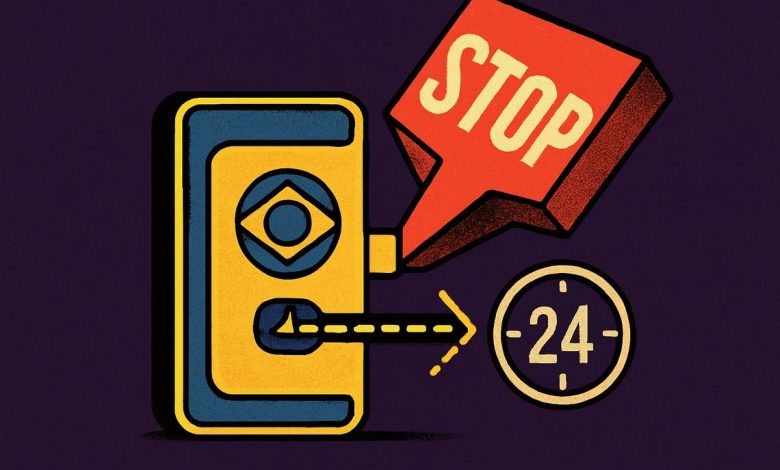
Brazil is about to make crypto transfers a little slower — and a lot more scrutinized. Starting in 2027, anyone sending crypto abroad or into a personal wallet from a Brazilian exchange will have to wait a full day before the funds move. The new Brazil crypto transfer regulation comes from the country’s central bank, which says the delay is meant to give exchanges a window to catch fraud before stolen or scammed funds disappear across borders.
Key takeaways
- Brazil’s central bank will require crypto firms to hold certain outbound transfers for 24 hours after a customer funds their account.
- The rule, published under Resolution BCB No. 584/2026 on August 7, takes effect January 1, 2027.
- It applies to transfers to self-custody wallets or foreign crypto firms once a single transaction or daily total tops $10,000 in crypto or stablecoins.
- Smaller transfers can still be delayed if an exchange’s risk controls flag them as suspicious.
- Exchanges can release funds early if a risk review clears the transaction, but they must document the decision and notify the customer.
New 24-hour waiting period for crypto transfers in Brazil
Brazil’s central bank will force crypto exchanges to sit on certain customer transfers for up to a day before letting the money leave the platform. The rule targets a specific moment: when a customer deposits reais or crypto with an exchange and then tries to move those funds either abroad or to a wallet under their own control. According to CoinDesk, the measure was published on August 7 as Resolution BCB No. 584/2026, and it directly responds to concerns that criminals are using crypto — including stablecoins — to whisk away fraud proceeds before victims or banks can claw them back.
Scope of affected transfers
The hold doesn’t apply to every transaction on a Brazilian exchange. It kicks in specifically for transfers heading to self-custody wallets or to crypto firms based outside Brazil. Money staying within a regulated domestic platform, or transfers between accounts on the same exchange, fall outside this particular crypto transfer delay Brazil requirement. That narrower scope suggests the central bank is less worried about routine trading and more focused on the exit points where funds become harder to trace or recover.
Thresholds and risk-based exceptions
Size matters here, but so does behavior. The 24-hour hold automatically applies once a single transfer, or the combined total of several transfers in one day, crosses the equivalent of $10,000 in crypto or stablecoins. That’s a straightforward dollar-value trigger. But the rule also leaves room for judgment calls: even transfers well below that threshold can be delayed if an exchange’s internal risk controls flag them as suspicious, based on factors like the customer, the transaction itself, the counterparty, or the destination jurisdiction.
This is where the regulation shifts real responsibility onto exchanges themselves. Rather than applying a blanket rule to everyone, platforms are being asked to build out — or lean harder on — their own fraud-detection systems. The central bank isn’t dictating exact criteria for what counts as “risky,” which gives exchanges flexibility but also puts pressure on them to get the call right.
Implementation timeline and regulatory context
The rule doesn’t land immediately — exchanges have roughly a year and a half to prepare before enforcement begins. That runway matters for platforms that need to rebuild transfer workflows, customer notifications, and internal risk-scoring tools from scratch.
Effective date of the new rule
The measure takes effect on January 1, 2027. Until then, crypto firms operating in Brazil can process outbound transfers under existing rules, but they’ll need that lead time to adapt systems ahead of the deadline. The hold itself isn’t necessarily a full day in every case — exchanges can release a flagged transfer sooner if their own review turns up no evidence of wrongdoing, though they’re required to document that decision and tell the customer their transaction was placed on hold in the first place.
Objectives behind the regulation
Why go through the trouble of slowing down legitimate crypto users to catch bad actors? The central bank’s reasoning centers on timing. Fraud victims typically discover they’ve been scammed hours or days after the money has already moved — by which point funds sent abroad or into a self-custody wallet are effectively gone. A 24-hour buffer gives banks, exchanges, and victims a fighting chance to intervene before that happens.
This is one of the moments where the broader stakes come into focus: Brazil is essentially betting that a short delay on the back end will outweigh the friction it creates on the front end. For an industry that has spent years selling instant, borderless transfers as one of crypto’s core advantages, that’s a meaningful trade-off. It also signals where regulators are increasingly aiming their attention — not at trading activity itself, but at the exit ramps where stolen funds slip out of reach.
Not everyone in Brazil’s crypto industry sees the trade-off as painless. Regina Pedroso, president of Brazilian tokenization group Abtoken, told local outlet Portal do Bitcoin that the policy could impose costs on legitimate users while weakening the competitiveness of domestic exchanges against platforms operating outside Brazil’s jurisdiction. That tension — between fraud prevention and user friction — is likely to shape how the rule is received as its effective date approaches.
For now, the broader question is whether other regulators watching Brazil’s approach to stablecoin transfer compliance decide to follow suit, or whether the friction pushes users and volume toward exchanges operating outside the country’s reach.
FAQ
What transfers are subject to the 24-hour waiting period under Brazil’s new crypto regulation?
Transfers to self-custody wallets or foreign crypto firms where the single transfer or daily total exceeds $10,000 in crypto or stablecoins, as well as smaller transfers flagged by risk controls.
When does the new 24-hour waiting rule for crypto transfers in Brazil take effect?
The rule takes effect on January 1, 2027.
Are all crypto transfers delayed under the new regulation by Brazil’s central bank?
No, only transfers exceeding $10,000 or smaller transfers flagged as risky by the firms’ risk controls are subject to the 24-hour delay.
Why has Brazil’s central bank introduced this crypto transfer delay rule?
To increase oversight and risk management of crypto transactions, particularly to curb fraud by delaying transfers abroad or to self-custody wallets.
Article produced with the assistance of artificial intelligence and reviewed by the editorial team.