Adidas And 2 Global Stocks Facing Tariff Risk And Margin Pressure

Fresh U.S. tariff proposals of up to 12.5% on imports from 60 economies are reshaping the risk profile for globally exposed stocks, especially those tied to complex cross border supply chains. With partial exemptions for electronics and AI related products, some areas may find a softer landing while others face higher costs and potential pressure on margins. This article focuses on three stocks that appear negatively exposed to the latest trade policy headlines and explains how these tariff moves, along with the early signs of potential de escalation talks, could matter for your portfolio decisions.
Li Ning (SEHK:2331)
Overview: Li Ning (SEHK:2331) is a Beijing based sportswear company that designs, manufactures, and sells branded athletic footwear, apparel, equipment, and accessories, mainly under the LI NING label, across China and selected international markets, both online and through a network of branded stores and outlets.
Operations: Li Ning generates essentially all of its CN¥29.6b revenue from sporting goods, with about CN¥29.2b coming from the People’s Republic of China and roughly CN¥0.4b from other regions.
Market Cap: HK$41.9b
Investors watching trade sensitive stocks should pay close attention to Li Ning because its China centric supply chain and large apparel export exposure leave it squarely in the firing line of proposed U.S. tariffs of up to 12.5% on goods from countries without full forced labor bans. Textiles are not among the sectors expected to get major exemptions. At the same time, Li Ning is investing heavily in digital channels and Olympic partnerships, yet earnings recently slipped and margins have come under pressure, even as some valuation models and analyst targets imply meaningful upside from the current share price. That mix of tariff risk, slowing profitability, and an apparently attractive valuation setup is where the real story begins for this stock.
Li Ning’s tariff exposure, slipping earnings, and pressured margins could be masking deeper fault lines in the investment case. Before assuming the current share price is a bargain, read the 2 key rewards and 1 important warning sign.
Baidu (BIDU)
Overview: Baidu (NasdaqGS:BIDU) is a Beijing based technology company best known for its Chinese language search engine, while also running AI powered cloud services, autonomous driving platforms, and online entertainment through its iQIYI video streaming business.
Operations: Baidu generates about CN¥103.0b from its Baidu General Business segment and CN¥26.3b from iQIYI. Essentially all of its CN¥128.7b revenue comes from the People’s Republic of China.
Market Cap: US$38.0b
Investors may focus on Baidu because its push into AI agents, cloud and robotaxis is occurring alongside heavy spending, thin 0.3% net margins, a recent CN¥16.5b one off loss, and fresh U.S. tariff and geopolitical scrutiny that could influence sentiment even if some AI products are exempt. The company’s core AI powered businesses are expanding, while earnings have declined and funding relies entirely on higher risk external borrowing. This creates a delicate balance between expectations for future AI driven opportunities and the current financial pressures on the business.
Baidu’s thin 0.3% net margin and reliance on external borrowing suggest the AI story could be masking tougher questions about financial resilience. Before sentiment really shifts, read the 1 key reward and 2 important warning signs

adidas (XTRA:ADS)
Overview: adidas (XTRA:ADS) designs and sells sports footwear, apparel, and accessories under brands such as adidas, adidas Golf, and Five Ten, serving athletes and lifestyle customers through wholesale partners, its own stores, and e-commerce across Europe, Greater China, North America, Latin America, Japan, South Korea, and other markets.
Operations: adidas generates about €8.2b of revenue in Europe, €5.1b in North America, €3.7b in Greater China, €3.5b in Emerging Markets, €3.1b in Latin America, and €1.4b in Japan/South Korea, plus a €123m segment adjustment.
Market Cap: €31.2b
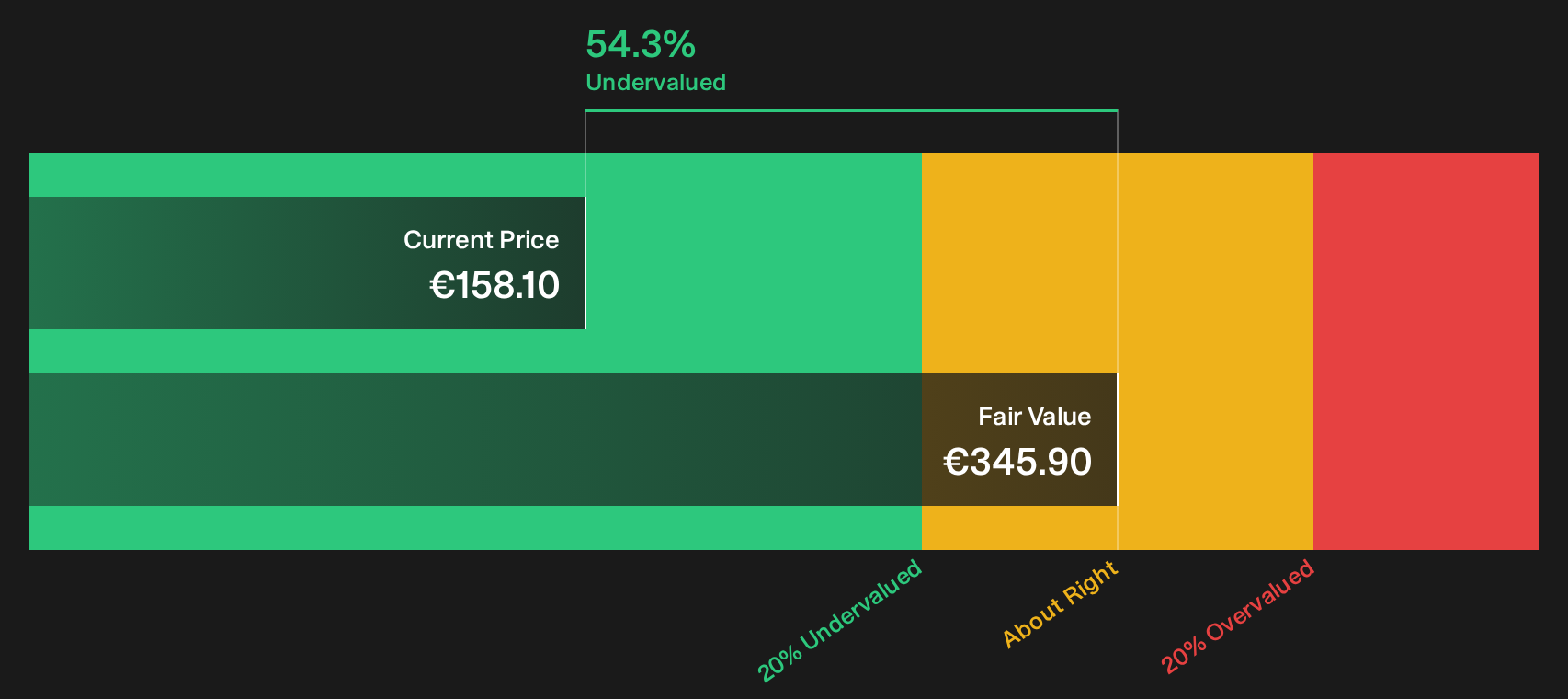
adidas sits at the heart of the new tariff story, with heavy sourcing from Asia, an already sizeable tariff bill, and management flagging more than €200m in tariff headwinds in 2026 that are proving hard to pass through to U.S. consumers in a highly discounted market. At the same time, the stock screens as substantially undervalued versus some fair value estimates, with high current and forecast returns on equity and solid recent earnings growth drawing in analysts who point to World Cup exposure and direct to consumer momentum. Investors weighing that apparent value against rising import costs, margin pressure, and fashion cycle risk may find that the new U.S. proposal shifts the balance from opportunity toward caution.
adidas’ tariff bill, margin strain, and “undervalued” label could be masking a tougher story for future profitability. Before treating this as a simple discount, unpack the analysis report for adidas
Take Control of Your Investment Journey
If Li Ning or any of these companies are making you feel more cautious, register for FREE with Simply Wall St and add your companies to a Watchlist to monitor the share price against the fair value and track any new developments as they happen.
Once you’ve made your move, manage your holdings with our Portfolio Command Center that filters out the noise to deliver only the most critical, actionable updates.
Throughout your journey, our Community allows you to filter the best ideas from thousands of investor perspectives.
By uncovering hidden catalysts and risks early, you’ll accelerate your decision-making and stay one step ahead of the market.
Seeking Alternatives Before The Crowd Moves?
Fresh tariff headlines have investors jumping between fear and FOMO while newer ideas start building quiet momentum under the radar for now. Consider evaluating options early instead of reacting later.
This article by Simply Wall St is general in nature. We provide commentary based on historical data
and analyst forecasts only using an unbiased methodology and our articles are not intended to be financial advice. It does not constitute a recommendation to buy or sell any stock, and does not take account of your objectives, or your
financial situation. We aim to bring you long-term focused analysis driven by fundamental data.
Note that our analysis may not factor in the latest price-sensitive company announcements or qualitative material.
Simply Wall St has no position in any stocks mentioned.
New: AI Stock Screener & Alerts
Our new AI Stock Screener scans the market every day to uncover opportunities.
• Dividend Powerhouses (3%+ Yield)
• Undervalued Small Caps with Insider Buying
• High growth Tech and AI Companies
Or build your own from over 50 metrics.
Have feedback on this article? Concerned about the content? Get in touch with us directly. Alternatively, email editorial-team@simplywallst.com