Britain’s Health Crisis Is Becoming a Political Crisis
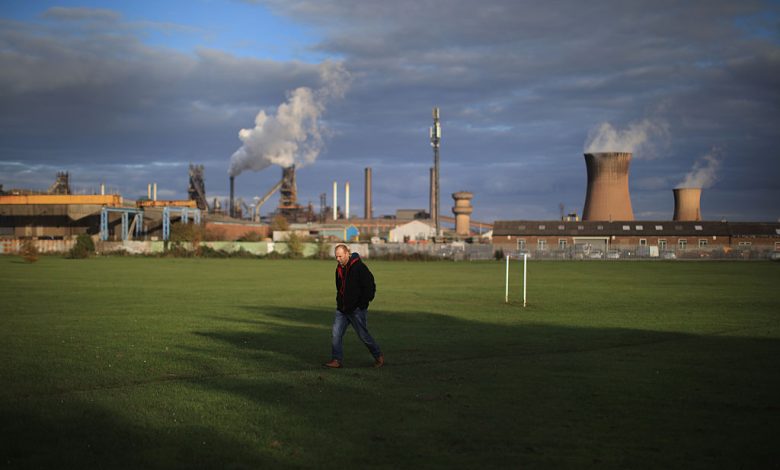
Britain’s geography of poor health is stark. Places subjected to deindustrialization, poverty, and economic insecurity have carried a disproportionate burden of illness for decades. Indeed, research on Britain’s former coalfields, for example, has repeatedly identified persistent health deficits in communities left behind by manufactured industrial collapse.
Recent research examining deaths from suicide, drugs, and alcohol in former mining communities in England and Wales found elevated mortality even after contemporary deprivation was taken into account. This matters because economic abandonment does not simply remove a wage packet. When an industry disappears, it can take with it the institutions anchored around it: trade unions, social clubs, apprenticeships, commercial centers, community organizations, and, eventually, younger generations themselves.
Local tax bases weaken; public services contract; high streets empty; employment becomes more precarious. What begins as an economic shock becomes a social environment. The social environment, of course, in turn becomes a lived reality.
For years, political scientists have attempted to explain the growth of the populist and radical right through two competing stories. One emphasizes material insecurity: deindustrialization, unemployment, austerity, and declining economic status. The other emphasizes cultural backlash: immigration, identity, and changing social values. The division has always been somewhat artificial. Economic insecurity changes how people experience social change; cultural resentment provides a language through which economic insecurity can be interpreted. Yet there is another neglected explanation: health.
In 2021, Nolan Kavanagh, Anil Menon, and Justin Heinze analyzed every wave of the European Social Survey between 2002 and 2020. Their findings were striking. Respondents reporting worse health were significantly more likely to vote for right-wing populist parties. The association persisted after accounting for measures of economic vulnerability, cultural attitudes, life satisfaction, and satisfaction with the health system.
Britain now has its own version of this finding. Anthony Laverty and Nicholas Hopkinson examined all 543 English constituencies following the 2024 general election. Constituencies electing Reform UK members of Parliament recorded the highest average prevalence of fifteen of the twenty health conditions studied. More important, across England, Reform vote share remained associated with several markers of poor health after adjustment for age, sex, and deprivation.
A 10 percentage point increase in Reform vote share was associated with a 0.261 percentage point higher prevalence of chronic obstructive pulmonary disease, a 0.113 percentage point increase in asthma, and a 1.479 percentage point increase in obesity.
Yet we must resist the temptation to be reductionist in these findings. It is not simply that as people become sick, they move to the radical right. That conclusion would be both scientifically weak and politically confused. The English study is ecological. It tells us about constituencies, not the motivations of individual voters. The European research demonstrates an individual-level association, but association is not destiny. Neither proves that illness somehow creates authoritarian attitudes. But there is a question, if we scratch beneath the surface, that proves more useful and operationalizable: What if the forces producing poor health are also producing political revolt?
Credit: Source link