Fidelity Healthcare ETF vs. iShares Pharma Fund: Which Wins?
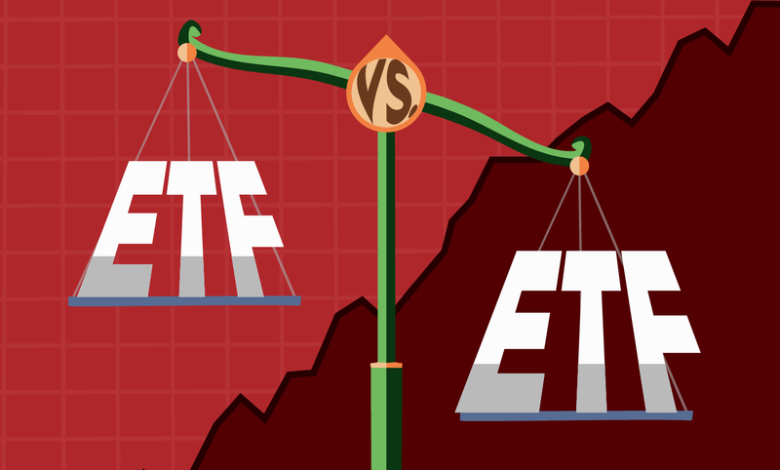
While Fidelity MSCI Health Care Index ETF (FHLC -0.20%) provides broad healthcare exposure at a very low cost, iShares U.S. Pharmaceuticals ETF (IHE +0.01%) offers a concentrated focus on the domestic pharmaceutical sector for investors seeking industry-specific depth.
Investors looking to capitalize on medical innovation often choose between broad sector funds and specialized industry niches. This comparison explores how the diversified Fidelity fund compares against the targeted iShares pharmaceutical fund, assessing whether broader diversification or sector concentration better suits specific portfolio objectives within the American healthcare market. The choice often hinges on whether an investor wants exposure to medical devices and services or just pure-play drug manufacturers.
Snapshot (cost & size)
| Metric | IHE | FHLC |
|---|---|---|
| Issuer | iShares | Fidelity |
| Share price (as of Aug. 10, 2026) | $103.86 | $81.90 |
| Expense ratio | 0.37% | 0.08% |
| 1-year return (as of Aug. 10, 2026) | 60% | 33.7% |
| Dividend yield | 1.4% | 1.3% |
| Beta | 0.48 | 0.60 |
| AUM | $1.6 billion | $3.3 billion |
Beta measures price volatility relative to the S&P 500; beta is calculated from monthly returns over the available fund history (up to five years). The 1-year return represents total return over the trailing 12 months. Dividend yield is the trailing-12-month distribution yield.
The Fidelity fund is significantly more affordable for long-term investors, carrying an expense ratio of 0.08% compared to the 0.37% charged by the iShares ETF.
Performance & risk comparison
| Metric | IHE | FHLC |
|---|---|---|
| Max drawdown (5 year) | (16.0%) | (17.7%) |
| Growth of $1,000 over 5 years (total return) | $1,781 | $1,339 |
What’s inside
Fidelity’s fund provides a broad sweep of the healthcare landscape, diversifying across 338 holdings to minimize individual stock risk. Its largest positions include Eli Lilly (LLY -0.92%) at 13.45%, Johnson & Johnson (JNJ +0.47%) at 8.82%, and AbbVie (ABBV +0.83%) at 6.15%. It was launched in 2013 and tracks a healthcare index. The fund has paid $1.02 per share over the trailing 12 months.
The iShares ETF offers a narrower investment lens, focusing solely on domestic pharmaceutical companies, with a total of 56 holdings. The fund’s allocation is 100% healthcare, excluding medical equipment or biotech-only companies. Its largest positions include Johnson & Johnson at 22.16%, Eli Lilly at 21.27%, and Bristol Myers Squibb (BMY +1.49%) at 4.75%. It was launched in 2006 and replicates a benchmark of pharmaceutical equities. The fund has paid $1.47 per share over the trailing 12 months.
For more guidance on ETF investing, check out the full guide at this link.
Which looks like the better buy?
Fidelity MSCI Health Care Index ETF has a couple of notable facets that make it stand out compared to the iShares fund. For one, the former’s expense ratio is 29 basis points lower than its peer’s. Furthermore, FHLC’s portfolio holds more than 300 stocks. That diversification helps to reduce investors’ exposure to risk. Apart from the top five holdings, the rest of the Fidelity fund’s positions all weigh in at under 4%, so you’re getting real diversity. That said, it is worth mentioning Eli Lilly, its largest position, accounts for 13% of the portfolio.
On the other hand, the iShares ETF has significantly fewer holdings, with only 56 equities. Fewer stocks means less diversification, obviously, but there’s an even bigger risk that leaps out when looking at IHE’s portfolio: concentration risk. Healthcare juggernauts Eli Lilly and J&J account for more than 20% of the portfolio each. A bit of simple math shows the top five stocks in IHE account for roughly 57% of the portfolio. The top 10 make up 75%. So your returns are going to be driven by just a handful of companies.
FHLC looks like the better buy to me. It has lower recent returns, sure, but past performance is no indication of future results. Plus, the fund’s expense ratio is attractive, and its portfolio offers real diversity, which is kind of the whole point of owning an ETF. The concentration risk in IHE’s portfolio makes it a nonstarter for this investor.