Gold rebounds as markets eye Middle East agreement framework
Gold prices climbed for a third straight session, rising to their highest level since the start of the month, as investors reacted to signs of a possible agreement framework between the United States and Iran that could lead to the reopening of the Strait of Hormuz.
The rebound comes after a volatile stretch for bullion, with markets trying to price in shifting geopolitical risks, central bank policy expectations and changing investor demand across both international and domestic markets.
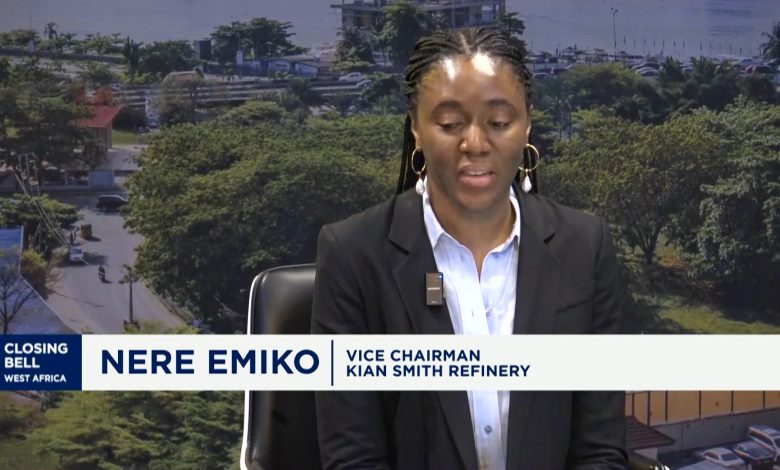
Speaking in a television interview, Naremiko, vice chair at Kent Smith Refinery, said the market’s immediate reaction to the latest Middle East developments had been constructive, with gold posting a roughly 2% gain on the day. She said the move was encouraging, particularly if the Strait of Hormuz reopens as expected and no further disruptions emerge.
“I think for today the news, the market has reacted positively. The 2% jump just alone today is pretty good news,” she said.
Still, she struck a measured tone on the broader outlook, noting that despite the recent rebound, gold has not fully recovered earlier losses this year. According to her assessment, the metal remains down roughly 6% to 7% on a net basis for the year, even after the latest advance. That marks a sharp contrast to last year, when gold delivered a gain of about 26% by year-end.
Her comments reflect the unusual nature of this year’s market behavior. Gold, traditionally seen as a haven in periods of stress, has been pulled between conflicting forces: geopolitical tensions that typically support prices, and evolving macro expectations that can cool safe-haven demand or alter investor positioning.
Naremiko said much will depend on whether the expected reopening of the Strait of Hormuz proceeds smoothly on Friday. If it does, and if there are no additional shocks, she believes gold could resume an upward trend, aided in part by expectations that the U.S. Federal Reserve will keep interest rates on hold at its upcoming meeting.
“I’m always very bullish on gold, but this time I’m actually very careful. I’m softer than usual,” she said, underscoring the degree of uncertainty that still surrounds the market.
Beyond the global price outlook, the interview also turned to structural shifts in African gold markets, especially Ghana’s efforts to expand access to gold investment through tokenization and digital assets. Naremiko described Ghana’s regulatory sandbox and gold board pilot as potentially transformative, even calling the initiative “disruptive.”
She said Ghana’s earlier experience with a gold coin issuance had demonstrated investor appetite, but also exposed affordability constraints for smaller buyers. Tokenization, by contrast, could open the market to a broader range of participants by lowering entry barriers and enabling gold exposure in local currency rather than foreign exchange.
In her view, this could help “democratize gold,” deepen domestic participation and unlock financing opportunities across the value chain.
Naremiko noted that Nigeria had already seen private-sector gold tokenization efforts before Ghana’s latest move, but said the key distinction is that Ghana’s initiative appears to be backed more directly by government. That, she argued, could make it more influential across the continent.
“My sense is that once Ghana does this, every other gold-producing country will follow the lead,” she said.
She pointed to Zimbabwe’s experiment with a gold-backed currency as another sign that resource-rich African economies are increasingly looking to precious metals as part of broader financial innovation and economic stabilization strategies. In Ghana’s case, she said strong recent performance from the country’s gold board and the momentum in the small-scale segment suggest the initiative has a credible chance of succeeding.
“I do believe that Ghana is leading the way for the tokenization of gold in Africa, and it’s going to be a game changer,” she said.
The interview also addressed reports that a major mining company was considering a London listing while negotiating a sale of African business assets, a move that raised questions about investor confidence and portfolio strategy in the region. Naremiko said she did not view the proposed restructuring as a negative signal for African markets.
Instead, she framed it as a risk-management exercise, describing it as ring-fencing and portfolio protection rather than a retreat from the continent. African mining assets, she noted, can generate strong returns, but they also come with elevated risk, making structural separation a rational step for companies seeking to align with investor expectations.
She added that potential interest from other industry players, including Endeavor, suggests the assets remain attractive.
“I don’t see this as a bad thing. I just look at this more as a lesson that the business has learned,” she said.
On investment strategy for the second half of the year, Naremiko said the recent pullback and rebound in gold prices present an opportunity for longer-term investors rather than short-term traders. She cautioned that recent volatility has shown that gold can be difficult to trade tactically and said short-term positioning should be left to specialists.
For medium- and long-term investors, however, she argued that current prices offer a favorable entry point. She noted that after rallying above the 5,000 mark earlier in the year, gold has since softened to around 4,350, creating what she sees as a more attractive valuation for buyers with patience.
In Nigeria, she said local retail demand for gold has remained resilient despite broader market turbulence. While external demand may have faced headwinds, domestic interest has stayed firm, suggesting that gold continues to hold appeal among individual investors.
At the same time, she said Nigeria’s broader mining investment story may increasingly center on critical minerals rather than gold alone. Battery-linked commodities such as nickel, lithium and related materials, she said, currently offer especially strong long-term potential.
Taken together, her remarks point to a market balancing near-term geopolitical headlines with longer-run structural shifts in investment demand, financial innovation and resource strategy. For now, gold’s latest rebound is being driven by hopes that tensions in the Middle East may ease without cutting off a critical shipping route. But as investors look ahead, the trajectory for bullion may hinge just as much on central bank policy, domestic market development in Africa and the broader appetite for hard-asset exposure in an uncertain global environment.