Halliburton (HAL) Stock Looks Cheap On Earnings While Its 89% Run Raises Questions
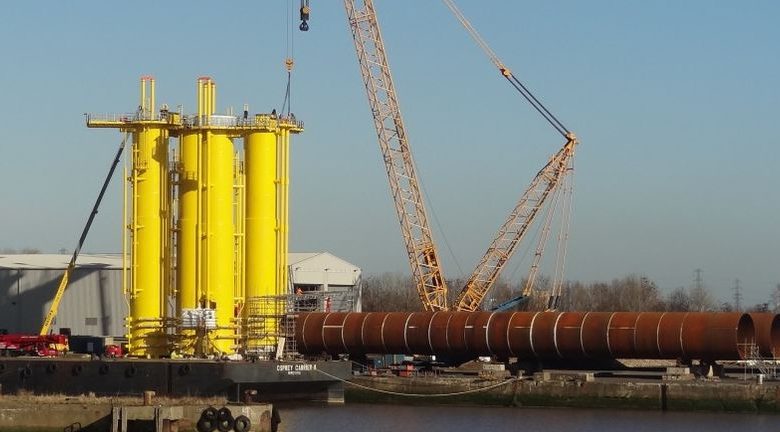
Halliburton stock has delivered an 89.1% return over the past 5 years, and the latest valuation checks still suggest the shares screen as inexpensive on several fronts. This raises the question of how much of the story is already reflected in the current price.
- Over 5 years, Halliburton has returned 89.1%, which points to meaningful value creation for longer term holders.
- Halliburton’s push into higher tech oilfield services and new applications like nuclear waste drilling can support earnings power, while execution risk in these projects and the cyclical nature of oilfield spending may limit how much investors are willing to pay.
- Across the broader checks, Halliburton screens as relatively cheap, with the company passing 6 of 6 valuation tests on Simply Wall St’s framework here.
The issue now is whether Halliburton’s recent share price performance already captures this valuation support or if there is still a margin of safety left for new investors.
Does Halliburton Look Undervalued on Earnings?
P/E is a useful yardstick for Halliburton because earnings remain a key driver for how investors weigh established oilfield service stocks. On this measure, Halliburton trades at about 18.4x earnings.
That is below the Energy Services industry average P/E of roughly 25.8x and also below the broader peer group at about 37.1x. The Fair Ratio, which reflects what investors might typically pay for a company with Halliburton’s profile, sits higher at around 22.9x. Despite recent attention on Halliburton’s role in advanced oilfield technology and nuclear waste drilling, the current P/E still indicates a discount to this more tailored benchmark.
On the P/E multiple, Halliburton stock currently appears undervalued compared with both industry averages and the Fair Ratio benchmark.
See what the numbers say about this price — find out in our valuation breakdown.
The Halliburton Narrative: What Would Justify Today’s Price?
Simply Wall St Narratives for Halliburton pick up where the valuation checks leave off and explain the future that would need to unfold in order for today’s P/E and other ratios to look cheap or expensive. Instead of giving a single figure, they unpack the assumptions on Halliburton’s growth, margins and earnings that those figures rest on, so you can watch how reality lines up with the story over time on the Community page.
The Halliburton community splits into two very different camps on what today’s price really reflects.
Bull case: 33% undervalued
“Halliburton’s investments in clean energy technologies (carbon capture, geothermal) and integrated project management offer new, resilient revenue streams in less-cyclical markets…”
Read the full Bull Case to see why Halliburton could be undervalued
Bear case: 5% overvalued
“Accelerating global transition toward renewable energy sources and stricter decarbonization targets threaten to reduce demand for oil and gas exploration and production in the coming years…”
Read the full Bear Case to see why Halliburton could be overvalued
Do you think there’s more to the story for Halliburton? Head over to our Community to see what others are saying!
The Bottom Line
Halliburton still screens as undervalued on market multiples, which suggests the current price leaves room for different interpretations rather than a clear-cut verdict. The stronger set of valuation checks leans in favor of the bulls, yet the bear case highlights real questions about long term demand for oilfield services and the execution risk in newer projects. For you as an investor, the key question is whether that apparent discount reflects an opportunity in Halliburton’s evolving business mix or whether the market is correctly pricing in those structural and execution risks.
This article by Simply Wall St is general in nature. We provide commentary based on historical data
and analyst forecasts only using an unbiased methodology and our articles are not intended to be financial advice. It does not constitute a recommendation to buy or sell any stock, and does not take account of your objectives, or your
financial situation. We aim to bring you long-term focused analysis driven by fundamental data.
Note that our analysis may not factor in the latest price-sensitive company announcements or qualitative material.
Simply Wall St has no position in any stocks mentioned.
Valuation is complex, but we’re here to simplify it.
Discover if Halliburton might be undervalued or overvalued with our detailed analysis, featuring fair value estimates, potential risks, dividends, insider trades, and its financial condition.
Have feedback on this article? Concerned about the content? Get in touch with us directly. Alternatively, email editorial-team@simplywallst.com