Hedge Funds Pile Back Into AI and Tech Stocks:
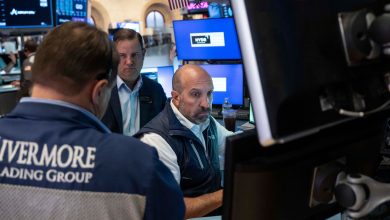
(HedgeCo.Net) Hedge funds are moving back into technology with force, and artificial intelligence is once again the center of the trade. After a period of market volatility, macro uncertainty, and concern that the AI boom had become too crowded, global hedge funds have been rebuilding exposure to technology stocks at one of the fastest clips of the year. Goldman Sachs Prime Brokerage said hedge funds bought technology shares last week at the fastest pace in nearly three months, with positions in global information technology hovering near record highs. The buying was led by renewed conviction in artificial intelligence, especially companies tied to semiconductors, chip manufacturing, and AI infrastructure.
That shift matters because hedge fund positioning often acts as a real-time window into institutional risk appetite. When managers cut technology exposure, the market tends to read it as a warning that valuations, earnings expectations, or macro conditions are becoming less supportive. When hedge funds pile back in, it signals something different: a belief that the AI trade is no longer merely a speculative growth theme, but the dominant capital allocation story across public markets.
The latest buying wave suggests that many hedge funds have concluded the AI cycle still has room to run. The trade has evolved from an enthusiasm-driven rally in a few mega-cap names into a broader hunt for companies that can monetize AI demand through chips, data centers, power infrastructure, cloud services, software productivity, networking equipment, cooling systems, and digital infrastructure.
Goldman’s prime brokerage data shows that technology buying was broad-based across regions, with every major region except Europe seeing net buying. North America and emerging-market Asia led in dollar terms, while hedge funds also covered shorts in technology stocks, adding fuel to the move.
This is not just a rotation back into growth. It is a renewed statement of conviction in one of the largest investment themes of the decade.
The AI Trade Returns to the Center of the Hedge Fund Playbook
The AI trade has already gone through several phases.
The first phase was discovery. Investors recognized that generative AI was not simply a software feature, but a potential platform shift. Companies tied to large language models, cloud infrastructure, graphics processing units, and AI-enabled productivity tools suddenly became the focus of institutional portfolios.
The second phase was concentration. A small group of mega-cap technology companies, semiconductor leaders, and cloud platforms absorbed a disproportionate share of investor capital. Nvidia became the emblem of the AI infrastructure boom. Microsoft became the enterprise AI distribution story. Alphabet, Amazon, Meta, Broadcom, Advanced Micro Devices, and other major technology names became part of the broader basket.
The third phase was skepticism. Investors began asking whether AI capital spending could produce enough revenue to justify the scale of investment. Concerns emerged about overcrowded positioning, stretched valuations, software disruption, margin pressure, energy constraints, and the possibility that some AI beneficiaries were being rewarded before profits were visible.
Now hedge funds appear to be entering a fourth phase: selective recommitment.
Managers are not simply buying every company with an AI narrative. They are increasingly distinguishing between firms that supply the infrastructure, capture the economics, or demonstrate measurable productivity gains—and companies that are merely attaching AI language to investor presentations.
That distinction is critical.
The latest buying wave suggests that hedge funds still believe AI is the dominant secular growth engine in equities. But the trade is becoming more disciplined. The market is rewarding companies with real order books, pricing power, compute demand, semiconductor exposure, cloud scale, and credible monetization paths. It is less forgiving toward firms whose AI strategies remain vague or whose products risk being disrupted by AI-native competitors.
In other words, the hedge fund community is not abandoning AI. It is refining the trade.
Technology Exposure Near Record Highs
The scale of the repositioning is notable.
Goldman Sachs Prime Brokerage data showed that hedge fund net long exposure to global information technology saw its biggest increase in more than five years, while technology positions are close to the highest levels since Goldman began tracking the trades in 2016.
That is an important signal because hedge funds are usually highly sensitive to crowding. When a trade becomes too popular, managers often reduce exposure to avoid being caught in a rapid unwind. The fact that technology exposure is near record highs suggests that many managers still view the risk-reward as attractive despite obvious crowding concerns.
There are several reasons.
First, earnings momentum remains concentrated in technology. The largest technology platforms and semiconductor companies continue to represent a meaningful share of expected profit growth in public equity markets. Hedge funds care about earnings revisions, and AI-exposed companies have continued to receive upward revisions in many cases.
Second, AI spending is becoming a real capital cycle. Hyperscalers, enterprises, governments, and private infrastructure investors are spending enormous sums to build the compute, data center, networking, and power capacity required for artificial intelligence. That creates visible demand for hardware, chips, memory, electrical equipment, cooling solutions, optical networking, and energy infrastructure.
Third, technology remains one of the few sectors where investors can underwrite both cyclical earnings growth and secular transformation. Even when macro conditions are uncertain, companies tied to AI may still benefit from long-term spending commitments.
Fourth, hedge funds may be using technology exposure as a way to own the winners of a narrowing market. If economic growth slows or geopolitical uncertainty rises, investors may prefer companies with fortress balance sheets, high margins, global distribution, and structural demand drivers.
The result is a powerful positioning dynamic: technology is crowded, but it is also where many managers believe the earnings power remains strongest.
Semiconductors Lead the Rebuild
The strongest part of the AI trade remains semiconductors.
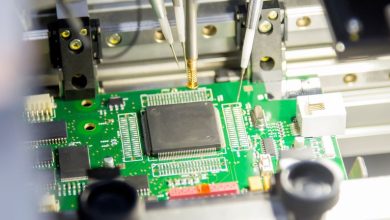
Goldman’s note highlighted renewed demand for companies exposed to artificial intelligence, particularly semiconductor and chip manufacturing firms. This makes sense because chips remain the physical foundation of the AI economy. No matter how large language models evolve, they require compute. Compute requires chips. Chips require manufacturing capacity, design ecosystems, memory, packaging, testing, power management, and supply chain precision.
For hedge funds, semiconductors offer a cleaner AI monetization path than many software names. Revenue is tied directly to orders for data centers, GPUs, accelerators, networking components, and related hardware. While valuations can be volatile, the demand signal is often more tangible.
That does not mean the semiconductor trade is risk-free. It is cyclical. It is highly competitive. It is exposed to geopolitical risk, especially around Taiwan and advanced chip manufacturing. It can be affected by export controls, inventory cycles, capital expenditure pauses, and customer concentration.
But the sector remains central to AI deployment. If enterprises and cloud platforms continue investing in AI infrastructure, semiconductor demand remains a primary beneficiary.
This is why hedge funds are not simply buying “technology” as a broad sector. They are increasingly buying the AI supply chain.
That includes chip designers, semiconductor equipment companies, foundries, memory producers, optical networking providers, server manufacturers, data center component suppliers, and companies tied to power efficiency. In many portfolios, the trade has moved beyond software enthusiasm into the hard infrastructure of artificial intelligence.
The Software Question
The renewed hedge fund buying in technology does not mean every area of tech is equally attractive.
Software remains one of the most complicated parts of the AI debate. For years, software was the ideal institutional growth asset: high margins, recurring revenue, low capital intensity, and strong customer retention. Private equity firms loved software. Hedge funds loved software. Public market investors loved software.
AI has changed the conversation.
On one hand, software companies may use AI to automate workflows, improve products, expand margins, and create new pricing tiers. The most successful platforms may become more valuable as AI is embedded into enterprise productivity, customer service, cybersecurity, analytics, and workflow automation.
On the other hand, AI may disrupt traditional software economics. If AI agents can perform tasks across applications, the value of individual software seats may decline. If coding becomes cheaper, barriers to entry may fall. If customers expect AI features without paying enough for them, margins may come under pressure. If large platforms bundle AI tools aggressively, smaller software vendors may struggle.
This is why some hedge funds are rotating within technology rather than simply increasing exposure across the board. The trade is no longer “buy software because it is high quality.” It is “buy software that can defend pricing, prove AI monetization, and avoid being commoditized.”
This is also where long-short hedge funds may find opportunity. They can own companies that benefit from AI while shorting firms whose revenue models may be threatened by it. The AI trade is therefore becoming more nuanced: long infrastructure, long scale platforms, long proven monetizers, short vulnerable legacy software, short overhyped AI stories, and short companies facing rising capex without clear returns.
AI as the New Capital Cycle
One of the reasons hedge funds are returning to the trade is that AI is no longer just a product story. It is a capital cycle.
The last major technology capital cycles—cloud computing, mobile internet, e-commerce, digital advertising, and software-as-a-service—created enormous winners. But AI may be even more capital intensive. Building and operating advanced AI models requires data centers, power, cooling, chips, memory, networking, security, and specialized talent.
That capital intensity creates a different type of opportunity.
In traditional software booms, the best businesses were often asset-light. In the AI boom, many of the biggest beneficiaries may be asset-heavy or infrastructure-linked. That includes semiconductor firms, data center operators, utilities, grid equipment manufacturers, electrical contractors, cooling companies, and real estate owners with power access.
Hedge funds are increasingly recognizing this shift. The AI trade is moving from “who owns the best model?” to “who controls the infrastructure required to run the models?”
That distinction has major investment implications.
If AI demand continues to grow, the bottlenecks may not be only algorithms or applications. The bottlenecks may be electricity, transformers, land, fiber, cooling, semiconductor capacity, and high-performance networking. These are areas where public equities, private equity, infrastructure funds, and credit investors are all competing for exposure.
Hedge funds that can analyze these bottlenecks may gain an edge.
The result is a broader AI investment universe. It is not limited to the Magnificent Seven. It includes industrial companies, energy providers, data center landlords, power equipment manufacturers, chip tool suppliers, and specialized hardware firms. That creates more opportunities for stock selection and relative value.
Why the Buying Matters Now
The timing of the hedge fund buying is significant because it comes after a period of uncertainty.
Markets have been dealing with a mix of risks: inflation concerns, interest rate uncertainty, geopolitical tension, energy volatility, questions about consumer strength, and fears that AI valuations had become excessive. In that environment, some managers reduced risk or rotated away from crowded trades.
The latest buying suggests that hedge funds are willing to look through those risks when the AI earnings story remains strong.
This does not mean managers are ignoring macro conditions. Hedge funds are highly aware that technology stocks can be sensitive to rates. Higher yields can pressure long-duration growth equities. Geopolitical shocks can hit semiconductor supply chains. A broad risk-off move can force selling even in high-quality names.
But the renewed buying indicates that many managers view AI-related technology as one of the few areas where secular growth can offset macro uncertainty.
That is a powerful statement.
In a market where earnings leadership is narrow, hedge funds often gravitate toward companies with the clearest profit visibility. AI-exposed technology firms still offer that visibility for many investors, particularly where demand is tied to large, multi-year capital spending programs.
Short Covering Adds Fuel
Another important part of the story is short covering.
Goldman’s data indicated that hedge funds bought back stocks to close previous short positions in technology. Short covering can accelerate rallies because it turns bearish positioning into forced buying. When a shorted stock rises, managers may buy it back to limit losses, which can push the price higher and trigger more covering.
In crowded sectors, short covering can be especially powerful.
Technology stocks often attract both long and short interest. Hedge funds may own leading AI beneficiaries while shorting companies they believe are overvalued or vulnerable. But when the sector rallies broadly, even weaker names can rise, forcing managers to reduce shorts.
This creates a feedback loop. Fundamental buying lifts the strongest names. Short covering lifts the broader basket. Momentum strategies may then join the move. Options activity can amplify it. The result can be a rapid increase in exposure across the sector.
That appears to be part of the latest technology rebound.
For investors, the key question is whether the rally is driven primarily by durable long-term conviction or by short covering and positioning pressure. The answer is likely both. Hedge funds are rebuilding long exposure because AI remains compelling, but some of the speed of the move may reflect forced positioning adjustments.
That distinction matters for sustainability. A rally built only on short covering can fade. A rally backed by earnings, revenue growth, and continued capital spending can last much longer.
The Crowding Risk
The biggest risk in the AI trade remains crowding.
When hedge fund exposure approaches record highs, the market becomes more vulnerable to abrupt reversals. If too many managers own the same names, a negative earnings surprise, macro shock, regulatory headline, or valuation scare can trigger simultaneous selling.
This is especially true in technology because liquidity can disappear quickly during stress. The same stocks that attract enormous inflows can become sources of cash when managers need to reduce gross exposure.
Crowding also creates performance risk. If everyone owns the same winners, it becomes harder for managers to differentiate themselves. The trade can become less about identifying AI exposure and more about sizing, timing, and risk management.
That is why sophisticated hedge funds are increasingly looking for second- and third-order AI beneficiaries. They may still own the obvious winners, but they are also searching for less crowded opportunities: power infrastructure, optical networking, thermal management, industrial automation, chip supply chain firms, cybersecurity, data governance, and specialized software tools.
This is where alpha may emerge.
The first AI trade rewarded investors who owned the obvious leaders. The next AI trade may reward investors who understand the bottlenecks, second derivatives, and unintended consequences of the capital cycle.
The Magnificent Seven Still Matter
Even as the trade broadens, the mega-cap technology platforms remain central.
The largest companies have the balance sheets to fund AI infrastructure, the distribution to monetize AI products, and the data advantages to improve model performance. They also remain major drivers of index returns, earnings growth, and hedge fund positioning.
For many managers, owning mega-cap technology is still the simplest way to express AI conviction. These companies are liquid, widely followed, and deeply embedded in global markets. They also have the scale to absorb huge AI capital expenditures without threatening their overall financial stability.
But mega-cap technology is no longer a one-way trade. Investors are increasingly asking whether AI spending will generate acceptable returns. If capex rises faster than revenue, free cash flow could be pressured. If competition increases, margins could compress. If regulators intervene, growth may slow. If AI becomes commoditized, returns on investment may disappoint.
That is why the latest hedge fund buying is important. Managers are not blind to these concerns. Their willingness to add exposure suggests they still believe the earnings potential outweighs the risks, at least for now.
AI and the Hedge Fund Performance Race
The return to AI and tech is also connected to hedge fund performance pressure.
In a year when dispersion is high and major technology stocks are driving a large share of equity market gains, managers who are underweight AI risk falling behind. This creates a performance incentive to participate.
Hedge funds are judged on absolute returns, relative performance, risk-adjusted returns, and consistency. Missing the dominant market theme can be costly, especially when allocators are closely monitoring exposure to secular growth sectors.
This does not mean managers are chasing blindly. But it does mean that AI has become too important to ignore.
A hedge fund that avoids AI entirely must have a strong reason. The theme now touches semiconductors, cloud, enterprise software, industrial automation, energy infrastructure, cybersecurity, digital advertising, and even private markets. It is not one trade. It is an ecosystem.
That ecosystem is generating winners and losers across sectors. Hedge funds are built to exploit exactly that kind of dispersion.
The latest buying suggests that managers are positioning not only for market beta, but for a new phase of AI-driven stock selection.
Private Markets Watch the Public Signal
The public equity repositioning also matters for private markets.
Private equity, venture capital, infrastructure funds, and private credit managers are all watching how public markets value AI exposure. Public market multiples influence private valuations. Public company spending influences private infrastructure demand. Public equity rallies can reopen exit windows for AI-linked companies.
If hedge funds are aggressively buying AI and technology stocks, it supports a broader risk appetite for AI-linked assets. That can help private market managers mark portfolios, raise capital, and pursue exits. It can also encourage more capital to flow into data centers, AI software, chip supply chains, and related infrastructure.
But the connection cuts both ways. If public AI stocks reverse sharply, private valuations may come under pressure. This is especially relevant for venture-backed AI companies, private software firms, and infrastructure projects priced on aggressive growth assumptions.
Hedge fund positioning therefore acts as an early warning system. Public markets usually reprice faster than private markets. When hedge funds rotate into AI, private markets take note. When hedge funds rotate out, private markets eventually feel it.
The Next Phase: From AI Narrative to AI Earnings
The next test for the AI trade will be earnings.
Investors have moved beyond simple excitement about artificial intelligence. They now want evidence. They want revenue growth, margin expansion, customer adoption, productivity gains, pricing power, and return on invested capital.
The companies that can show those results will likely continue attracting hedge fund capital. The companies that cannot may face sharper scrutiny.
This is where the market will separate AI winners from AI talkers.
For semiconductor firms, the question is whether demand remains strong enough to support elevated expectations. For cloud companies, the question is whether AI workloads generate profitable growth. For software firms, the question is whether AI features drive incremental revenue or simply become a cost of doing business. For infrastructure companies, the question is whether demand translates into durable margins.
Hedge funds will be watching these signals closely. The renewed buying wave shows conviction, but that conviction must be validated by results.
Conclusion: AI Is Again the Dominant Hedge Fund Allocation Theme
Hedge funds are piling back into AI and technology because the theme remains too large, too profitable, and too structurally important to ignore.
Goldman Sachs Prime Brokerage data shows technology stocks were bought at the fastest pace in nearly three months, with global technology positions near record highs and AI-linked semiconductor demand leading the move. This is one of the clearest signs that hedge funds are rebuilding conviction in the AI trade after a period of volatility and skepticism.
The implications are significant. AI is no longer just a story about a few mega-cap stocks. It is becoming a broad capital cycle that touches chips, data centers, cloud computing, power infrastructure, software, networking, cybersecurity, and industrial systems. Hedge funds are positioning across that ecosystem, searching for both obvious winners and underappreciated beneficiaries.
But the trade is not without risk. Technology exposure is crowded. Valuations are demanding. AI monetization must be proven. Software disruption remains a real threat. Macro shocks can still trigger sharp reversals.
Even so, the message from hedge fund positioning is clear: AI is again the dominant allocation theme in global equities.
For alternative investment managers, the opportunity is no longer simply to own “technology.” It is to understand where AI creates real economics, where it destroys legacy profit pools, and where the next bottleneck will emerge. The funds that can make those distinctions may define the next phase of hedge fund performance.
The AI trade is back. But this time, it is more institutional, more selective, and more consequential than before.