Is It Better to Play the Historic Gold Rally With a Physical Gold or Mining Stock ETF in 2026?
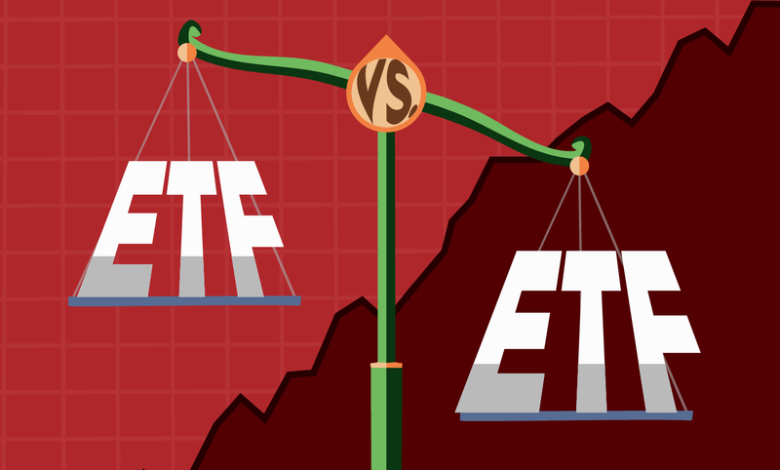
SPDR Gold Shares (GLD +1.63%) provides direct exposure to the price of physical gold bullion with lower volatility, while VanEck Gold Miners ETF (GDX +4.74%) offers a more volatile play on the equity of mining companies.
Investors seeking exposure to the gold market often choose between owning the metal itself or the companies that extract it. While both SPDR Gold Shares and VanEck Gold Miners ETF trade in the same commodity cycle, their risk-return profiles differ substantially. Miners often possess significant operating leverage, meaning their profits can expand more rapidly than the price of gold itself, though this also introduces company-specific risks such as management execution and regional instability. This comparison explores how the volatility of miners contrasts with the relative price stability of physical bullion.
Snapshot (cost & size)
| Metric | GDX | GLD |
|---|---|---|
| Issuer | VanEck | SPDR |
| Share price | $70.74 (as of 2026-07-20) | $367.60 (as of 2026-07-20) |
| Expense ratio | 0.51% | 0.4% |
| 1-yr return (as of 2026-07-20) | 39.4% | 19.2% |
| Dividend yield | 0.9% | n/a |
| Beta | 0.66 | 0.17 |
| AUM | $21.6B | $129.2B |
Beta measures price volatility relative to the S&P 500; beta is calculated from monthly returns over the available fund history (up to five years). The 1-yr return represents total return over the trailing 12 months. Dividend yield is the trailing-12-month distribution yield as of the close of trading July 20th.
The SPDR Gold Shares is the more affordable option for long-term investors, carrying an expense ratio of 0.4%. This is lower than the 0.51% fee charged by the VanEck Gold Miners ETF. For many investors, the combined cost of trading GLD on the secondary market may be lower than the expenses associated with directly acquiring and insuring physical gold bullion.
Performance & risk comparison
| Metric | GDX | GLD |
|---|---|---|
| Max drawdown (5 yr) | (46.5%) | (26.4%) |
| Growth of $1,000 over 5 years (total return) | $2,256 | $2,178 |
What’s inside
The SPDR Gold Shares is designed to track the market price of physical gold bullion. The fund consists of physical gold with cash holdings as needed. This fund was the pioneering gold ETF introduced in the U.S. and remains the largest fund backed by a tangible asset. It was launched in 2004.
The VanEck Gold Miners ETF tracks the MarketVector Global Gold Miners Index, which benchmarks the performance of companies in the worldwide gold mining industry. It holds 57 different securities. Its largest positions include Newmont Corp (NEM +3.50%) at 10.5%, Agnico Eagle Mines Ltd (AEM +3.52%) at 10.5%, and Barrick Mining Corp (B +4.11%) at 8%. The portfolio consists entirely of stocks in the basic materials category, given its focus on miners. It was launched in 2006.
Which fund is the better buy?
Each of these funds gives you access to gold, history’s most coveted asset. But they are quite different.
Gold prices have been on a tremendous rally for the past year. Spot gold is currently trading around $4,070 per ounce, up about 20% in the past 52 weeks. While gold has returned to earth a bit (it was as high as $5,608 in January), investors have flocked to the yellow metal for its historic inflation-hedging characteristics.
Investors seeking exposure to the metal rally without the time and expense of buying physical commodities or futures contracts directly can buy GLD, the SPDR Gold Shares ETF. Keep in mind that while this is an ETF, holding physical gold through GLD brings different tax implications. In the U.S., gains from these funds will be treated as collectibles, which typically means a higher tax rate than for stocks for most investors. For some investors holding less than a year, the top tax rate is 37%. If you hold them in a tax-advantaged account, such as an IRA, you should sidestep these taxes.
Owning a collection of gold mining stocks, like GDX, the VanEck Gold Miners ETF offers, isn’t a pure play on the price of gold, but it tracks rather closely. Studies show that the vast majority of the price movement of gold mining stocks is influenced by gold’s price.
The benefit for stock ETF holders is that when gold prices rise, they usually outpace operating costs. That’s because miners are pulling gold from the ground that they have already paid to acquire, while the royalties and other costs don’t rise as high (though they do rise). That means in the early years of a gold rally, the higher prices flow mostly to the bottom line. As a bonus, GDX pays a dividend because of its stock holdings, whereas GLD doesn’t.
Yet because miners have rising costs, they can suffer more when the price of gold declines. Given that gold has been retracing some of its gains this year, that means GLD has outperformed GDX in the past three months, having lost 6.7% versus a decline of 12.4% for GDX. But in all other time frames, GDX bests GLD, returning positive annualized returns of 37.5%, 19%, and 11.6% over the 3-, 5-, and 10-year time frames, compared to 27.7%, 17.5%, and 11.4%, respectively, for GLD.
Another benefit for GDX investors is that gold mining companies can make decisions that boost returns to shareholders, whether by increasing dividends or merging with another miner. Those gains can flow through to ETF shareholders.
Given those aspects and its superior long-term performance, GDX is the ETF to buy in 2026 to benefit from gold’s newfound popularity.
For more guidance on ETF investing, check out the full guide at this link.