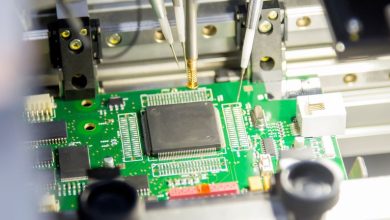
‘Market has jumped the shark’: Sizzling chip stocks rally showing signs of patterns seen in 2000
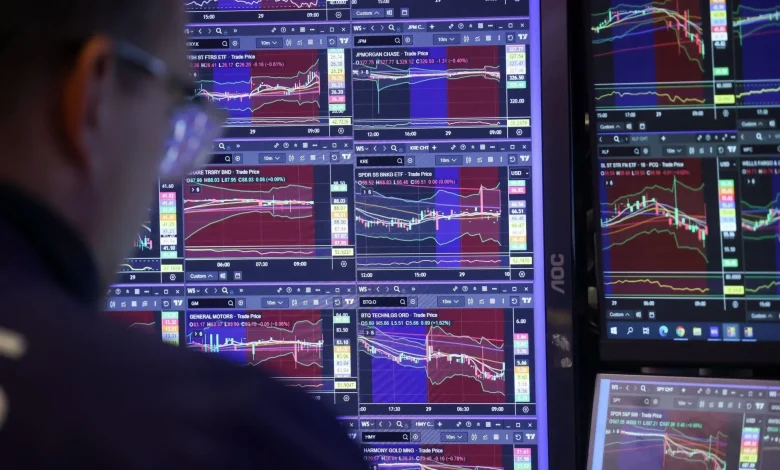
MICHAEL Burry – the American investor who rose to fame when his bets against mortgage securities were celebrated in the Hollywood blockbuster The Big Short – recently warned that history was about to repeat itself in the form of another massive tech implosion.
In a post on online publishing platform Substack, he argued that the tech sector has entered a dangerous “parabolic” phase, mirroring patterns from 2000 when the Dotcom bubble was about to burst.
He pointed to a steep jump in chip stocks that has seen the Philadelphia Stock Exchange Semiconductor Index – commonly known by its ticker SOX – rise by nearly 70 per cent since the end of March.
Burry, one of the biggest winners of the global financial crisis in 2008, went so far as saying that “the market has jumped the shark” and that this year’s rally in tech stocks would soon come crashing down.
SOX is a benchmark stock index that measures the performance of the 30 largest US-traded companies involved in the design, manufacturing, distribution and sale of semiconductors.
Among these companies are Intel, Nvidia and TSMC, which have all seen significant improvement in their outlooks in recent weeks but nothing that would justify a near doubling in their value.
Many bulls say the parabolic shape of the curve would be a problem, except that Wall Street analysts following the companies are raising their earnings growth outlook almost as fast.
Unlike in 2000, when the Dotcoms were mostly unprofitable, the parabola is tracing earnings this time around.
It might not make any sense that Micron rises 7 per cent on no news on any given day, but it makes sense that its shares have risen sevenfold over the course of a year.
An AI-driven surge in memory-chip prices has caused Micron’s revenue to increase by similar orders of magnitude. But memory-chip prices, like semiconductor indexes, go down as well as up.
Burry questions these earnings claims, however. He said that, based on a Warren Buffett concept called “owner’s earnings” – the amount of earnings that could be withdrawn as cash without affecting operations – Nvidia, Microsoft and Alphabet are not growing as quickly as the analysts covering them would lead us to believe.
There is another potential problem that echoes the Dotcom era, and that is euphoric growth expectations have not yet been justified by earnings.
Back in 2000, it turned out that much of the capital from the investors clamouring for Dotcom exposure was misspent on infrastructure that turned out to be superfluous. Could the world soon be littered with ghost towns of data centres?
There are a few more red flags to consider, in addition to those identified by Burry.
First, there is the “priced for perfection” problem. At these levels and these valuations, AI companies carry a halo of infallibility for investors.
The slightest sign of vulnerability could break that spell and cause a dramatic reassessment, said Lorenzo Di Mattia, the manager of hedge fund Sibilla Global Fund.
“The market is increasingly pricing the AI value chain as if every link remains intact: labs continue to scale, hyperscalers keep raising capital expenditure, chips and data centres stay scarce, power arrives on time, pricing holds, financing remains available, and AI revenue lands before depreciation, financing costs and electricity constraints become problems,” said Di Mattia.
Currently, every measure of AI activity – revenue, capital spending and computing capacity – is not only growing but accelerating every time any corporation mentions AI.
“AI-linked stocks do not need absolute spending to fall. They can fall the moment investors begin to anticipate a slower rate of growth,” warned Di Mattia. “The story does not need to die; expectations only need to stop rising.”
Then there is the risk of growth shortfalls. Clearly, AI is already providing a revenue boost to the companies investing in data centres, but will that boost be big enough or come quickly enough to cover the costs of construction?
Oracle is borrowing about US$133 billion to build sprawling facilities such as its Stargate project in Texas. It’s worth noting, however, that the company only made US$4.9 billion in cloud infrastructure revenue in the latest quarter.
While Oracle said its backlog of orders – mostly from AI demand – has skyrocketed to roughly US$553 billion, there is no guarantee that all those orders will be filled.
It’s worth noting that the sheer scale of the share price gains in Micron, Sandisk and other memory chip makers is reminiscent of some micro bubbles that have inflated and crashed in the past.
Patchy record
On his Substack page, Burry describes himself as Cassandra, the mythical seer who was doomed to see the future but also be disbelieved. His critics say there are good reasons to disbelieve his latest prognostications.
While Burry predicted the mortgage crash that led to his fame, his record since then has been somewhat patchy. As he himself pointed out, he has not often pounded the table with as much conviction as he has on this latest warning. To him, these parabolic charts look like the “scene of a bloody car crash, minutes before it happens”.
Still, when the likes of Nvidia are seemingly on pace to become the world’s first US$6 trillion company, Burry could well argue that this is worth describing as the next “Big Short”.
“Even if it seems there is more time to run up, anyone lucky enough to be riding these parabolic moves, by not selling, is betting on one’s own ability to jump off at or near the top,” he wrote in his Substack post.
“History tells us that even if the party goes on for another week, month, three months or year, the resolution will be to much lower prices. We are getting into that rare air, so extreme that the consequences will be unavoidable, no matter where one hides,” he said.
Decoding Asia newsletter: your guide to navigating Asia in a new global order. Sign up here to get Decoding Asia newsletter. Delivered to your inbox. Free.