Mega-IPOs are coming, and you may be forced to take part
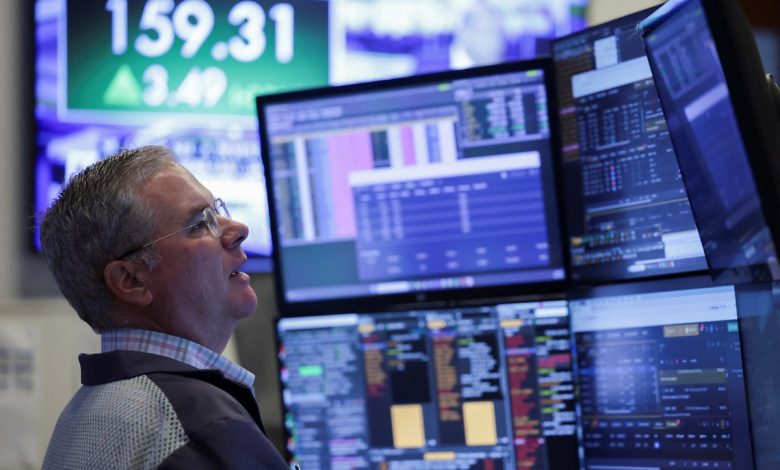
A trader works on the floor at the New York Stock Exchange in New York City on Thursday.Jeenah Moon/Reuters
The biggest initial public offering in history is just around the corner, and many Canadians are going to have money on the line, whether they like it or not.
When Elon Musk takes SpaceX public as early as June, it will become one of the world’s largest publicly traded companies on Day 1, with a target valuation reported to be US$1.75-trillion.
To accommodate such a colossal debut, the rules governing how companies join major stock benchmarks such as the S&P 500 index are being changed by the providers that create those indexes.
Waiting periods typically keep new stocks out of major indexes for up to a year, sometimes longer.
The revisions, if they go ahead, would put SpaceX in these flagship portfolios almost immediately. Passive stock funds with trillions of dollars tracking these indexes would be forced to follow suit. That includes some of largest exchange-traded funds listed on the Toronto Stock Exchange.
“It’s hard to overstate the magnitude of what Musk is trying to achieve by gaming the passive investing paradigm,” said Adam Butler, chief investment officer at ReSolve Asset Management in Toronto.
“This could end up being a substantial transfer of wealth from passive index investors to SpaceX insiders.”
Have investors forgotten how to panic?
These are uncharted waters for the public markets. Typically, companies would go public at a much earlier stage in their development than SpaceX. Index providers would only add them to their primary benchmarks after a seasoning period.
Such probations help protect investors from being forced into new stocks at inflated valuations, which are a hallmark of the IPO hype cycle.
These days, companies spend years being fattened up by private capital. By the time they IPO, many of them are fully formed. SpaceX, for example, is already responsible for more than 80 per cent of all commercial rocket launches in the United States.
The current record-holder for IPO valuation by a U.S.-based company is Meta Platforms Inc., which went public as Facebook in 2012 with a market capitalization of about US$104-billion. SpaceX could fetch a valuation 20 times that, which would make it the seventh-largest U.S. company. Bigger than Tesla Inc. and bigger than Walmart Inc.
Mr. Musk isn’t interested in waiting his turn. He is apparently lobbying for almost immediate index inclusion. The Nasdaq Stock Market, in its pursuit of such a whale of a listing and its lucrative fees, is willing to oblige him.
Effective May 1, Nasdaq will bend its rules to fast-track SpaceX’s entry into the Nasdaq 100 index after just 15 trading days. That’s down from a minimum of three months.
FTSE Russell said it is considering its own exemption for giant IPOs, which could promptly put SpaceX in equity indexes such as the Russell 1000.
The same goes for S&P Dow Jones Indices, which is also considering a fast-entry rule change, according to a recent Bloomberg report. Such a move by the industry leader could swiftly insert SpaceX into the S&P 500, a process that now takes a minimum of one year and requires at least four straight quarters of positive earnings.
Congratulations, you survived the bursting of the AI bubble
There are US$24-trillion in investment funds tied to the S&P 500 alone. All those funds would be forced to buy shares of SpaceX in direct proportion to its weight in the underlying index. This would include many of the most popular ETFs in Canada, the country’s largest among them – the $30-billion Vanguard S&P 500 Index ETF.
Nothing on this scale has ever happened before. Tens of billions of dollars could be funnelled into a stock with just three weeks of trading history. Plus, the whole thing could be replayed twice more this year. OpenAI is eyeing a 2026 IPO that could top US$1-trillion. As is Anthropic, which was most recently valued at US$380-billion.
There is a rationale behind changing how major stock indexes work. Since they are meant to capture the totality of the stock market, why exclude one of the largest publicly traded companies?
The concern is that regular investors will be shoved into a stock with a bloated valuation and shaky fundamentals. SpaceX revenue last year was a relatively modest US$18.5-billion, according to estimates. At a US$1.75-trillion market cap, the stock would trade at nearly 100 times sales. Nvidia Corp., which is often flagged as a richly priced stock, has a price-to-sales ratio of about 22.
Let’s say SpaceX debuts in June, as planned, starting the clock on 15 trading days before index inclusion. Early investors would know a wave of buying would be coming from index-tracking investment funds at whatever price the market dictates. That could serve as a powerful incentive to front-run that wave, pushing SpaceX’s valuation up even further.
“That waiting period exists for a reason,” George Noble, a former Fidelity Investments fund manager and a Wall Street veteran, wrote in a recent newsletter. “It lets the market establish real price discovery. It protects passive investors from being forced into untested, illiquid stocks.”
Lots of regular investors have done very well betting on Mr. Musk. But they got to choose their entry point. A whole new batch of index investors may not have that luxury.