New threat to Labour spending plans as UK long-term borrowing costs hit highest level since 1998 | Gilts
The risk to Labour’s tax and spending plans from the war in Iran was underscored on Tuesday, as long-term government borrowing costs hit their highest level since 1998.
Fears of higher inflation as a result of the conflict have fuelled a selloff across government bond markets, which City analysts say has been exacerbated in the UK by uncertainty about the future of Keir Starmer’s government.
The yield – effectively the interest rate – on 30-year UK government bonds (gilts) hit 5.77% on Tuesday – exceeding the 27-year high reached last September.
Mohamed El-Erian, chief economic adviser at Allianz, said he was “concerned for the health of the UK economy”, after the latest market moves.
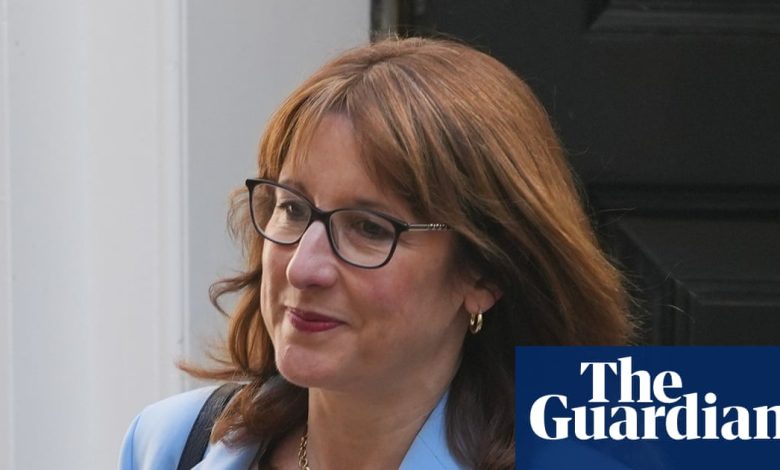
Higher government borrowing costs will eat away at the headroom that the chancellor, Rachel Reeves, has built up against her fiscal rules.
Sanjay Raja, chief UK economist at Deutsche Bank, said more than half of the £24bn margin for error Reeves created by raising taxes in last autumn’s budget may already have been wiped out, by higher gilt yields and the prospect of weaker economic growth.
Labour is likely to come under pressure to spend some of the remaining buffer on protecting households from soaring utility bills before next winter – especially if the impasse in the strait of Hormuz proves prolonged.
With the Treasury planning to issue £250bn worth of bonds this year, and overseas investors such as US hedge funds important buyers, Raja warned: “We are beholden to the kindness of strangers in many ways, and they aren’t beholden to stay.”
Jo Michell, professor of economics at the University of the West of England, said, “fiscal policy is in a very difficult position because we’ve got bond yields above 5%, we’ve got political resistance to tax rises, but we’re going to have to have higher spending in the short run to protect low income families.”
Reeves has sought to win back the confidence of bond market investors since Labour came to power, after Liz Truss’s short-lived government alarmed markets with massive unfunded tax cuts.
Against the challenging fiscal backdrop, City economists have produced a flurry of research notes in recent days about whether Thursday’s local elections in England and Scottish and Welsh elections could augur the end for Starmer’s leadership – and what potential successors may mean for tax and spending policy.
Luke Hickmore, the investment director for bonds at Aberdeen Investments, said markets were “actively pricing” the impact of a tough set of election results this week for Labour. “Politics is not background noise. In today’s gilt market, it is a fundamental part of the investment signal,” he said.
Analysts suggested that, should Starmer be forced out of Downing Street, his possible replacements could seek to loosen or scrap the government’s fiscal rules.
Two of the frontrunners, Angela Rayner and Andy Burnham, have hinted that they would like to see higher public spending – with Burnham suggesting last week that defence could be excluded from the rules, for example.
The prospect of looser fiscal policy is “one reason” gilt yields have risen sharply, said Thomas Pugh, the chief economist at the consultancy RSM UK. “Granted, more debt-funded government spending would, in theory, provide a near-term boost to growth, but it would also boost inflation.”
Allies of Burnham, the Greater Manchester mayor, told the Guardian last week that he had a credible plan to return to Westminster “within weeks”.
UK bond yields moved more than those of other leading economies on Tuesday, although London markets were closed for a bank holiday on Monday, so had not had time to absorb the latest developments in the Middle East.
Ten-year UK government bond yields also rose, by 12 basis points or 0.12 of a percentage point, to 5.09% – the highest level since late March. The yields on both 10-year and 30-year bonds eased slightly later on Tuesday afternoon. Bond yields move inversely to prices.
The longer oil supplies are blocked from transiting the critical strait of Hormuz, the greater the impact is likely to be on inflation and economic growth in the UK.
Darren Jones, the chief secretary to the prime minister, has warned that the effects could last for eight months, saying: “There’s going to be a long tail from this.” Starmer has suggested UK holidaymakers might need to change their plans as a result of looming jet fuel shortages.
The Bank of England warned last week of higher-than-expected inflation, as it left interest rates on hold at 3.75%, but warned it may need to take action to bring price rises under control in the coming months.
Petrol costs have already risen sharply since the start of the war, and higher energy and fertiliser prices are expected to spread to the wider economy in the coming months.
Andrew Bailey, the Bank’s governor, said last week that as the Iran war evolves “where we go from here will depend on the size and duration of the shock to energy prices.”
He added: “The longer this problem goes on and the longer the disruption to energy supplies goes on, the more difficult the scenario we’re in.”
As a significant importer of energy Britain is more exposed to the Middle East inflation shock than other large economies. The International Monetary Fund warned last month that a further escalation in the Iran war would affect the UK more than other G7 nations.
Markets were “starting to price in a more fragile UK outlook than headline data suggests”, added Lale Akoner, an analyst at the trading firm eToro, citing the “combination of political uncertainty, energy sensitivity and fiscal pressure”.
“If uncertainty persists, upward pressure on yields is likely to remain, with broader implications for borrowing costs and financial conditions across the economy.”