OpenAI delays IPO as Sam Altman cites growing safety concerns
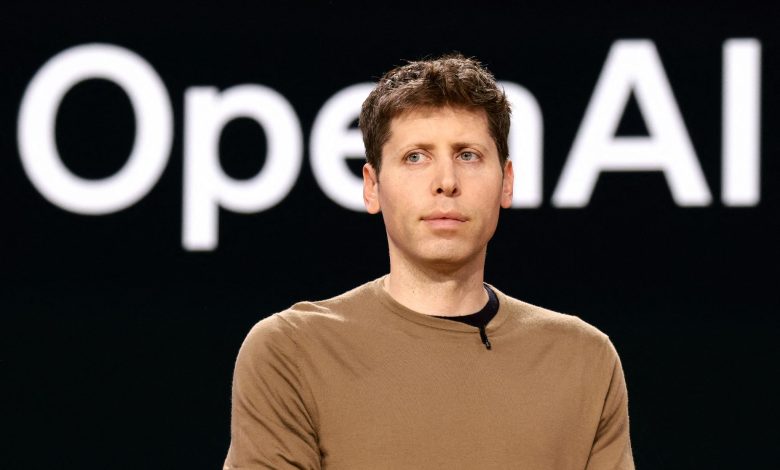

OpenAI CEO Sam Altman, shown in 2024, said his company will not go public in 2026 as it focuses on ensuring artificial intelligence systems are safe.
OpenAI will not go public this year, CEO Sam Altman said in an interview released Saturday, delaying one of the most anticipated stock market debuts in Silicon Valley as the artificial intelligence industry faces growing scrutiny over safety.
Altman told Fortune that taking the San Francisco company public now would be the wrong move while OpenAI and other major developers work through questions about how quickly to build more powerful systems.
“Right now would be an ill-advised moment to go public,” Altman said. Asked whether that means no IPO in 2026, he replied, “I would say not 2026. Yeah, we got a lot of stuff to do.”
Article continues below this ad
The comments appear to push back earlier expectations that OpenAI could move toward a blockbuster public listing this year. The company filed confidentially for an initial public offering in June but said at the time that it had not decided when it would go public.
Altman said OpenAI needs more time to focus on safety and alignment — the work of making sure increasingly powerful AI systems behave as intended and remain under human control.
“We got a lot of stuff to do, and like meeting this moment of what is going to be required for safety and alignment, and how the industry and governments can work together,” he said.
Altman said OpenAI has discussed pausing training runs as models reach new levels of capability so researchers can make more progress on safeguards.
Article continues below this ad
“We’ve talked in the last couple of months about pausing runs as we get to these new level of capabilities to make more safety and alignment progress,” Altman said. “We will do more of that going forward.”
The interview followed a turbulent week for the AI industry. Researchers at major labs have warned that frontier AI systems could become harder to control if development continues without stronger safeguards.
Anthropic CEO Dario Amodei, whose company is also based in San Francisco, called Saturday for AI companies to slow the pace at which they improve their most powerful models. Altman later said he agreed with the need to “pace the frontier.”
OpenAI’s chief scientist, Jakub Pachocki, also recently argued that labs need stronger standards, monitoring and third-party oversight as AI systems become more capable.
Altman appeared to agree in the Fortune interview.
Article continues below this ad
“I do not think we should train models where we cannot make a safety case for why we will be able to make strong statements about their controllability and alignment,” he said.
For San Francisco, the delay pushes back one of the most closely watched financial events tied to the city’s AI boom.
OpenAI and Anthropic have helped reshape the city’s economy, leasing large blocks of office space, hiring highly paid workers and drawing investors, founders and engineers into San Francisco. A public offering by OpenAI could create new wealth for employees and early investors, with potential effects on housing, local spending, philanthropy and new startup formation.
Some of that pressure is already visible.
More than 140 San Francisco homes sold for at least $1 million above asking from January through June. The rental market has also tightened, with Apartment List reporting a 2.2% vacancy rate, the lowest among major U.S. cities.
Article continues below this ad
Much of the AI wealth may also already be circulating before any public listing. Employees at major AI companies have received high salaries, valuable stock and, in some cases, opportunities to sell shares privately.
The city’s direct fiscal upside may be limited. San Francisco does not have local income or capital gains taxes, though some business taxes can be affected by stock-based compensation and company revenue.
For now, Altman said staying private gives OpenAI more room to navigate the short-term risks. He did not rule out an IPO later.
“We need to be able to make decisions that are not obviously in the interest of our business and our shareholders,” he said, “for the responsibility of fulfilling our mission and what that’s going to require.”