Quantum computer maker Quantinuum closes flat after $1.68B IPO
Quantinuum Inc. listed its shares on the Nasdaq today after raising $1.68 billion in an initial public offering.
The quantum computer maker sold 28 million shares for $60 apiece. That’s significantly more than the $53 to $55 target range the company filed last week, which itself represented an increase over the original fundraising goal. Quantinuum also boosted the number of shares it sold.
The company’s stock jumped 19% at one point, but ended the trading session just 0.3% above the opening price. Though first-day stock pops are often seen as a vote of confidence, the flat reception also means the company didn’t leave much money on the table. The banks that underwrote the offering have the option to buy up to 4.2 million additional shares at the original IPO rate.
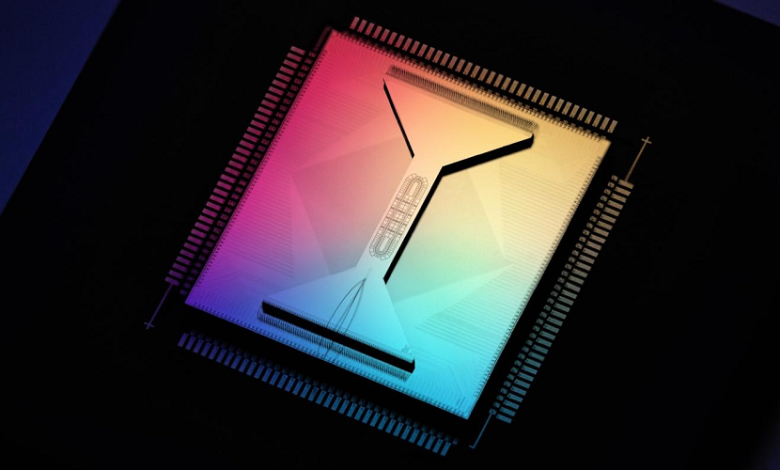
Quantinuum sells a 98-qubit quantum computer called Helios that is based on a trapped-ion design. Its qubits are metal atoms that are suspended in a vacuum chamber by magnetic fields. The system uses lasers to program the qubits, mitigate any errors that emerge during calculations and read the results.
Some quantum computers connect data transmission wires to every single qubit. Quantinuum’s system design removes that requirement, which lowers costs and leaves more space for qubits. Another selling point of Helios is that all its qubits are based on the same architecture. Programming identical qubits is simpler than working with circuits that have varying technical characteristics.
Helios performs some computing operations by moving qubits inside its vacuum chamber. Quantinuum is developing a larger computer, Apollo, that will rearrange qubits using a “2D array of trapping locations.” The company expects the technology to facilitate faster qubit movement.
The qubit reconfiguration array will also provide scalability benefits. Quantinuum plans to ship Apollo in 2029 with thousands of qubits, an order of magnitude more than Helios. Furthermore, the system is expected to make calculation mistakes less often. Quantinuum sees scientists using it for tasks such as material discovery.
The company ships its quantum computers with a simulation program called InQuanto that makes it easier to perform chemistry research. Another software component, Guppy, enables developers to write custom programs in a Python-like syntax. A third module called TKET automatically optimizes user applications to make the most out of the underlying qubits.
Rounding out Quantinuum’s software portfolio is a random number generator called Quantum Origin. It’s designed to generate cryptographic seeds, which are random strings of bits that companies use to create encryption keys. Cryptographic seeds must be random to avoid the risk of tempering. According to Quantinuum, Quantum Origin generates cryptographic seeds through a process that involves millions of qubit operations.
The company lost $192.6 million on $30.9 million in sales last year. More than half of its revenue came from Riken, a Tokyo-based research institute.
Quantinuum’s IPO filing provided a glimpse into its roadmap. The company indicated that it plans to make some of its quantum development tools available under an open-source license. Additionally, the filing noted that Quantinuum could use some of the proceeds from its IPO to make acquisitions.
Image: Quantinuum
Support our mission to keep content open and free by engaging with theCUBE community. Join theCUBE’s Alumni Trust Network, where technology leaders connect, share intelligence and create opportunities.
- 15M+ viewers of theCUBE videos, powering conversations across AI, cloud, cybersecurity and more
- 11.4k+ theCUBE alumni — Connect with more than 11,400 tech and business leaders shaping the future through a unique trusted-based network.
About SiliconANGLE Media
Founded by tech visionaries John Furrier and Dave Vellante, SiliconANGLE Media has built a dynamic ecosystem of industry-leading digital media brands that reach 15+ million elite tech professionals. Our new proprietary theCUBE AI Video Cloud is breaking ground in audience interaction, leveraging theCUBEai.com neural network to help technology companies make data-driven decisions and stay at the forefront of industry conversations.