Stock market illusion following rally in Soitec and STMicroelectronics
Soitec (up 758%), Samsung up (150%), STMicroelectronics (up 167%)… European technology has nothing to envy its global competitors.
By Enguerrand Artaz
The AI revolution continues to stimulate markets and sustain economic growth. However, investors have gradually been shifting their focus to gain exposure to this phenomenon. Thus, they have moved away from the tech giants that have been so popular for years—the famous Magnificent Seven—to invest in their suppliers, particularly those operating in the semiconductor and memory sector. This trend has fuelled the dizzying rise of the South Korean market, led by Samsung and SK Hynix, and the resurgence of former leaders such as Intel, whose share price has rebounded by almost 500% in a year. However, in the shadow of the American and Asian champions, another group is breaking records: European semiconductors.
With a 127% rise since the start of the year, the Stoxx Europe Total Market Semiconductors index clearly outshines the 81% gain of its US counterpart, the famous Philadelphia Semiconductor Index or SOX. Within the European index, some performances are even more impressive. If you liked the Korean firm SK Hynix and its 246% gains since the start of the year, then you’ll love the French firm Soitec and its 758%. Has Samsung soared by almost 150% this year? Well, the Franco-Italian group STMicroelectronics has risen by more than 167%.
These gains are, in reality, an optical illusion and have more to do with accelerated catch-up than a miraculous discovery. Before regaining the market’s favour from the end of last year,STMicroelectronics had lost more than 60% from its summer 2023 levels, weighed down by its heavy exposure to a struggling automotive sector. The situation was even more dire for Soitec, which had plummeted by 90% from its 2021 highs against a backdrop of valuation correction and excess inventory built up by its customers. Therefore, the markets have not suddenly discovered overlooked gems on the Old Continent, but rather have revised upwards — abruptly and perhaps excessively — the valuations of shares that had virtually disappeared from the radar, only to suddenly realise that part of their business is crucial to the roll-out of AI.
As for STMicroelectronics, the rebound does not resolve doubts about margins and exposure to the automotive sector’s cycle, but optical connectivity, power conversion and thermal infrastructure components—technologies that enable data centres to communicate, source power and better manage their consumption—are seen as significant growth drivers. The case of Soitec is even more telling. Although they are still largely electrical, short-distance connections within data centres (between servers, cards, GPUs and memory) could gradually shift towards optical solutions for reasons such as energy costs, bandwidth and the risk of overheating.
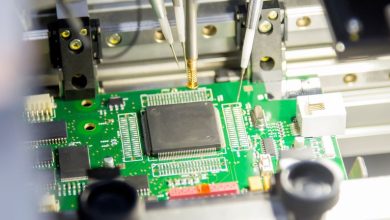
In this scenario, Soitec would be a key supplier at the early stages of the supply chain, thanks to its technological advances in photonics substrates (ultra-pure base plates, usually made of silicon, on which components capable of guiding, modulating or detecting light are manufactured), which are key components for enabling optical connections.
We could also mention the German company Infineon, whose power chips help make data centre power supply more efficient and manageable, or BE Semiconductor, a Dutch firm specialising in optimising the assembly of chips and memory, which helps reduce energy consumption and increase bandwidth. Although it is overshadowed by the major stock market indices struggling to keep pace with their US or Asian counterparts, European technology is every bit as good as its global competitors.
Although the history of AI in the markets has long been written through a handful of stocks adored by investors, they are now realising that the semiconductor industry, which underpins AI growth, is far more complex and involves numerous critical dependencies. In 2026, the market is rediscovering that many of these still pass through Europe.