Which Is the Better Tech ETF for Artificial Intelligence (AI) Stocks, State Street’s XLK or Vanguard’s VGT?
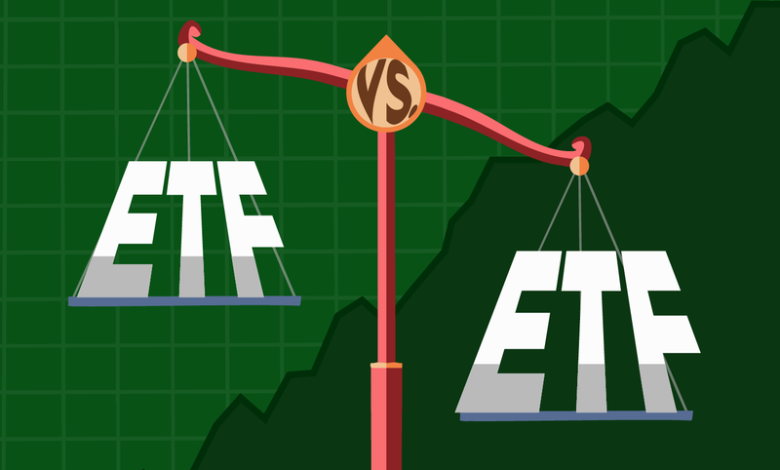
The State Street Technology Select Sector SPDR ETF (XLK +3.72%) offers more concentrated exposure to tech giants, while the Vanguard Information Technology ETF (VGT +3.39%) provides broader diversification across hundreds of smaller firms.
Both funds serve as primary vehicles for investors seeking artificial intelligence growth stocks through the information technology sector. While they share many top positions, their underlying strategies result in different levels of diversification and historical performance. Choosing between them depends on whether one prefers the efficiency of a giant-cap focus or a broader market reach.
Snapshot (cost & size)
| Metric | XLK | VGT |
|---|---|---|
| Issuer | State Street | Vanguard |
| Expense ratio | 0.08% | 0.09% |
| 1-yr return (as of June 12, 2026) | 53.20% | 48.00% |
| Dividend yield | 0.40% | 0.30% |
| Beta | 1.33 | 1.34 |
| AUM | $120.8 billion | $170.1 billion |
Beta measures price volatility relative to the S&P 500; beta is calculated from five-year monthly returns. The 1-yr return represents total return over the trailing 12 months. Dividend yield is the trailing-12-month distribution yield.
The Vanguard fund is slightly more expensive with a 0.09% expense ratio, compared to 0.08% for the State Street fund. With $170.1 billion in assets under management (AUM), the Vanguard fund is the larger of the two portfolios and offers a lower dividend yield.
Performance & risk comparison
| Metric | XLK | VGT |
|---|---|---|
| Max drawdown (5 yr) | (33.60%) | (35.10%) |
| Growth of $1,000 over 5 years (total return) | $2,705 | $2,525 |
What’s inside
The Vanguard Information Technology ETF tracks a benchmark of electronics and computer companies, providing exposure to approximately 310 holdings. Its largest positions include AI giant Nvidia (NVDA +3.41%) at 16.79%, Apple (AAPL +1.74%) at 15.27%, and Microsoft (MSFT +2.31%) at 9.88%. This fund, which launched in 2004, has a trailing-12-month dividend of $0.38 per share and focuses on technology stocks with minimal exposure to other sectors.
The State Street Technology Select Sector SPDR ETF was launched in 1998 and holds a much narrower portfolio of 72 stocks. Its largest positions include Nvidia at 13.23%, Apple at 11.53%, and Microsoft at 7.70%. The fund has a trailing-12-month dividend of $0.76 per share. While its sector tilt is also 100% technology, its reliance on the S&P 500 index universe means it excludes the broader range of mid-cap and small-cap firms found in the Vanguard fund.
For more guidance on ETF investing, check out the full guide at this link.
What this means for investors
For investors looking to gain exposure to the hot field of artificial intelligence, the Vanguard Information Technology ETF (VGT) and State Street Technology Select Sector SPDR ETF (XLK) provide an efficient way to do so. Choosing which to invest in depends on which fund’s strategy best aligns with an individual investor’s goals.
XLK holds a significantly smaller basket of stocks compared to VGT, but these are all tech companies within the S&P 500 index. This means you get exposure to the largest tech companies, including AI heavyweights Nvidia and Microsoft. Thanks to the AI boom, the stocks in XLK drove a higher one-year return than VGT. However, the fund’s performance is dependent on its smaller universe of companies, so if any of these businesses experiences a downturn, the ETF will be impacted.
VGT is a far more diversified fund, giving you exposure to smaller AI companies you don’t get through XLK. At the same time, you’re getting many of the same AI giants, providing a well-rounded ETF for artificial intelligence exposure. VGT performed an 8:1 share split on April 21, bringing the price per share below XLK as of June 15.
For investors who want to focus only on the biggest AI companies, XLK is the fund for you. For those who desire broader exposure, including smaller AI businesses with the potential for outsized growth, VGT is the better ETF.