Domestic gold demand offsets UAE tourism drop
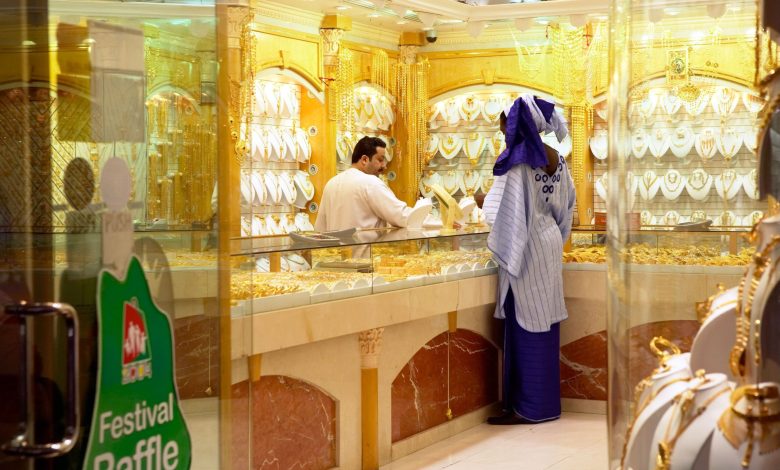
- Tourists usually make up 30% of sales
- ‘Good’ demand for jewellery in Eid
- Higher gold transit insurance premiums
Increased gold buying by UAE residents has partially cancelled out a decline in sales to foreign visitors following the outbreak of the US-Israeli war against Iran, executives from Dubai’s gold industry told AGBI.
Emirates residents and foreign tourists usually each account for up to 30 percent of Dubai gold sales, while the remainder comprises larger quantities bought by investors for overseas shipment, said Rashid Alharmoodi, a senior director at Dubai Gold District developer Ithra Dubai.
While travel disruptions have lowered the number of visitors to Dubai and hurt tourist gold sales, increased domestic buying has partly offset this as UAE residents have taken advantage of a recent decline in gold prices, Alharmoodi said.
The UAE is the world’s fourth-largest gold exporter, with exports totalling $53 billion in 2024, according to the United Nations Comtrade database.
Trading is centred upon Dubai Gold District, which launched in January under the auspices of government-owned real estate developer and asset manager Ithra Dubai and includes much of Deira’s historic gold souk.
This month participating Dubai Gold District retailers launched a home delivery service.
Gold slumped to a 12-week low of about $4,383 an ounce on March 26 before rebounding somewhat to trade at $4,828 on Wednesday – down 11 percent from a January all-time high of $5,416.
That peak capped an extraordinary rally in which gold more than doubled from roughly $2,000 in late 2024.
Highly pure gold is exempt from Valued Added Tax (VAT) in most jurisdictions including the UAE, although gold jewellery is not.
The UAE’s VAT rate is 5 percent, lower than in Europe and much of the Gulf and Asia, so it is common for tourists from these regions to buy gold jewellery while visiting Dubai, said Alharmoodi. Visitors can also recoup most of the VAT upon departing the UAE.
Chandu Siroya, owner of Dubai’s Siroya Jewellers, said there had been inadvertent benefits from fewer UAE residents going abroad during last month’s Eid Al Fitr holidays.
“They had a budget for the holiday and that was spent on jewellery,” said Siroya. “During Eid there was very good demand for 21-carat jewellery.
“We see in the market a lot of movement now… even at the wholesale level,” he said. “The shops have sold their jewellery and now are returning to replenish stocks. Some flights have opened up. So there is a positive sentiment.”
Iran’s near-complete closure of the Strait of Hormuz does not affect Dubai’s gold imports and exports because these move exclusively via airfreight.
Flight cancellations in early March and ongoing disruptions to commercial aviation schedules have affected gold shipments, however.
Insurance premiums for gold transit have also increased. “The war insurance premium is expensive,” said Siroya.
Essa Al Falasi, chairman of Emirates Minting, concurred. His company refines gold to produce gold bullion and bars, while it also trades gold and has a retail store in Dubai.
Emirates Minting’s main clients are local gold traders. It had stock in reserve so clients could continue to buy gold even if gold refining was disrupted, said Al Falasi.
Further reading:
Gold refining involves applying chemicals to gold ore to remove impurities in a process that increases purity to 99.99 percent from 99.95 percent.
The war has led the price of the chemicals involved to rise four-fold, said Al Falasi, explaining that chemical supplies came close to being exhausted.
Although these shortages have eased, prices have not returned to pre-war levels, he added.