Gold Price Down 25%, Correction in Its Final Stage [Click e-Market]
![Gold Price Down 25%, Correction in Its Final Stage [Click e-Market]](https://thewallstreetledger.com/wp-content/uploads/2026/08/2026081208340077485_1786491240.jpg "Gold Price Down 25%, Correction in Its Final Stage [Click e-Market]")
Dropped 25% From Peak, Sideways at $4,000 Range
Central Banks Continue Buying… Year-End Forecast at $5,000
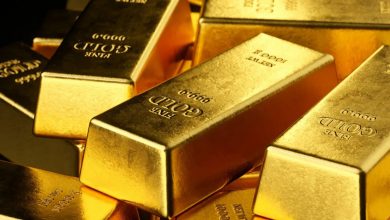
On the 18th, as gold prices soar and a gold bar shortage occurs, a photo of gold bars is posted on the exterior wall of the Korea Gold Exchange Jongno Main Branch in Jongno-gu, Seoul. 2025.2.18. Photo by Kang Jinhyung
There is an analysis that the gold price correction is nearing its end. After hitting an all-time high early this year, prices cooled off by falling about 25%. Recently, however, the combination of a weaker dollar, expectations for a more accommodative interest rate policy, and central bank buying has helped gold resume its upward trend.
On August 12, SangSangin Securities, in a recent report, projected that the end of the gold price correction is in sight.
Gold futures prices closed at an all-time high of $5,318 at the end of January. Afterwards, they dropped to $3,990 on June 24, marking a 25% decrease from the peak. For about six weeks until early this month, they moved within a box range around $4,000.
![Gold Price Down 25%, Correction in Its Final Stage [Click e-Market]](https://www.asiae.co.kr/news/img_view.htm?img=2026081116445277087_1786434293.png)
The sharp decline began on January 30, when Kevin Warsh was nominated as Chair of the U.S. Federal Reserve (Fed). The market, which had been expecting a rate freeze or cut, re-evaluated liquidity conditions and adjusted its interest rate path following the nomination. On the day Warsh was nominated, gold futures plunged 11%, marking the largest single-day drop on record. Subsequent price corrections deepened further due to concerns about crude oil and inflation stemming from the outbreak of war between the United States and Iran.
SangSangin Securities assessed that overheating has been largely resolved after six months of price and time correction. Yechang Choi, a researcher at SangSangin Securities, stated, “On January 20, we entered an extreme overbought zone, and on June 23, we entered an oversold zone. As of the close on the 7th, gold futures prices broke above the downward resistance line, reaching $4,340 due to improvements in the macroeconomic environment.”
The macroeconomic environment is also turning favorable for gold. The biggest change is the weakness of the U.S. dollar. After coordinated interventions to buy the Japanese yen by both the United States and Japan, the dollar’s strength eased. The slowdown in U.S. employment figures further accelerated dollar weakness. The dollar index, which stood at 101.5 points at the end of July, fell to around 99 points as of August 10.
Interest rate expectations have also become more dovish. In July, U.S. nonfarm payrolls fell by 23,000, far below market expectations. The figures for the previous two months were also revised down by 169,000. As a result, the Federal Reserve’s year-end rate hike forecast has been lowered from 1.8 times to 1.2 times, and the probability of a hike in September has dropped to 44%. If additional employment slowdown is confirmed, the likelihood of a rate freeze within the year could increase further.
![Gold Price Down 25%, Correction in Its Final Stage [Click e-Market]](https://www.asiae.co.kr/news/img_view.htm?img=2026081116443777086_1786434277.png)
Central bank buying is also providing support for the floor of gold prices. Central bank demand increased even during the price correction. In the second quarter, central banks’ net gold purchases reached 288.9 tons, an increase of 62% compared to the same period last year. The People’s Bank of China continued to be a net buyer for the twentieth consecutive month.
A notable development is the Bank of Korea. This month, the Bank of Korea announced the establishment of a cooperative system for purchasing domestically produced gold and disclosed that it already began purchasing gold exchange-traded funds (ETFs) in the second quarter. This marks the first gold exposure increase in 13 years. The ongoing global trend of central banks increasing gold holdings to reduce dependence on the U.S. dollar could also be favorable for gold prices in the mid- to long-term.
![Gold Price Down 25%, Correction in Its Final Stage [Click e-Market]](https://www.asiae.co.kr/news/img_view.htm?img=2026081116443577085_1786434275.png)
SangSangin Securities predicted that, reflecting prolonged war as well as upward pressure on oil prices and interest rates, gold prices will reach $4,650 in the third quarter and $5,000 in the fourth quarter of this year. Researcher Choi stated, “Even in historical gold bull markets, after a drop of more than 15% from the peak, it took an average of eight months to find the bottom, and within 12 months, prices recovered to 90% of the peak. This time as well, following the correction, we expect prices to rise to near $5,000 by the end of the year.”
Hot Picks Today
![Is Now the Time to Buy? ... "SK hynix Set for Generous KRW 40 Trillion Shareholder Return" [Click e-Stock]](https://cwcontent.asiae.co.kr/asiaresize/93/2026081016110275478_1786345862.jpg)
![Gold Price Down 25%, Correction in Its Final Stage [Click e-Market]](https://www.asiae.co.kr/news/img_view.htm?img=2026081208340077485_1786491240.jpg)
This content was produced with the assistance of AI translation services.
© The Asia Business Daily. All rights reserved. Unauthorized AI training and use prohibited.