Should you look beyond gold and add silver to your portfolio on Akshaya Tritiya 2026? Explained
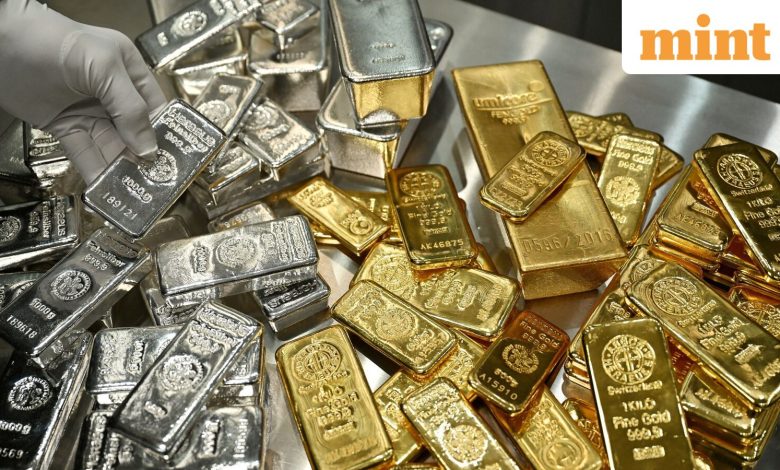
An average 30% returns by gold in the last five years from one Akshaya Tritiya to the next, undoubtedly makes it a compelling investment. But analysts believe the time might be right to add silver to the portfolio mix for better returns.
What strengthens silver’s case is the massive 165% rise since the last Akshaya Tritiya on 30 April 2025. It far outweighed the 63% rise seen in the gold prices, making analysts believe that investors can look beyond gold and consider silver as a strategic addition on the auspicious day, which falls on 19 April this year.
Gold or silver: What is ideal portfolio mix?
The white metal has a dual role as both a precious and industrial metal; silver offers higher beta potential, particularly if industrial demand strengthens alongside geopolitical stability.
On MCX, silver prices are trading at ₹252,800 levels. While the returns are steep in almost a year, the metal is significantly down by over 40% from the recent peak of ₹4,39,000, on the back of profit taking and fears that geopolitical conflict could derail economic growth and impact industrial demand.
Gold should remain as a core holding, supported by allocation to silver, opined analysts. Kaynat Chainwala, AVP Commodity Research, Kotak Securities, suggested 75–80% of the precious metals basket in gold, while silver can form a 20–25% tactical allocation, accumulated selectively and held with a 2+ year horizon.
Echoing similar views, Harshal Dasani, Business Head at INVasset PMS, said that investors should look beyond gold to silver on Akshaya Tritiya, but as an addition, not a replacement.
“Silver is no longer just a precious metal trade; it sits at the intersection of safe-haven demand and industrial usage, which gives it stronger torque when sentiment turns favourable,” he said, cautioning that though the white metal can offer higher returns, it also witnesses sharper volatility.
The Silver Institute and Metals Focus expect the global silver market to remain in structural deficit for a sixth straight year in 2026, with the deficit widening to 46.3 million ounces from 40.3 million ounces in 2025, even as coin and bar demand is projected to rise 18% and total supply to fall 2%, affirming a strong outlook for the white metal.
While silver can again beat gold returns because it typically outperforms in precious-metals upcycles, it will do so with much sharper swings, said Dasani. Therefore, for investors, this Akshaya Tritiya, gold should remain the core holding, while silver deserves a tactical overweight for higher return potential.
Gold outlook: 10-15% gains in the offing
Meanwhile, the outlook for gold looks promising, with a 10-15% upside likely in the next one year. Chawal said that maintaining a gold allocation of 8–15% of the portfolio remains prudent as it strikes the right balance between capturing safe-haven benefits and avoiding overexposure.
Driven by sustained central bank and investor buying amid persistent macroeconomic and geopolitical uncertainties, gold has reaffirmed its status as the pre-eminent safe-haven asset. That said, near-term volatility may persist due to liquidity pressures and shifting Fed expectations, as seen last month when gold plunged almost 10%.
According to the Kotak Securities analyst, the medium-term outlook remains supported by geopolitical uncertainty, stagflation risks, and ongoing structural shifts in global reserve allocation. Any weakness should be viewed as an opportunity to accumulate rather than exit, she opined.
Commenting on the gold price target for the next one year, Deveya Gaglani, Senior Research Analyst- Commodities, Axis Securities, said that prices may once again retest the $5,300–$5,500 range over the next year, implying an upside of around 10–15% from current levels. In the domestic market, we expect prices to reach ₹1,70,000– ₹1,85,000 over the same period, driven by either a stagflationary environment or lower crude oil prices, he said.
Disclaimer: This story is for educational purposes only. The views and recommendations made above are those of individual analysts or broking companies, and not of Mint. We advise investors to check with certified experts before making any investment decisions.