Hutti in Karnataka, India’s only functional gold mine, dazzles as prices soar in world market
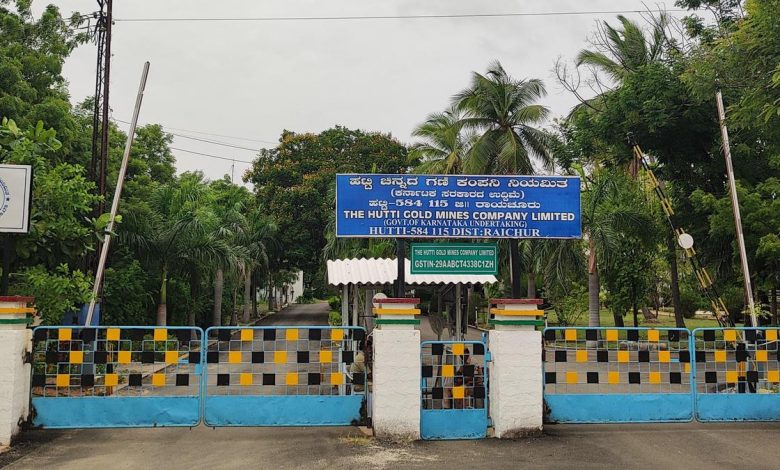
Soaring price of gold in the world market alone has helped Hutti Gold Mines — the only functional gold mine in the country — earn a whopping ₹633.34 crores more in 2025-26, when the average gold selling price increased by 34.11%. The year also coincided with the highest average recovery grade with 2.61 grams of gold recovered per metric tonne of ore mined in the last five years.
The average selling price of gold for The Hutti Gold Mines Company Ltd. — the State PSU at Hutti in Raichur district — during 2025-2026, was ₹11,603 per gram, an increase by ₹3,958 per gram over 2024-2025 when the average selling price was ₹7,645 per gram. Owing to geopolitical factors, the gold price in India has been fluctuating, and the retail gold price fluctuated between ₹12,000 and ₹15,000 per gram.

How much it produced
The company produced 1,691.57 kgs of gold, and earned a revenue of ₹ 1,910.62 crores by selling 1,521.36 kgs of gold, data shared by the company shows. The profit after tax was ₹ 844.71 crores.
Hutti’s gold production meets less than 1% of India’s annual demand for gold that is estimated to be over 700 tonnes. The company also produced 145.76 kgs of silver as a byproduct of gold ore beneficiation process, and sold 131.59 kg at an average selling price of ₹1,58,750 per kg during the year.
The spurt in the gold price has brought a windfall to the company as it saw its revenue increase by 42.23% and net profit nearly double over the previous year. The total revenue increased from ₹1,342.90 in 2024-2025 to ₹1,910.62 in 2025-2026. It also reported a 93.71% increase in net profit from ₹ 436.07 crores in 2024-2025 to ₹844.71 crores 2025-2026.
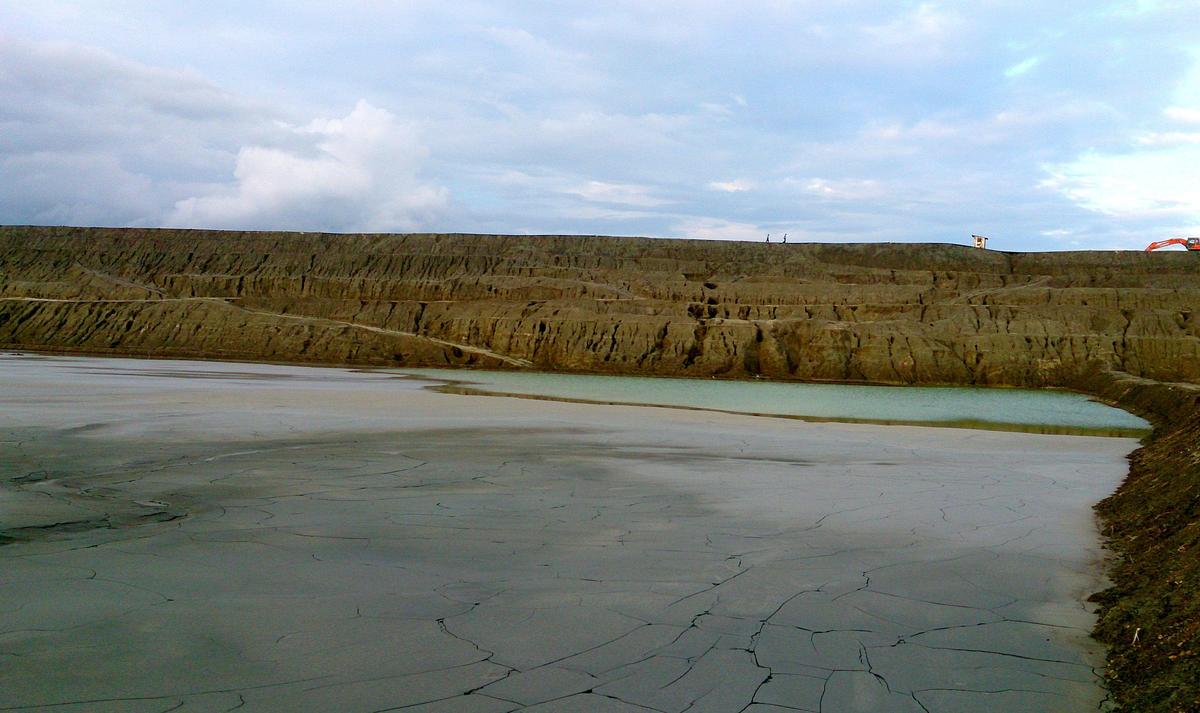
Top view of a dump of Gold Ore Tailings at Hutti in Lingasugur taluk of Raichur district.
| Photo Credit:
Santosh Sagar
Not retail trading cost
The selling cost of ‘Gold Dore Bars’ (that contains impurities) to the refiners by the HGML is a weekly average Indian Bullion and Jewellers Association (IBJA) rates, which is different from the retail trading cost of gold, a company official explained.
The increase in gold price has cushioned the company against market inflation of various materials, spares, consumables, power and labour that has increased the cost of the operation, sources acknowledged.
“The mining operations will be viable only if a minimum of 1.3 grams of gold is recovered from per tonne of ore since the overall cost of processing a tonne of ore is about ₹12,000. The increase in yield has also significantly contributed towards increase in the net gold production and also on the cost of production for the company,” said an official.
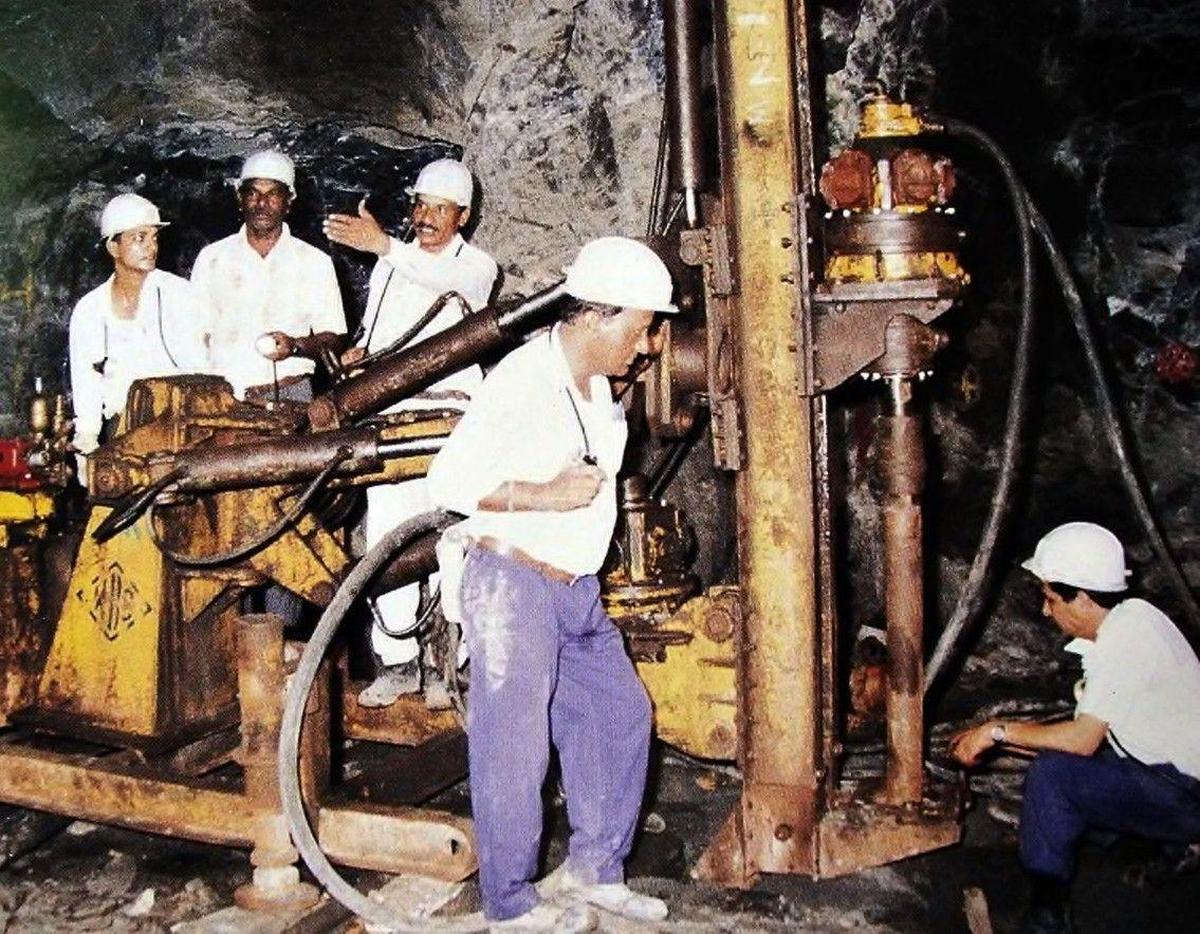
Workers seen drilling large diameter blast holes at the underground gold mine in Hutti in Raichur district.
| Photo Credit:
The Hindu
Ore grade
The rising profit for the company is also connected to better recovery grade of ore in 2025-2026, which was 2.60 grams per metric tonne whereas the recovery grade of ore in 2024- 2025 was 2.35 grams per metric tonne. The average yield ranged from 2.30 grams per tonnes to 2.60 grams per tonne in the last 10 years with lowest yield of 2.16 grams per tonne coming in 2023-2024 and the highest yield of 2.88 grams per tonne recorded in 2017-2018.
Sources said that the grade of ore supplied to the mill varied because the grade is not uniform across all stoping blocks.
After a major expansion project, the ore production capacity has been enhanced to 3,000 metric tonnes a day or about 9 lakh metric tonnes annually. Interestingly, in 1971, the company had nearly tripled the ore processing capacity from 310 tonnes per day to 910 tonnes per day, which is now at 3,000 tonnes daily.
Hutti’s gold mining history
The evidence of gold mining activity is traced back to pre-Asokan times.
Ancient gold mining has been established by carbon dating of wooden logs found in the old underground workings at Hutti.
1880-1920: Modern gold mining undertaken by John Taylor & Sons for Hyderabad (Deccan) Company owned by Nizam of Hyderabad.
1920: Mines closed due to paucity of materials, funds and due to World War I.
1938: Exploration by geological and geo physical surveys, diamond drilling and dewatering of village reef mine led to rediscovery of Zone-1 and Oakley’s Reefs.
1947: Hyderabad Gold Mines Company Ltd. was incorporated and mining again entrusted to John Taylor and Sons by Nizams.
1956: With the formation of Mysore State, it renamed as The Hutti Gold Mines Company Ltd.
Expansion of mining operations
The HGML is also expanding mining operations beyond Hutti. It is awaiting statutory clearances to take up brown field project at Wondalli, about 10 km from Hutti. The company is also exploring to enhance production at its satellite gold mines at Uti and Hira-Buddinni shortly by investing on additional infrastructure.
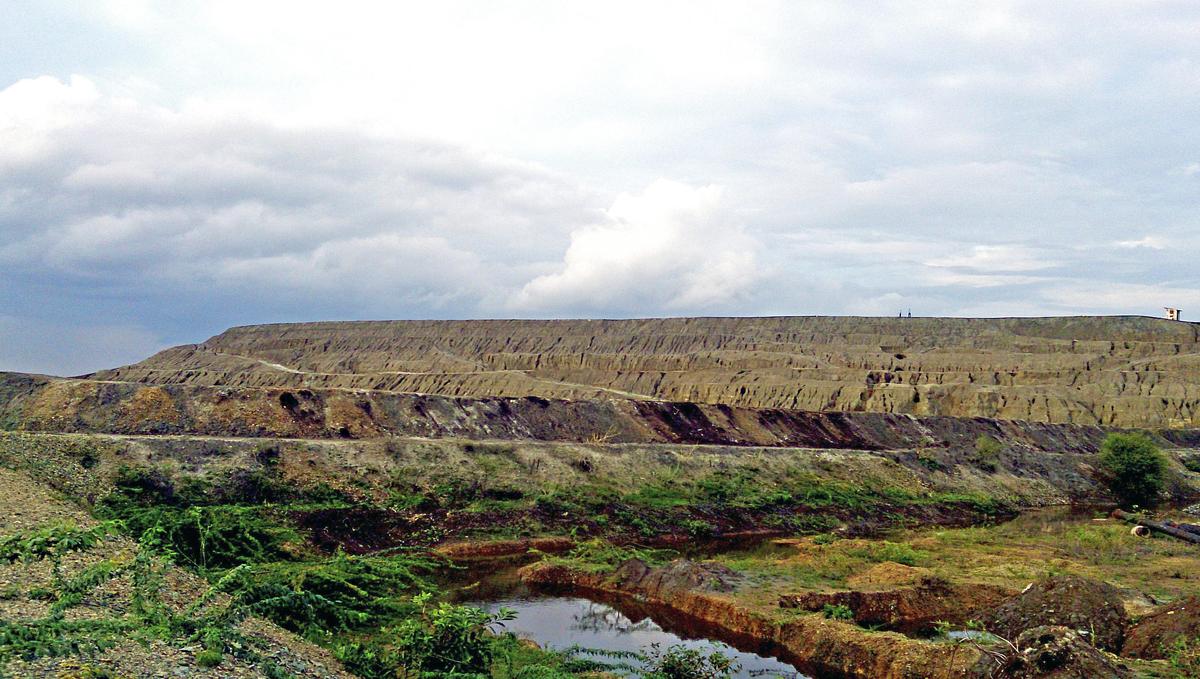
A partial view of a dump of Gold Ore Tailings at Hutti in Lingasugur taluk of Raichur district.
| Photo Credit:
Santosh Sagar
How much remains
Since the inception of modern mining at Hutti over a century ago, about 102 tonnes of gold has been mined and the remaining gold reserves are estimated to be about 71 tonnes. According to an estimate, sufficient ore is available in and around Hutti to continue mining operations for at least 25 years. Hutti is one of the deepest mines in the country with present mining depth at over 2,500 ft.
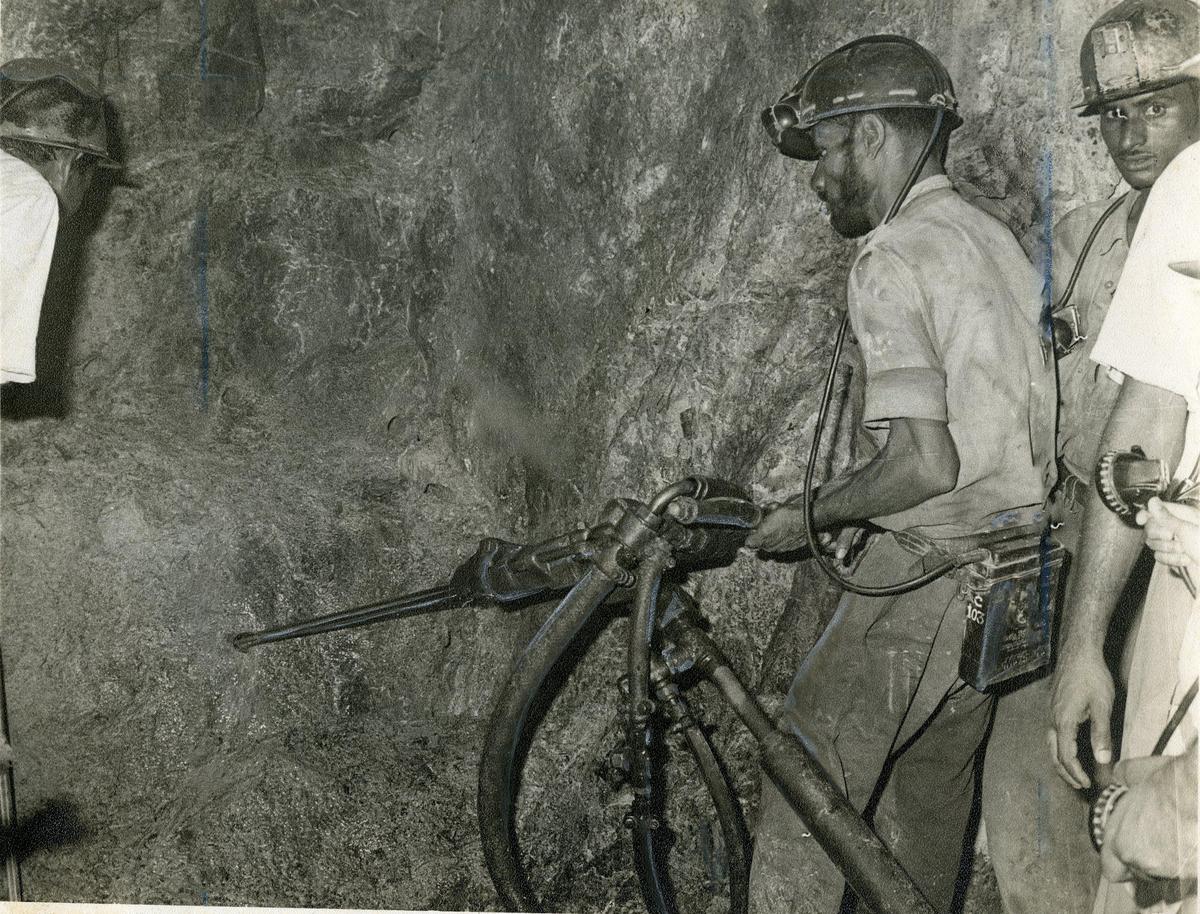
Drilling in progress inside Hutti Gold Mine at Raichur. File photo dated circa December 1975.
| Photo Credit:
THE HINDU ARCHIVES
Published – May 24, 2026 06:00 am IST